The post How PMT Portable CMM Improves Casting Inspection Efficiency appeared first on PMT Technologies.
]]>
The Shift to Proactive Quality Performance
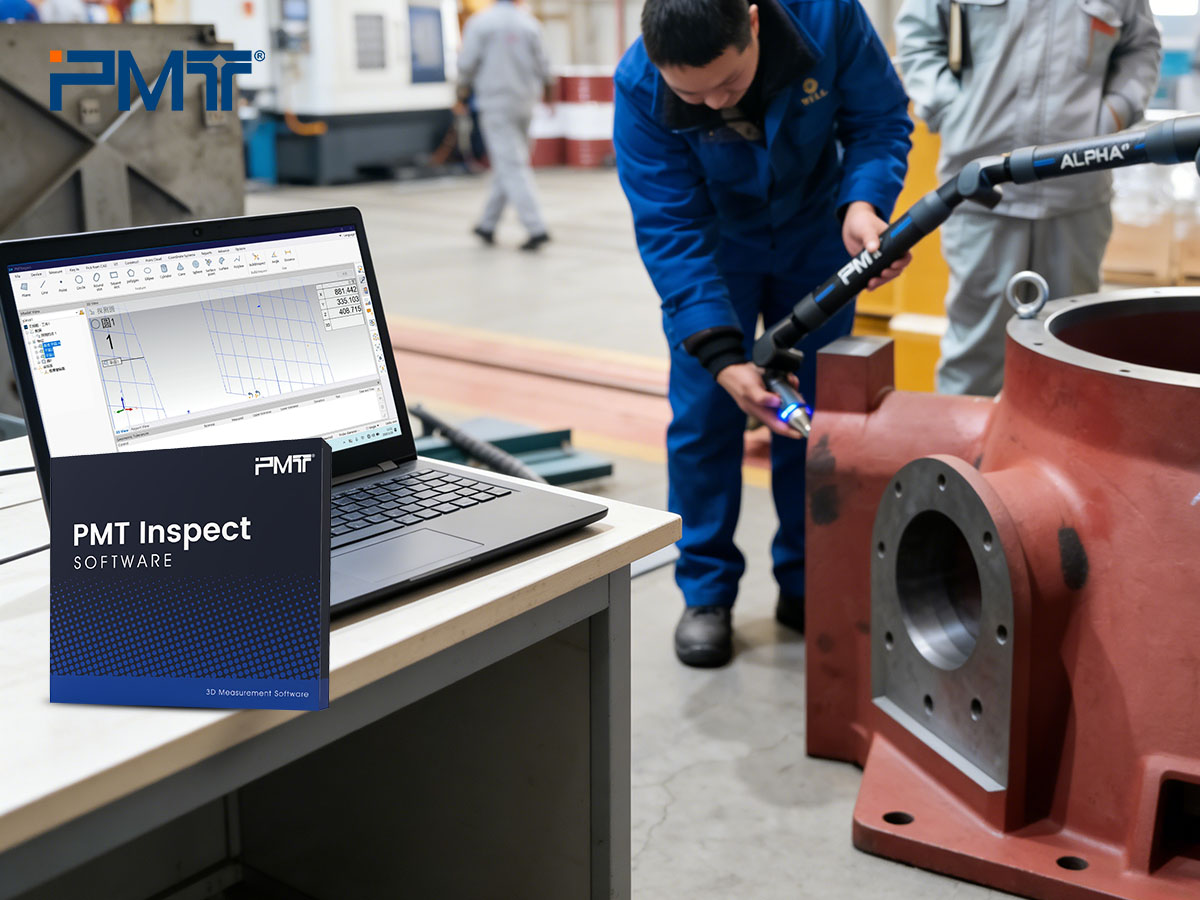
At PMT, we see advanced 3D dimensional inspection as a key driver of modern manufacturing. High-precision, high-efficiency measurement enables data-driven quality control, full traceability, and continuous process optimization.Our integrated solution delivers:
Data-Driven Quality Control: Real-time analysis for immediate decision-making.
Full Traceability: Digital records for every component produced.
Closed-Loop Processes: Continuous optimization that reduces waste and downtime.
Inspection Challenges Amid Rapid Growth
Founded in 1955, Baoding Well Foundry Machinery Co., Ltd. is a leading Chinese foundry equipment manufacturer. As part of its global expansion strategy, the company has significantly increased overseas exports in recent years.
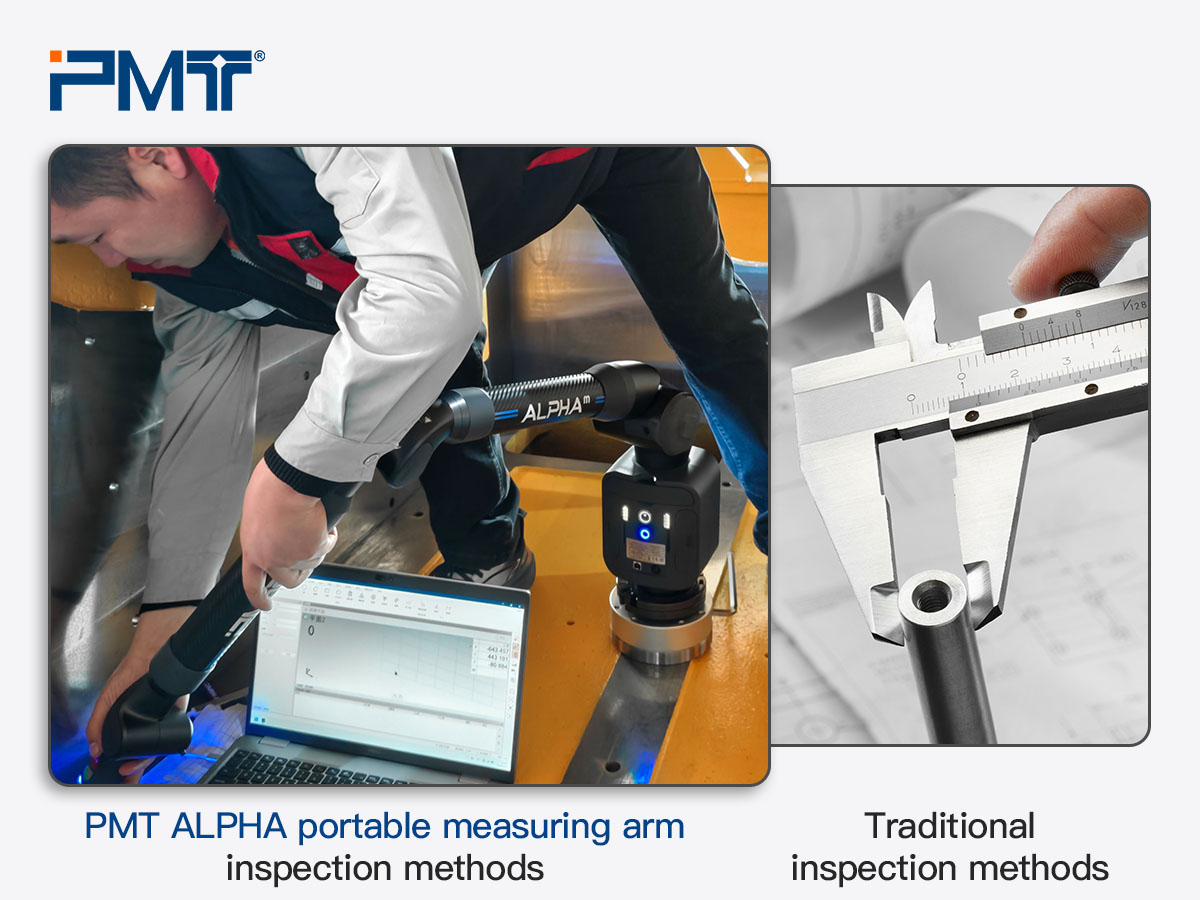
As international orders surged, traditional inspection methods created bottlenecks that slowed production and compromised quality—particularly in the production of complex casting components. To maintain rapid growth and meet strict global standards, the company turned to an advanced, integrated inspection solution that enhances efficiency, ensures precision, and enables closed-loop quality control directly on the shop floor.
How the PMT ALPHA Arm Enables Comprehensive Quality Control
In today’s competitive global market, inspection is no longer just about accuracy. Companies that can turn precision measurement into comprehensive, end-to-end dimensional control—from incoming materials to final assembly—gain a significant competitive advantage:
1. Independent Core Technology
As a high-tech company specializing in portable measurement, PMT combines independent R&D with a fully integrated inspection solution. Following discussions with Baoding Well, PMT proposed the ALPHA M 3.0 measuring arm with PMT INSPECT 3D metrology software, forming a stable, self-developed solution that helps manufacturers achieve technological independence and sustainable industrial development.
2.On-Site Efficiency & Accuracy
The PMT ALPHA portable measuring arm can be quickly deployed on the production line, enabling real-time, in-process inspection and immediate adjustments. Compared with traditional offline methods, inspection efficiency improves by over 50%, significantly reducing waiting time, rework, and production bottlenecks.
3.Added Value Beyond Quality Control
Beyond internal quality control, the PMT ALPHA Arm demonstrates technical capability and reliable quality assurance during customer audits and factory assessments. By showcasing advanced inspection capacity, it strengthens brand credibility and builds customer confidence in competitive global markets.
One-Stop Inspection Solution: Hardware + Software Integration
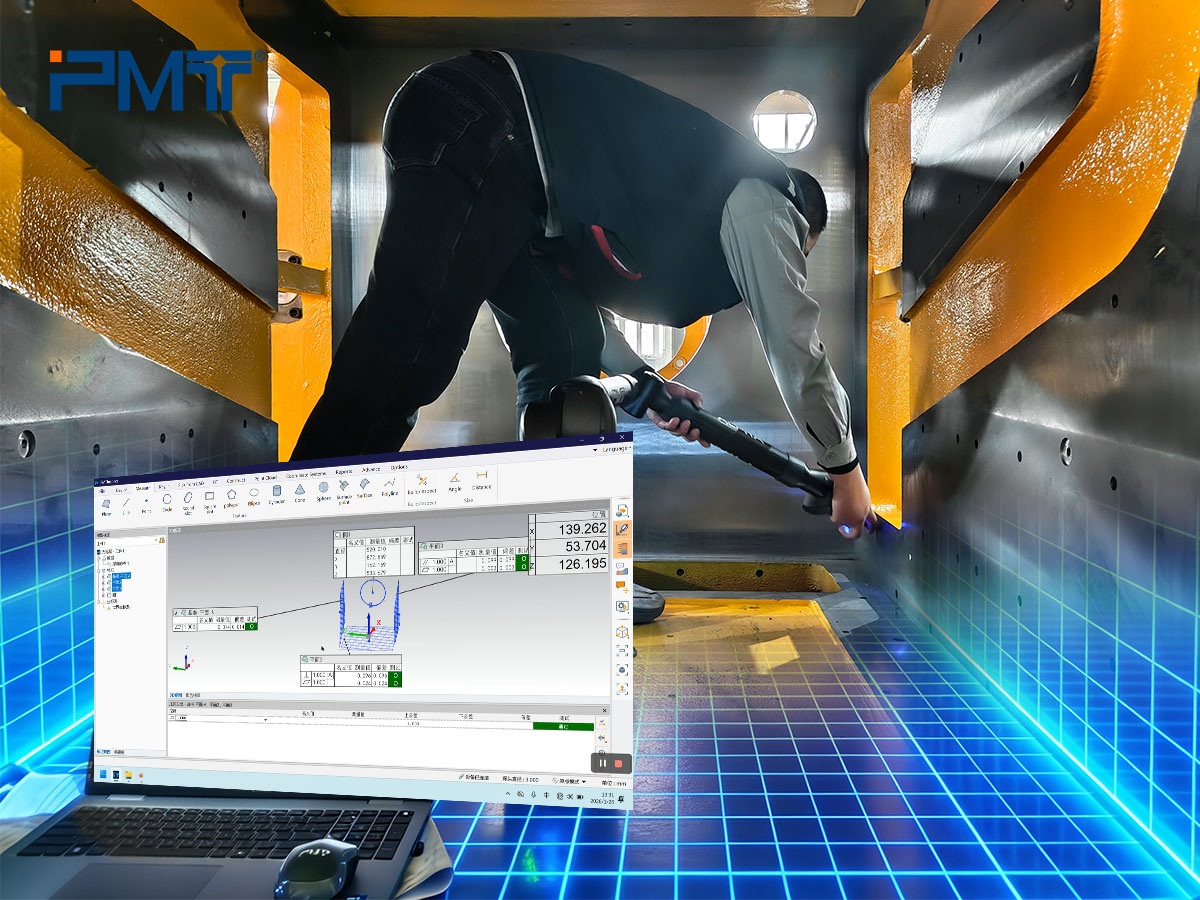
Inspection Objective:
Verify symmetry between the left and right mold cavities and the main drive shaft of the casting machine.
Inspection Procedure:
Step 1: Data Acquisition
- Probe the left Plane 1, Bottom Plane 2, Right Plane 3, and Inner Circle 4 using the PMT ALPHA measuring arm with PMT INSPECT.
- Set Plane 1 as datum A, evaluate parallelism with Plane 3 and perpendicularity with Plane 2.
- Select Plane 1, 2, and 3; flatness is automatically calculated.
Step 2: Construct Mid-Plane and Line
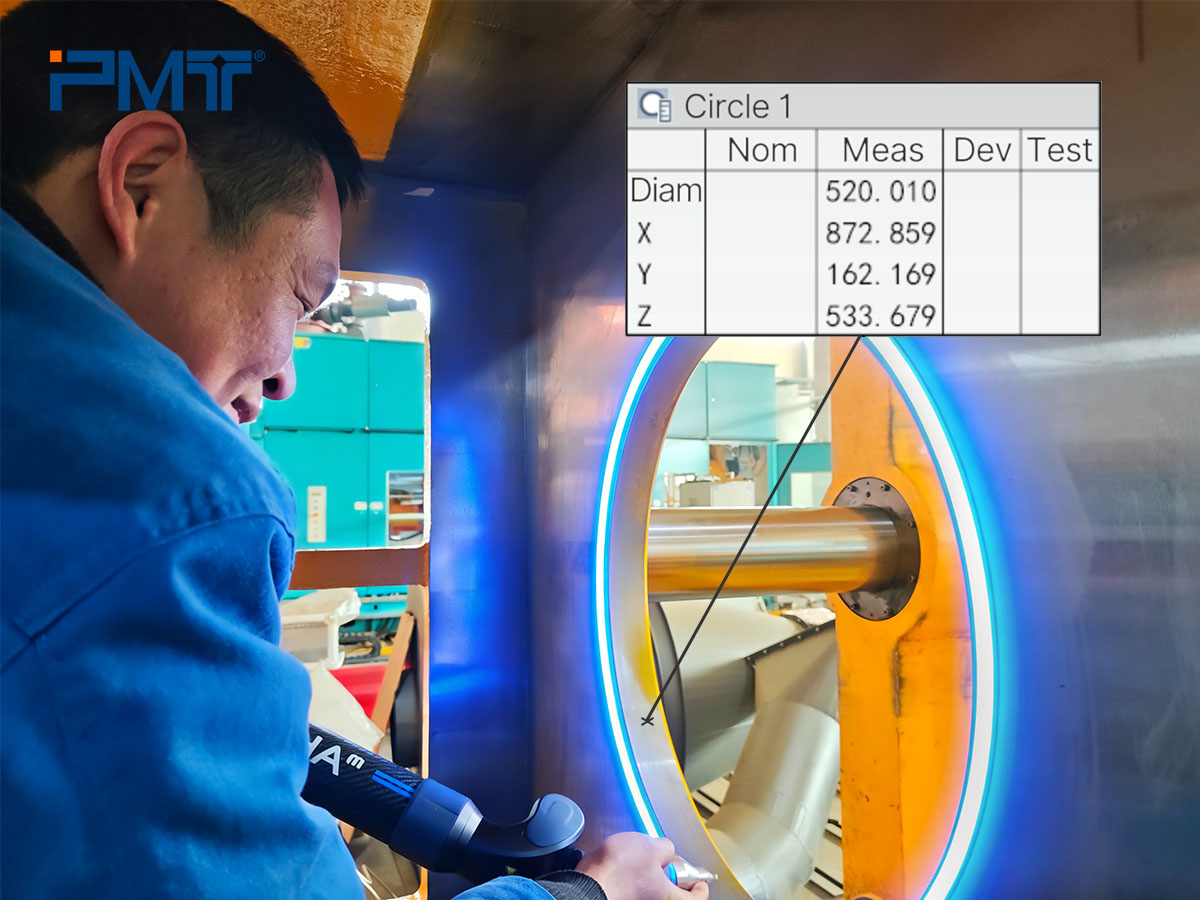
- In PMT INSPECT, use “Construct-By Bisection” on Plane 1 and Plane 3 to create Mid-Plane 4.
- Use “Construct-By Intersection of Two Planes” on Plane 2 and Mid-Plane 4 to create Line 1.
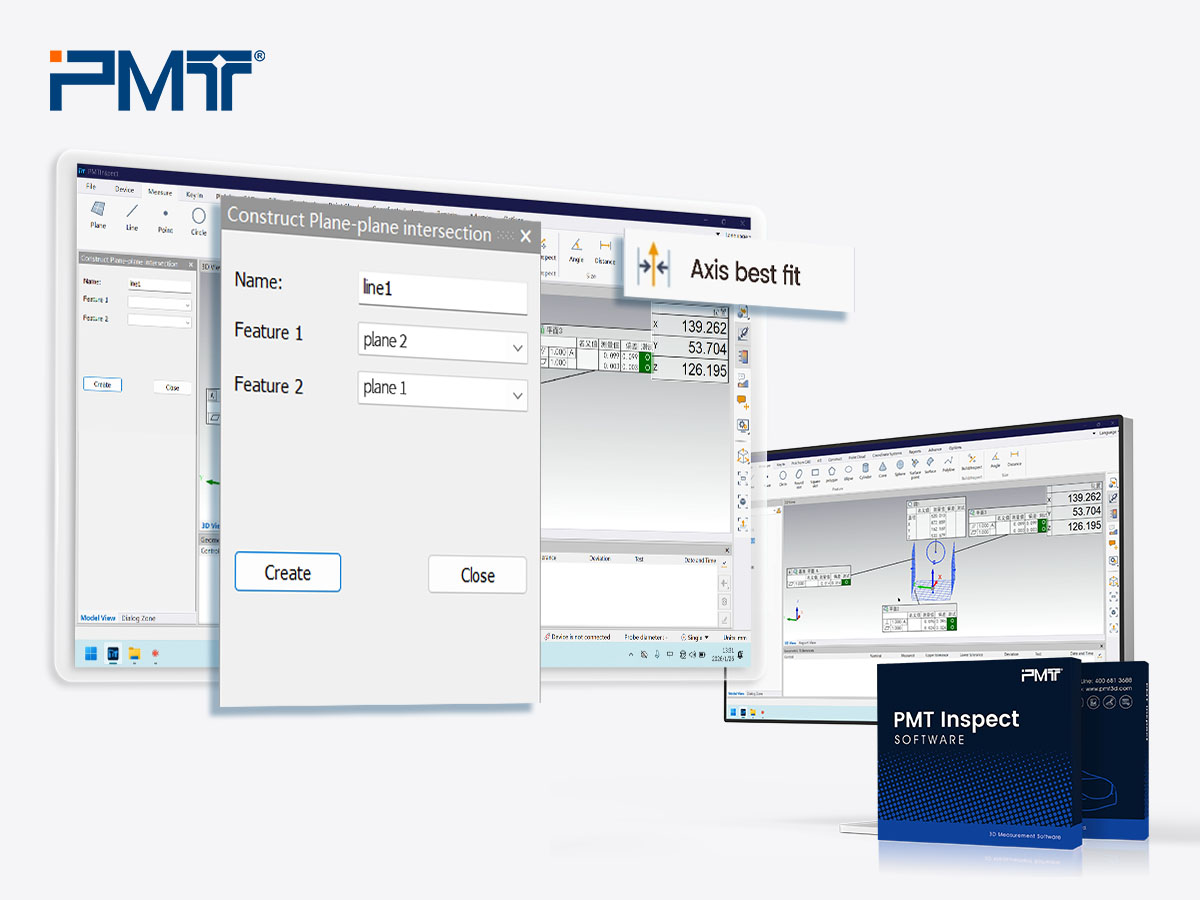
Step 3: Evaluate Symmetry
- Establish a coordinate system using Plane 2 and Line 1.
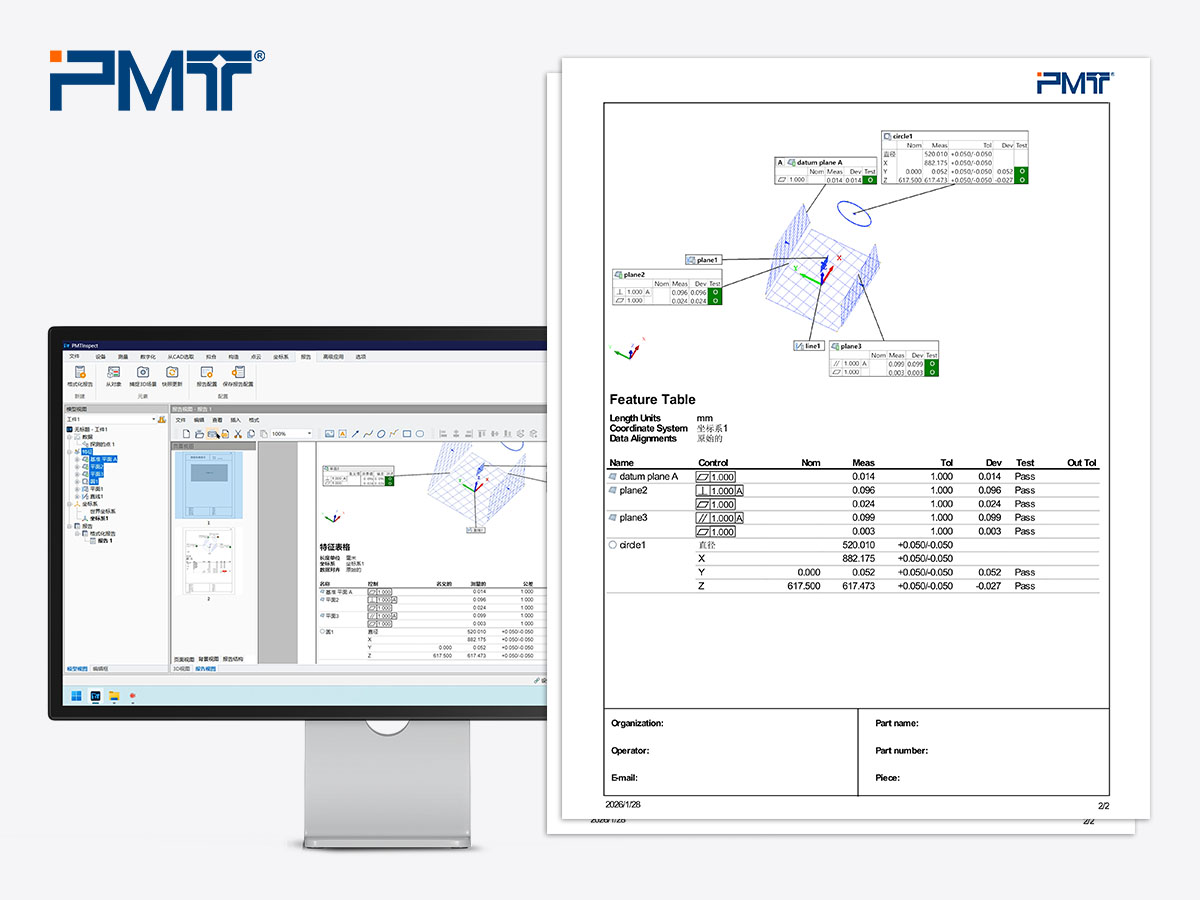
- Set the nominal Y-value of Inner Circle 1 to 0 with a ±0.05 mm tolerance.
- All measured features fall within tolerance, confirming cavity symmetry.
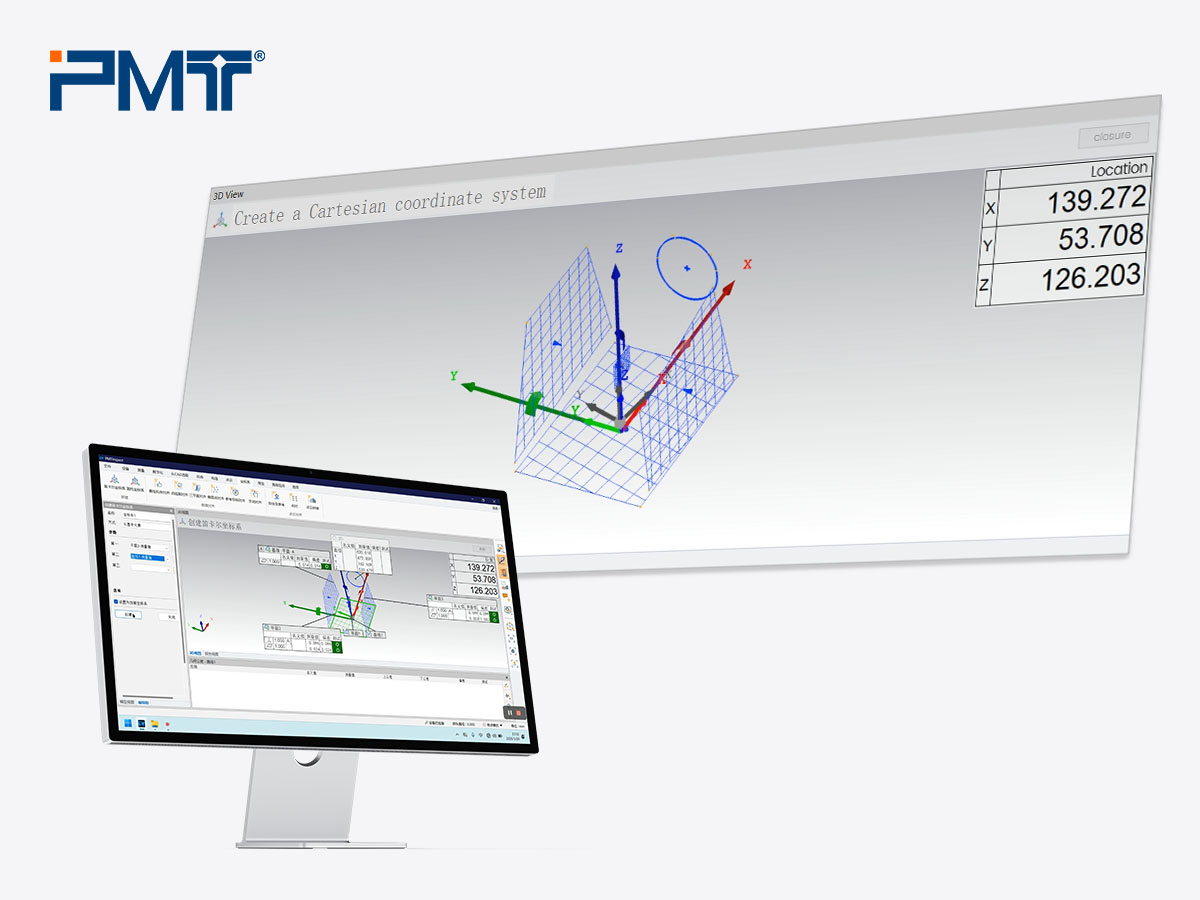
Step 4: Reporting and Traceability
- Generate inspection data and customized reports directly in PMT INSPECT.
- Archive data for full traceability.
Building Confidence with Baoding Well
Quality Manager, Baoding Well:
“We previously relied on traditional inspection methods, which often limited production capacity. As our products grew more complex, inspections could take hours, delaying delivery schedules. After implementing the PMT ALPHA portable measuring arm with PMT INSPECT 3D metrology software, the change was immediate: tasks that once took an hour now take just minutes.
Real-time, accurate data has greatly improved both efficiency and product quality. Digital measurement is far more reliable than manual methods, and we look forward to working with PMT as a long-term partner in strengthening our competitiveness.”
PMT Technologies: Driving Global Quality Standards
By integrating hardware and software into a unified inspection solution, PMT enables flexible, efficient, and data-driven quality control across the entire production process.
Today, PMT Technologies helps Chinese equipment manufacturers meet international standards and serves as a trusted partner for brands expanding into global markets.
The post How PMT Portable CMM Improves Casting Inspection Efficiency appeared first on PMT Technologies.
]]>The post CMM & CNC: Building a Closed-Loop Quality Control System appeared first on PMT Technologies.
]]>In modern industrial manufacturing, CMMs and CNC machines play complementary roles. A CMM provides high-precision measurement to verify dimensional accuracy and product quality, while a CNC machine transforms raw materials into complex, high-precision parts. Integrating these systems creates a complete quality control workflow that connects design, machining, inspection, measurement feedback, and corrective actions.
What is CMM?
A Coordinate Measuring Machine (CMM) is a high-precision metrology device widely used in manufacturing quality control. Equipped with contact or non-contact probing technology, a CMM captures accurate coordinate data along the X, Y, and Z axes to measure part dimensions, positions, and geometric tolerances (GD&T).
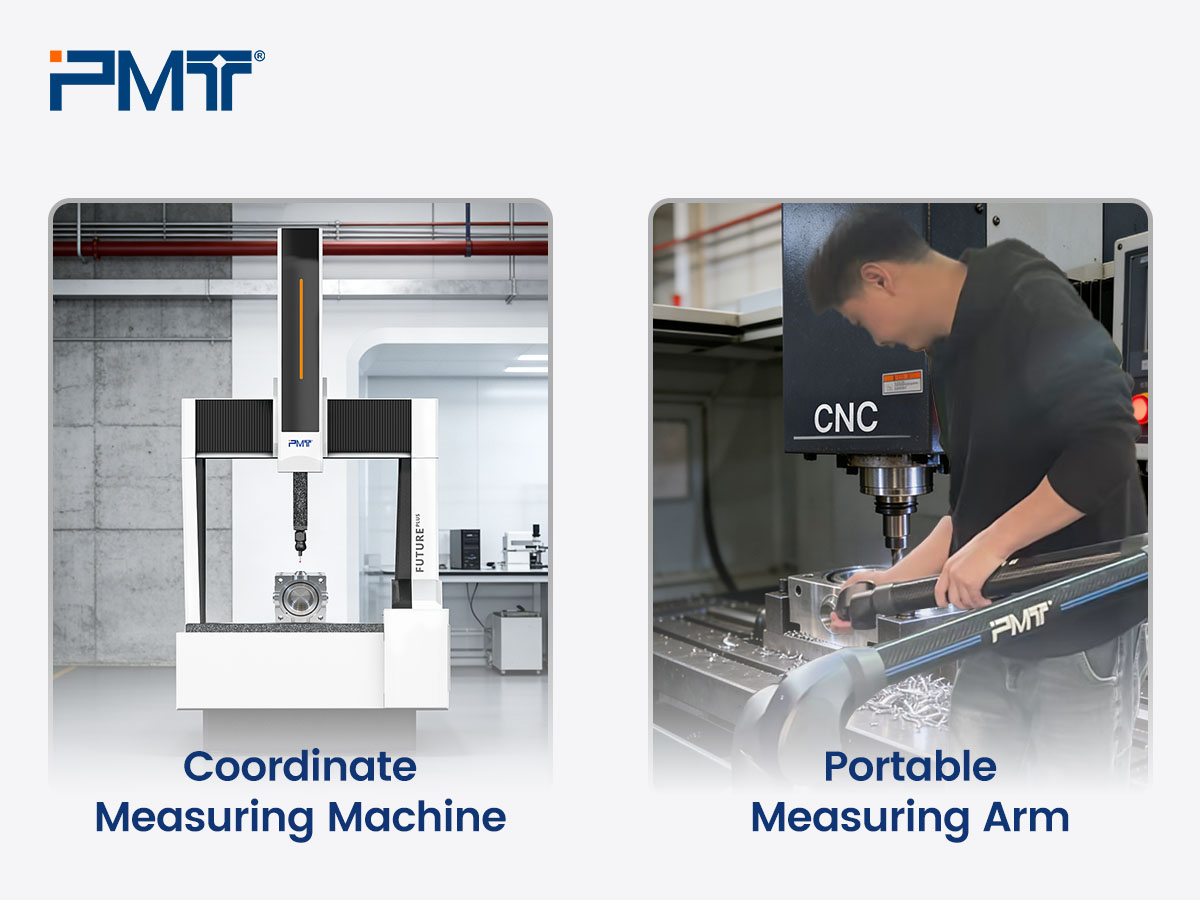
CMMs are generally classified into two types:
Fixed CMMs, such as bridge, gantry, and shop floor models, typically used in controlled environments for maximum accuracy.
Portable CMMs, such as measuring arms and handheld 3D scanners, which can be positioned directly on the shop floor or beside CNC machines for flexible inspection.
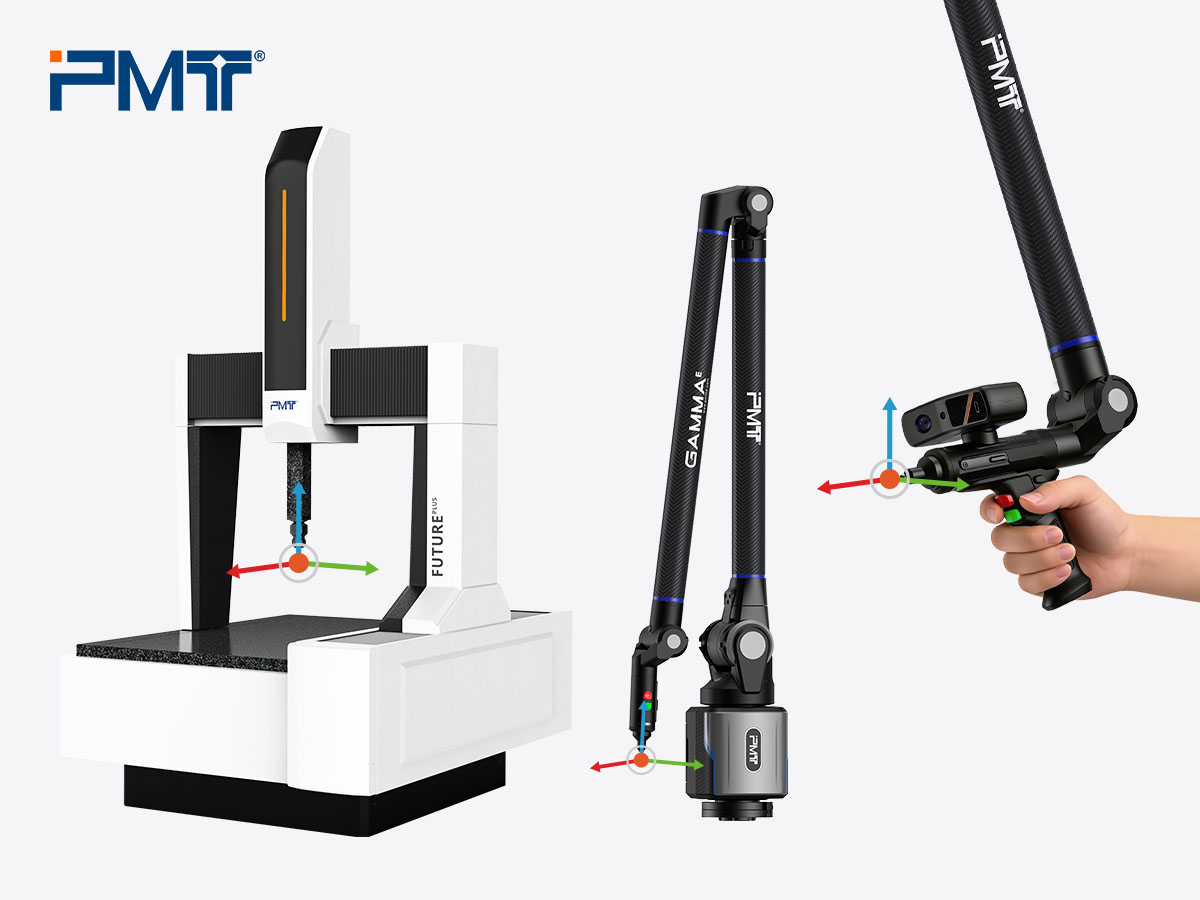
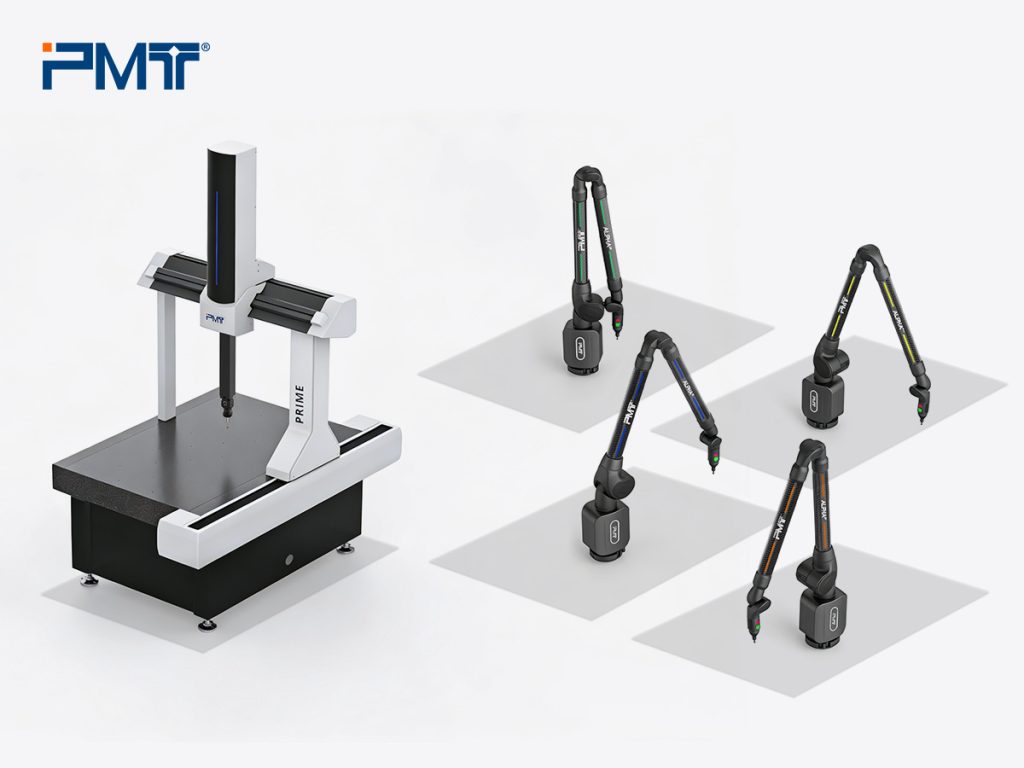
With over 20 years of metrology expertise, PMT is a high-tech enterprise committed to delivering integrated measurement for laboratory, shop floor, and on-site applications, meeting the diverse quality inspection needs of manufacturers. PMT’s fixed CMMs—including the PRIME and FUTURE series—operate in controlled temperature and humidity conditions to ensure stability, while, PMT portable CMMs, such as portable measuring arms, providing convenience and efficiency for immediate, in-process measurement.
What is CNC?
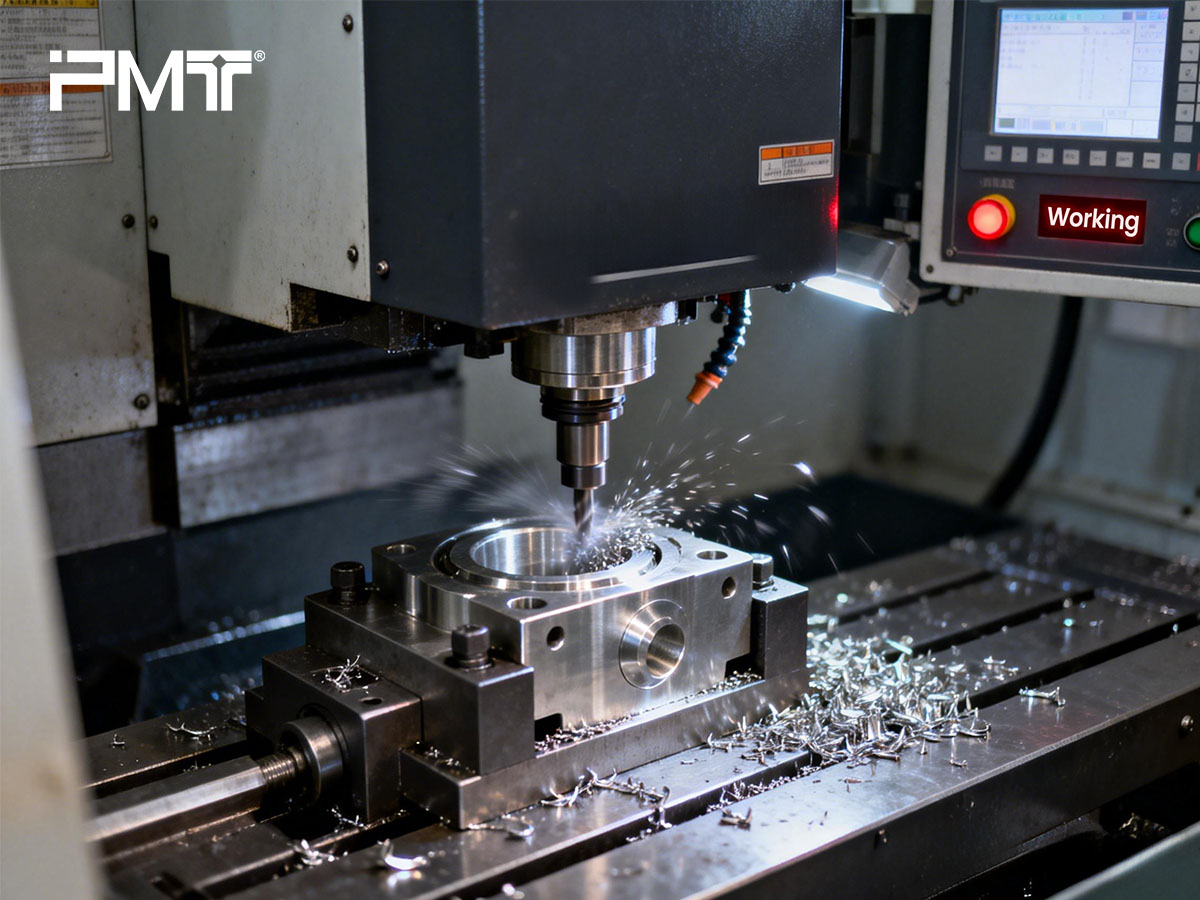
CNC machines convert raw materials into precise, finished components. Performing operations such as milling, turning, drilling, and tapping, these machines—including machining centers, CNC lathes, and compound machine tools—produce complex, high-precision parts according to design specifications.
CMM vs. CNC: What’s the Difference?
| Item | CMM (Coordinate Measuring Machine ) | CNC (Computer Numerical Control) |
| Role | Quality inspection equipment | Manufacturing and machining equipment |
| Process Stage | Quality Control | Production |
| Purpose |
Check part dimensions against design specifications |
Transform raw materials into finished parts |
| Function |
Measure dimensions, positions, and GD&T |
Machine parts such as flats, holes, surfaces and cavities. |
| Operating Method | Contact/scanning probes | Cutting tools |
| Core Software | PMT INSPECT metrology software | CAD/CAM manufacturing software |
| Output | Inspection report (digital data) | Machined part (physical part) |
How CMMs Drive CNC Process Optimization?
CNC machines excel at producing high-precision parts, while CMMs ensure those parts meet strict quality and consistency requirements. Measuring finished parts and feeding accurate inspection data back into CNC processes allows manufacturers to quickly identify deviations, make timely adjustments, reduce scrap, and improve overall production efficiency.
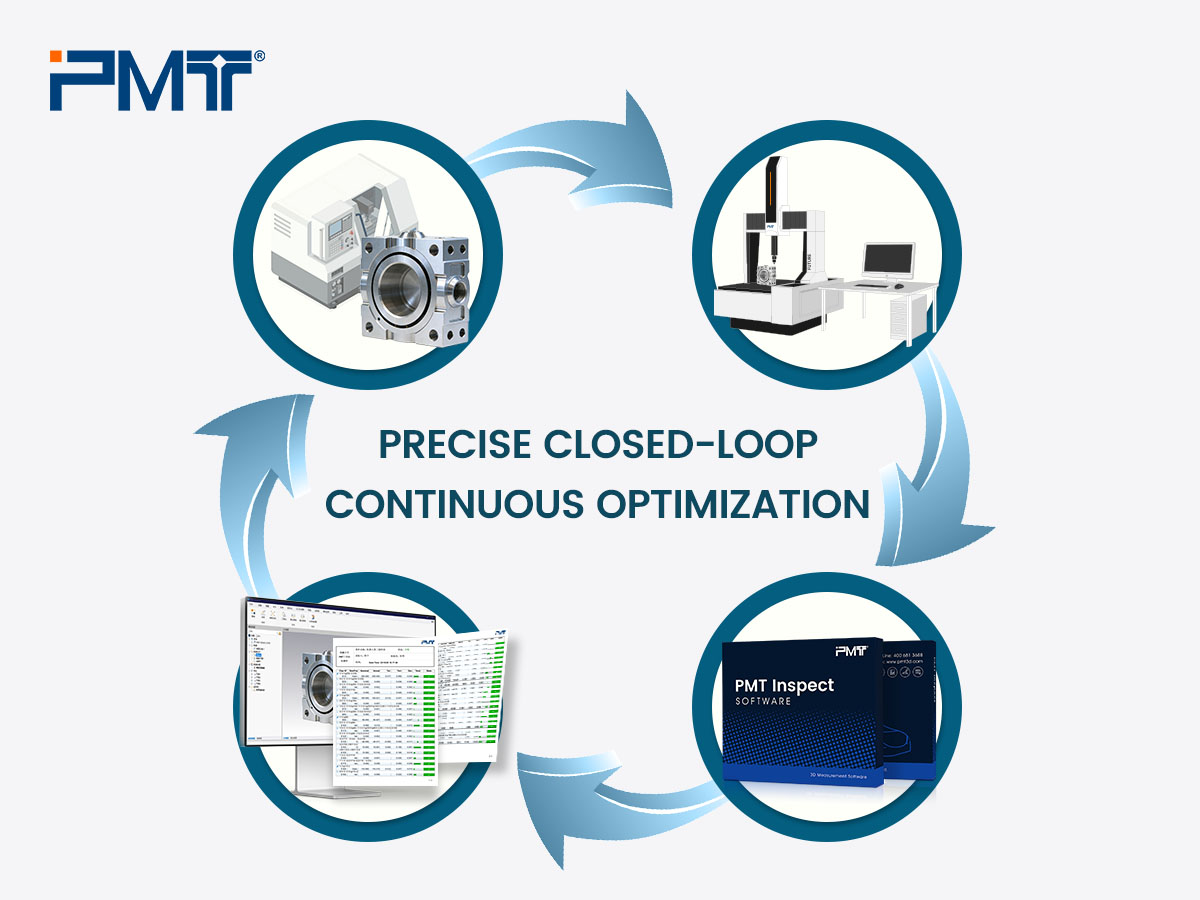
Closed-Loop CNC & CMM Process Optimization
- Hardware-Software Integration & Data Acquisition
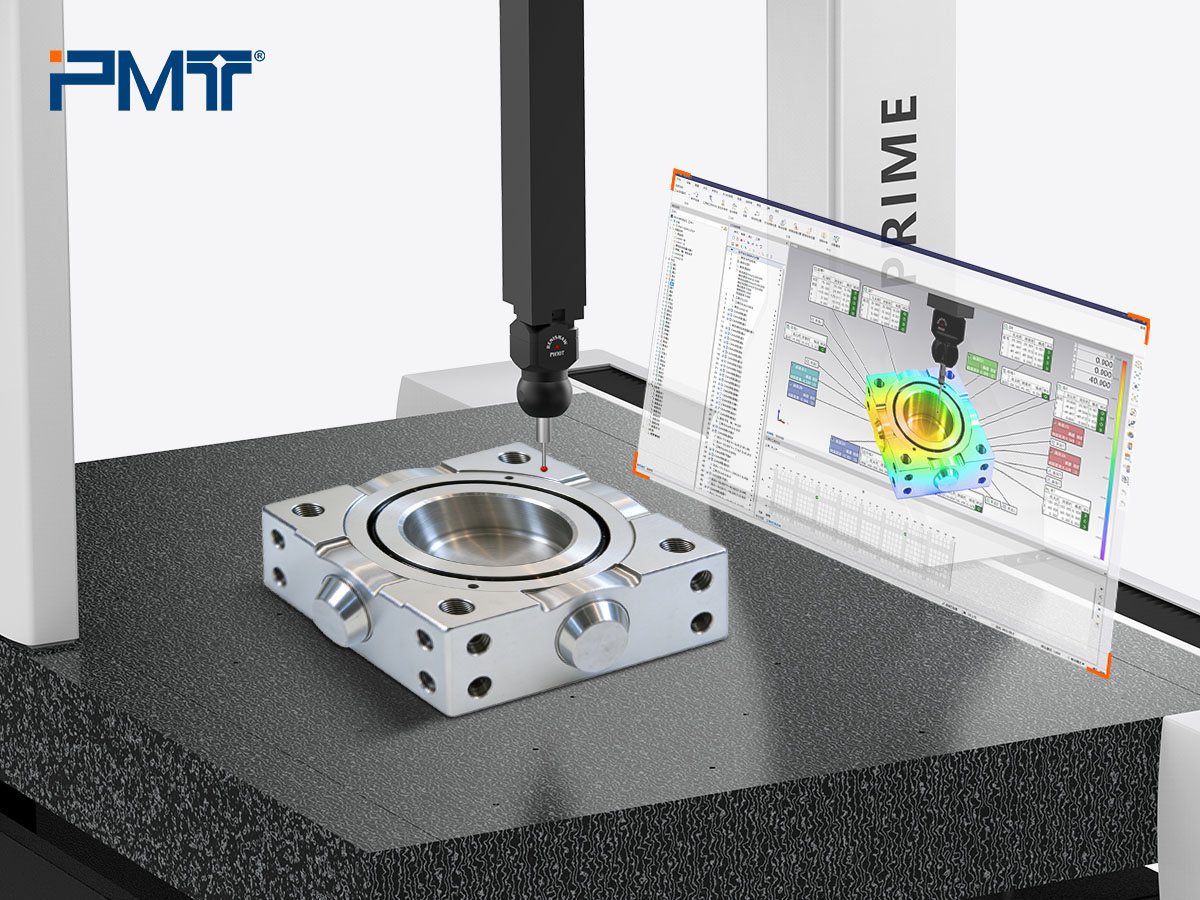
CNC machines precisely transform raw materials into finished parts according to design specifications. These parts are then measured with a PMT CMM using PMT INSPECT 3D metrology software. Acquiring 3D coordinate data via touch probes or reverse scanning, this integration provides a reliable foundation for process optimization.
- Report Generation & Deviation Analysis
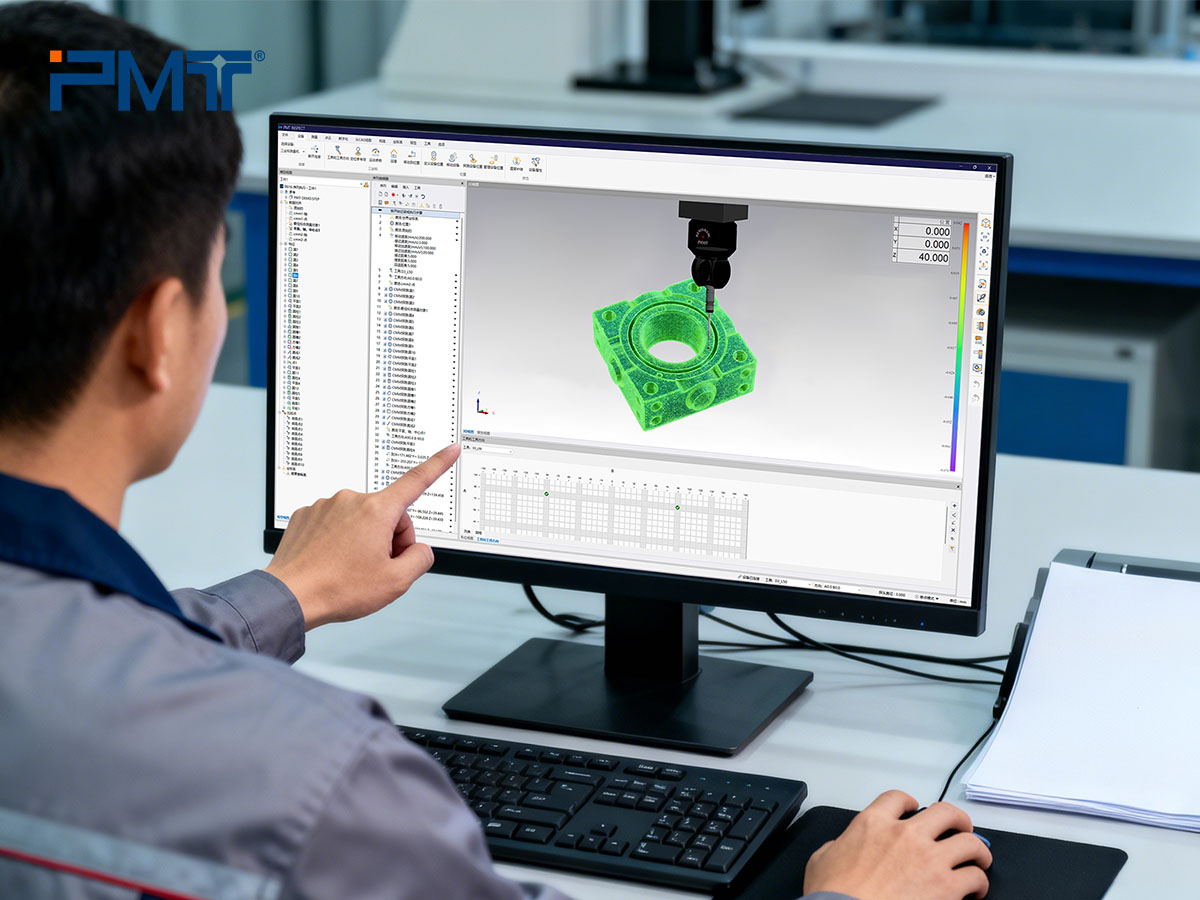
Operators analyze inspection data by constructing geometric features or aligning point clouds with the original CAD model. This process identifies dimensional deviations and potential quality risks—such as fixture misalignment or tool wear—enabling both verification and root-cause analysis.
- CNC Machining Process Optimization
Deviations identified by the PMT CMM are used to refine CNC programs or adjust parameters, such as fixture alignment or tool replacement, enabling precise and efficient machining optimization.
- Continuous Improvement Loop
After adjustments, newly produced parts are inspected again by the CMM. Comparing pre- and post-optimization data verifies the effectiveness of adjustments, completing the loop and establishing a cycle of continuous improvement.
Conclusion
Achieving sustainable manufacturing efficiency requires real-time, data-driven processes, but lasting success also depends on a stable, long-term quality control system. Integrating PMT CMMs with CNC machines extends far beyond basic inspection or production monitoring. By continuously collecting and analyzing measurement data and feeding it back to the CNC system, this synergy enables ongoing process optimization and ensures consistent product quality. The result is not only enhanced operational efficiency but also a compliant, sustainable manufacturing control system—helping enterprises stay ahead in today’s competitive market.
The post CMM & CNC: Building a Closed-Loop Quality Control System appeared first on PMT Technologies.
]]>The post How PMT Portable Measuring Arms Support Engine Quality Inspection appeared first on PMT Technologies.
]]>As a result, engine inspection has gradually moved beyond basic dimensional checks toward more comprehensive and precise quality control. However, traditional measurement methods often struggle to balance accuracy, efficiency, and on-site adaptability. Against this backdrop, portable measuring arms, also known as portable CMMs, are increasingly adopted in engine manufacturing environments to support flexible, reliable, and real-time inspection.
Core Challenges: Limitations of Traditional Engine Inspection Methods
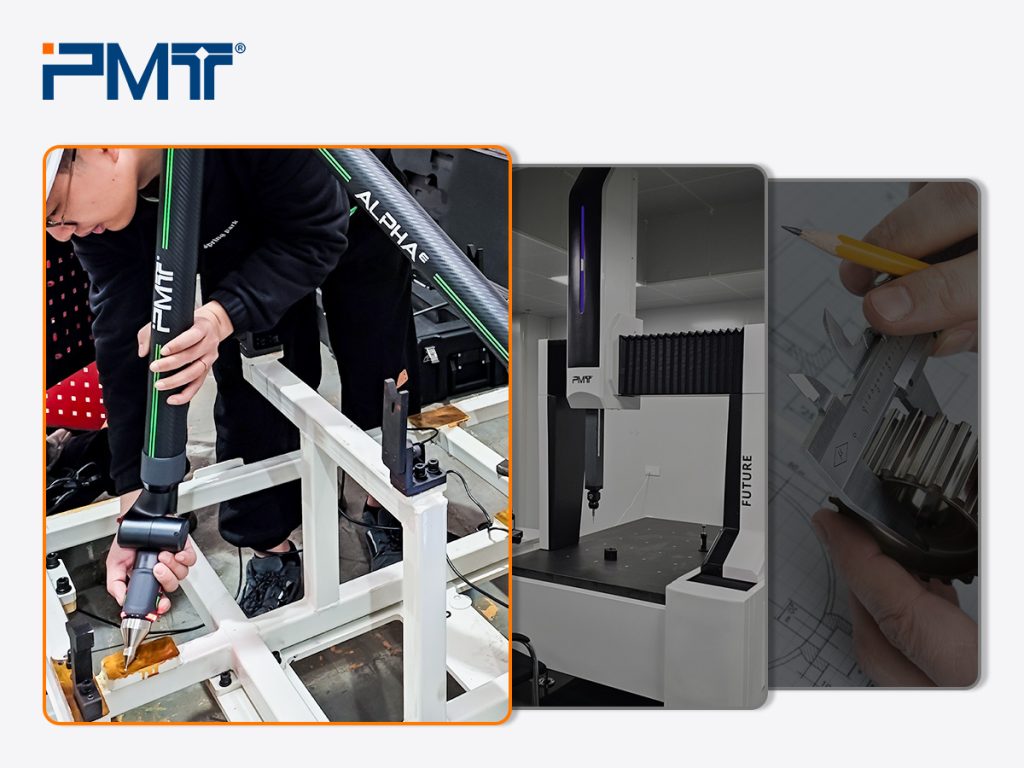
To better understand the value of portable measurement, it is first necessary to look at the limitations of conventional inspection approaches. In many factories, handheld tools such as calipers and micrometers are still used for parts with relatively low accuracy requirements. While these tools are easy to operate, they rely heavily on operator experience and are difficult to standardize across multiple inspectors. More importantly, they cannot fully capture three-dimensional geometric features.
On the other hand, fixed coordinate measuring machines (CMMs) offer high accuracy but require parts to be transported to temperature-controlled inspection rooms. For large or heavy engine components, this process is time-consuming and labor-intensive. In addition, repeated lifting and repositioning may introduce new risks and delays into the production flow.
Because of these constraints, traditional inspection methods often struggle to meet the evolving needs of modern engine manufacturing. In contrast, portable CMM solutions provide a practical alternative by bringing precision measurement directly to the production site.
Why Portable Measuring Arms Fit Engine Inspection Needs
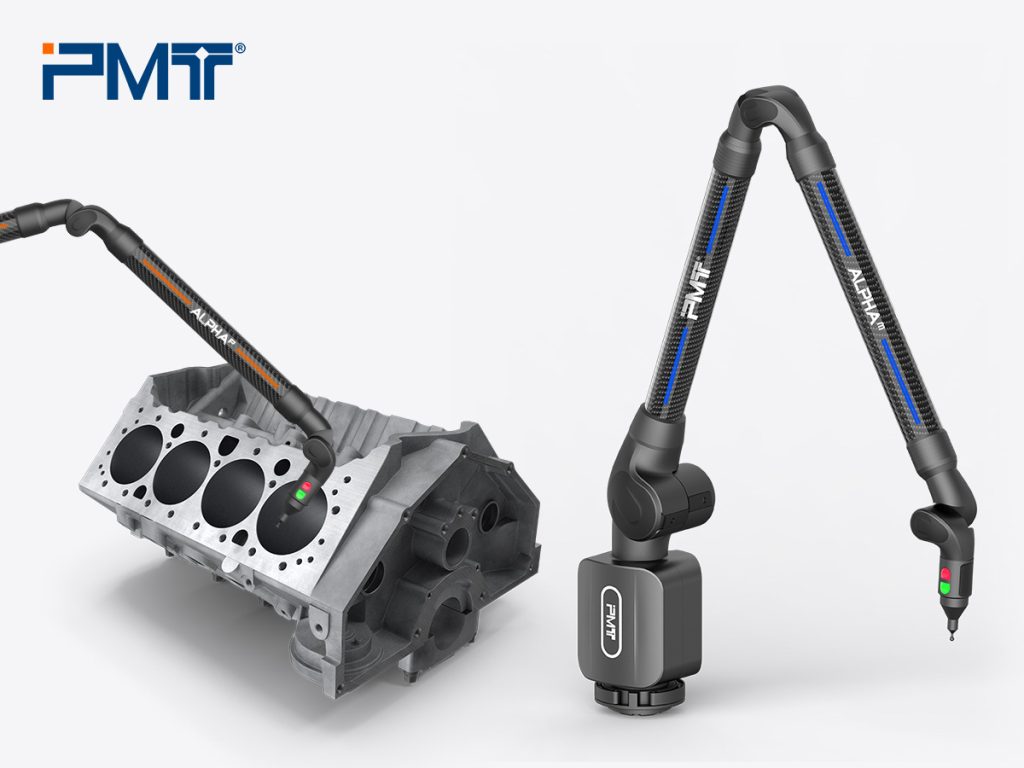
At this point, portable measuring arms demonstrate clear advantages in engine quality inspection. With lightweight structures, flexible articulation, and wireless operation, they can be deployed next to production lines or inside confined spaces without special foundations or environmental control.
PMT portable measuring arms combine stable measurement accuracy with flexible installation, enabling inspectors to perform on-site measurement without moving large engine components. Supported by PMT INSPECT measurement software, inspection tasks can be standardized, repeatable, and traceable, which helps improve both efficiency and data reliability.
More importantly, portable measuring arms adapt well to the diverse inspection requirements found across different engine types and industries.
Section 3: Typical Engine Inspection Applications
Marine Diesel Engine Compartment Inspection
In the marine industry, diesel engines are usually large in size and difficult to relocate. Moving such components to a fixed CMM is often impractical. In response, PMT portable measuring arms offer a mobile inspection solution that allows measurements to be performed directly inside the engine compartment.
Thanks to a lightweight design and built-in Wi-Fi module, PMT portable CMMs can operate without external cables. Under fully charged conditions, they support long inspection cycles, ensuring continuity during multi-feature and multi-angle measurement tasks. Inspectors can efficiently evaluate cylinder bore diameters, distances, and other tolerance-related features without interrupting the workflow.
In addition, PMT INSPECT software supports batch inspection functions, allowing the same measurement program to be applied to multiple engines of the same model. This significantly improves inspection efficiency and consistency in marine engine production.
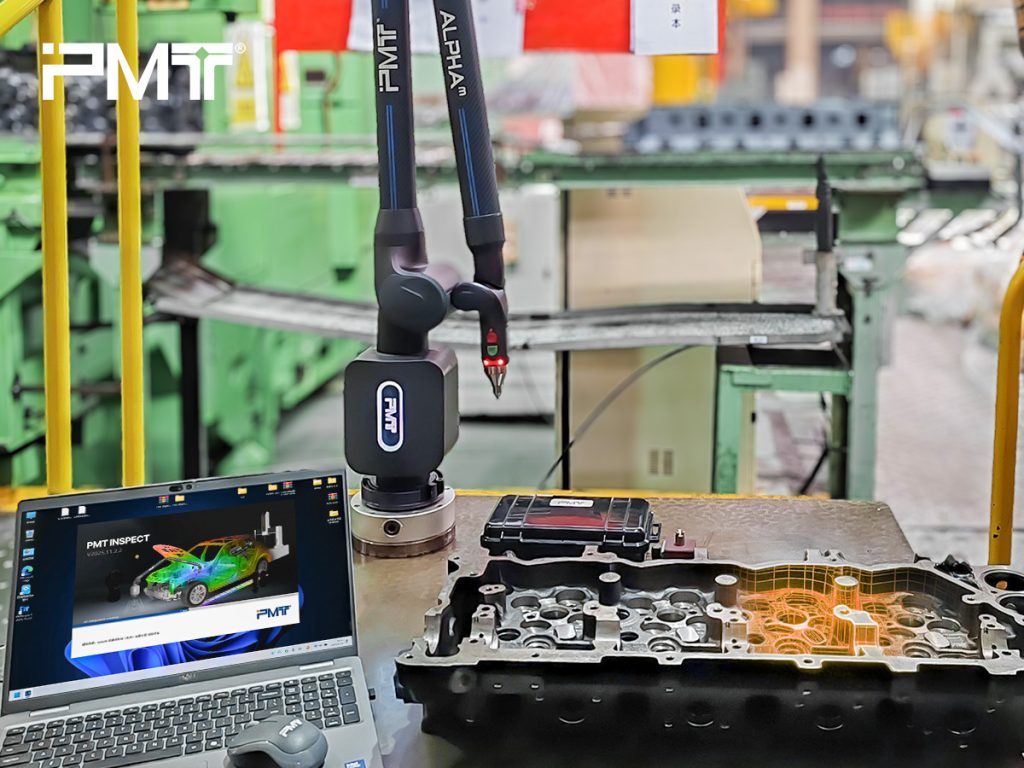
Automotive Engine Block Inspection
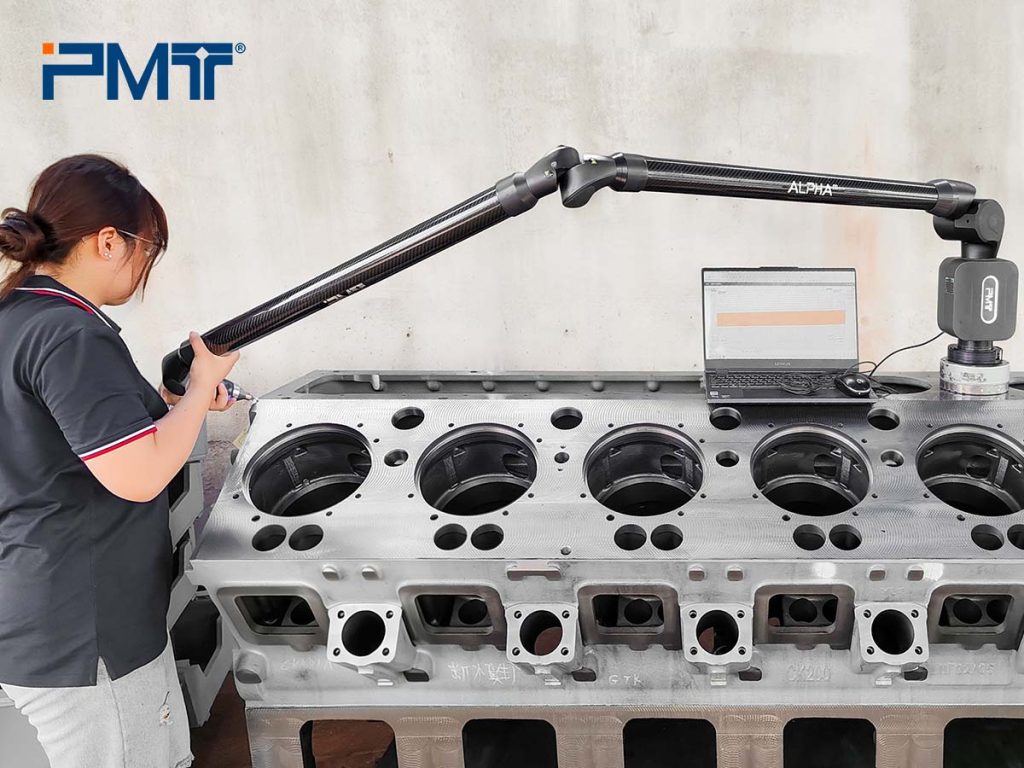
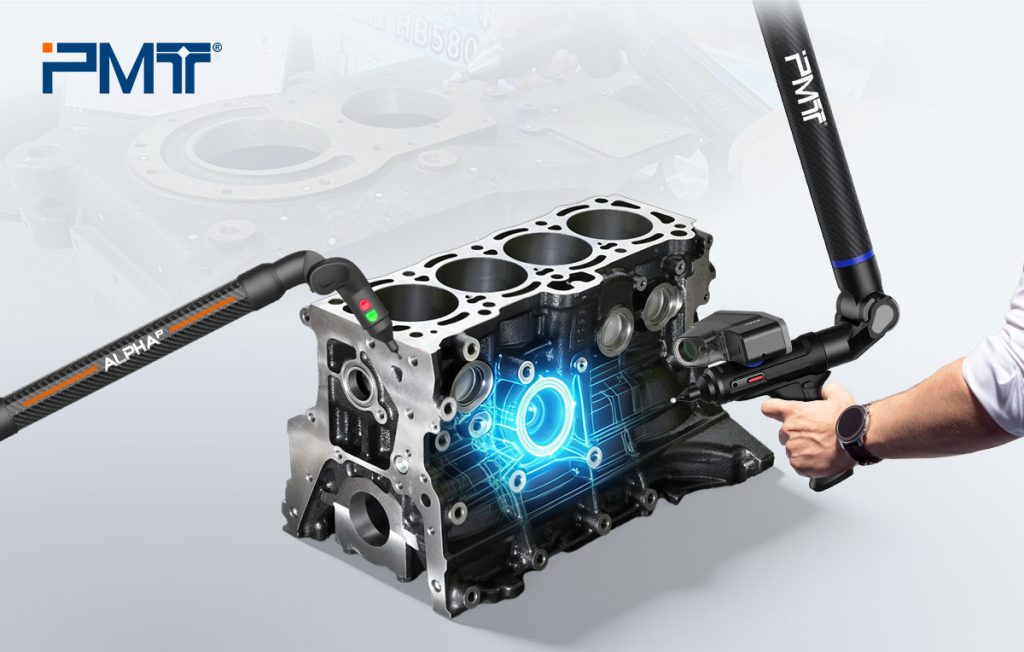
Moving from marine engines to automotive manufacturing, engine blocks form the structural foundation of the engine system. Key features such as bearing bores, hole positions, flatness of sealing surfaces, and distances between locating pins directly influence engine assembly and long-term stability.
In this scenario, portable measuring arms can be placed next to the production line to perform rapid inspections. After collecting dimensional data, inspectors can compare results with design tolerances in real time. This immediate feedback helps identify deviations early and supports timely process adjustment, improving the responsiveness of quality control in automotive engine production.
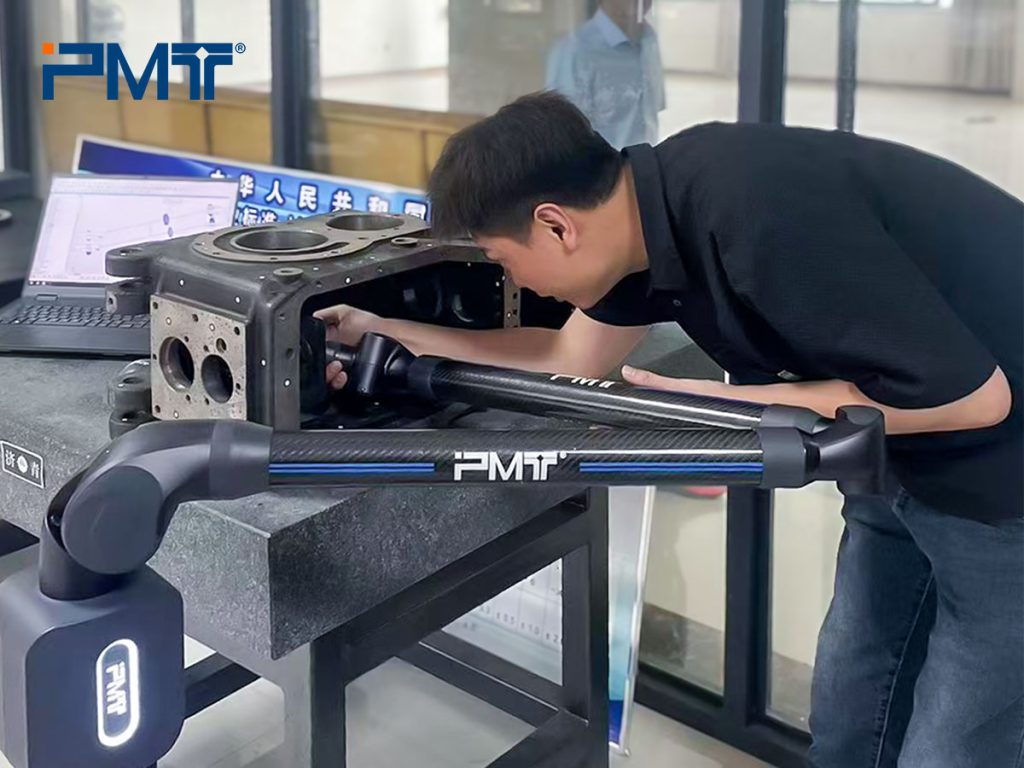
Agricultural Machinery Engine Housing Inspection
In agricultural equipment such as tractors, engine housings are often heavy and complex, with deep internal holes that are difficult to access using conventional tools. Portable measuring arms address this challenge by enabling in-place measurement without dismantling the component.
With flexible joints and optional extension probes, PMT portable CMMs can reach deep into engine cavities to accurately measure hole diameters, roundness, and positional relationships relative to mounting surfaces. This capability allows inspectors to complete comprehensive checks even in confined internal structures.
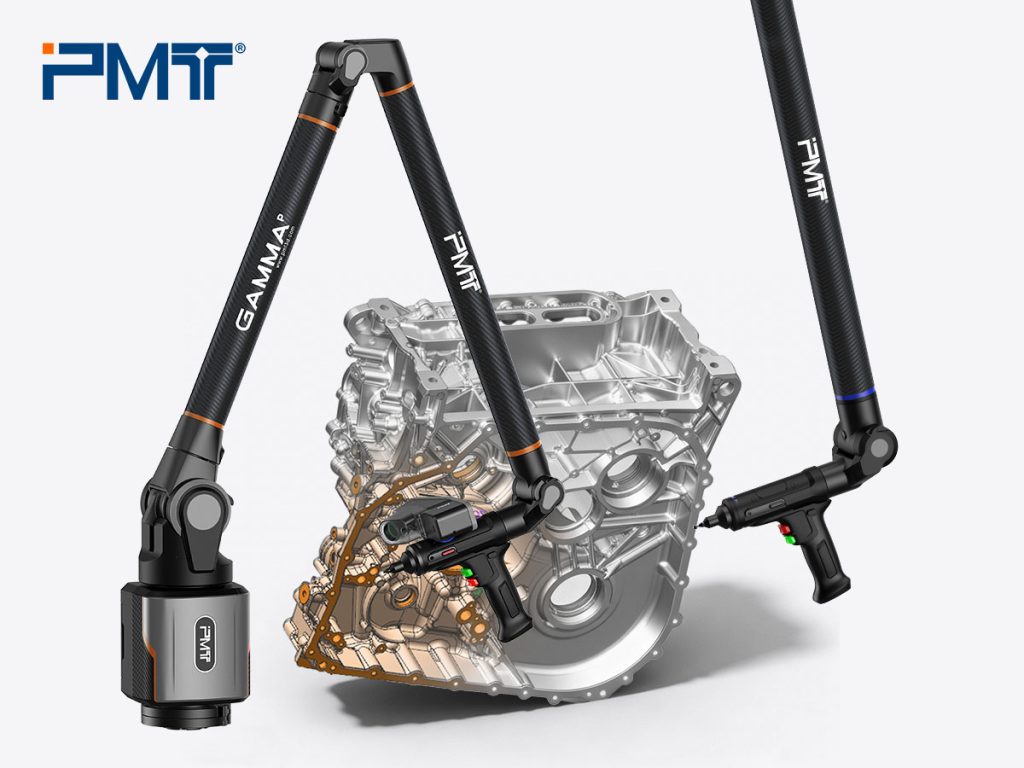
New Energy and Hybrid Engine Cover Measurement
In new energy and hybrid power systems, engine covers play a critical role in installation accuracy and sealing performance. PMT portable measuring arms equipped with both tactile probing and scanning capabilities support full-size inspection of these components.
Using a touch probe, inspectors can verify locating pins and critical interface dimensions. When combined with a scanning head, complex surfaces and contours can be captured efficiently for further analysis. This integrated approach supports both dimensional verification and design optimization, making portable measuring arms a valuable tool in new energy engine inspection.
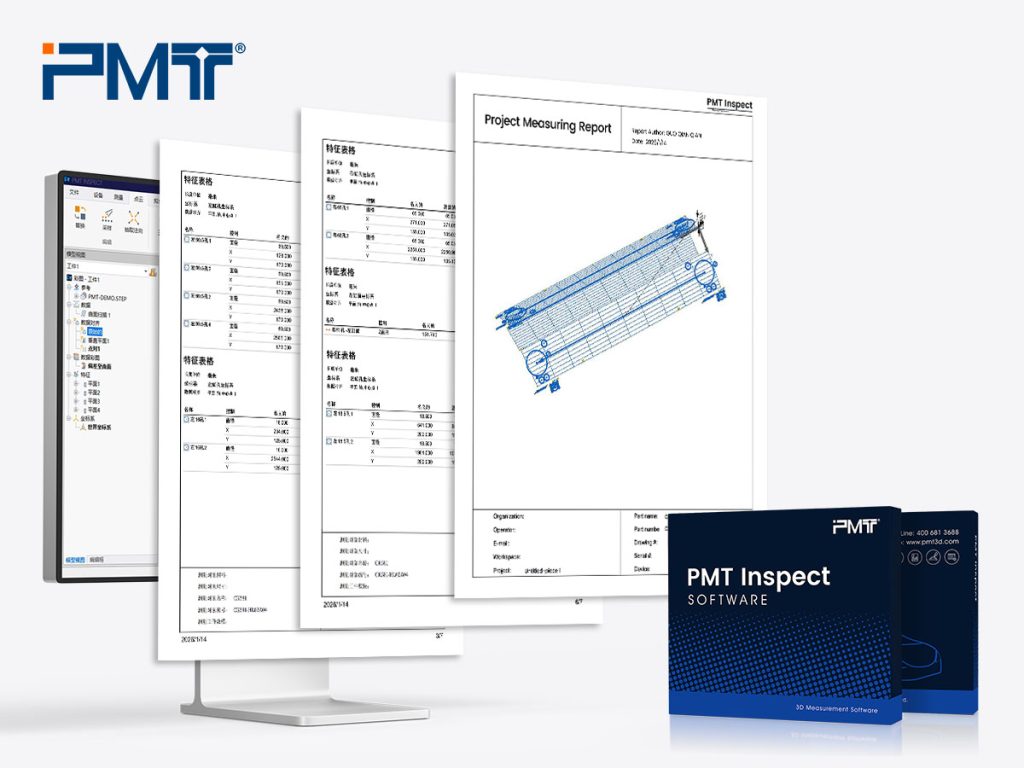
Section 4: Software Integration and Process Standardization with PMT INSPECT
While hardware flexibility is essential for engine inspection, software capability ultimately determines whether measurement results can be effectively transformed into production value. In this regard, PMT portable measuring arms are deeply integrated with PMT INSPECT 3D measurement software, forming a unified platform that supports standardized inspection workflows and data-driven quality management.
First, PMT INSPECT enables inspectors to build repeatable measurement programs based on part drawings and CAD models. Once established, these programs can be reused across different shifts, operators, or production batches. This significantly reduces dependence on individual experience and ensures that inspection methods and evaluation criteria remain consistent throughout the production lifecycle.
Second, during the inspection process, measurement results are displayed in real time, allowing deviations to be identified immediately. This real-time feedback supports faster decision-making on the shop floor, helping engineers adjust machining parameters or assembly processes before issues propagate further downstream.
In addition, PMT INSPECT supports visual reports and statistical analysis, including SPC-related functions. By analyzing dimensional trends over time, manufacturers gain better insight into process stability and quality risks. As a result, inspection shifts from a passive verification step to an active tool for continuous process improvement.
Section 5: From On-Site Measurement to Long-Term Quality Value
Beyond individual inspection tasks, the broader value of portable measuring arms lies in how they reshape quality control strategies. By moving precision measurement from the laboratory to the production site, PMT portable CMMs help manufacturers shorten feedback loops and reduce non-value-added time.
For engine manufacturers dealing with large components, frequent design changes, or multiple product variants, this flexibility is especially critical. A single portable measuring arm can support multiple workstations, production lines, or even external suppliers, maximizing equipment utilization while minimizing infrastructure investment.
At the same time, the combination of tactile probing and optional scanning expands application boundaries—from basic dimensional verification to complex surface analysis and reverse engineering. This makes PMT portable measuring arms suitable not only for routine inspection, but also for prototype validation, process optimization, and quality troubleshooting.
Conclusion: Redefining Engine Inspection with PMT Portable Measuring Arms
In today’s engine manufacturing environment, quality inspection must be accurate, efficient, and adaptable. PMT portable measuring arms meet these requirements by combining stable measurement precision, flexible deployment, and seamless software integration.
Across automotive, agricultural machinery, marine, and new energy industries, PMT portable CMM solutions support key engine inspection tasks—from deep-hole measurement and coaxiality evaluation to large-structure verification and complex surface analysis. By enabling on-site measurement and standardized workflows, they help manufacturers improve responsiveness, reduce rework, and enhance overall product reliability.
If you are looking to upgrade your engine inspection process with a flexible and reliable portable measuring arm solution, PMT is ready to support you.
Contact PMT today to learn how our portable CMM systems and PMT INSPECT software can help you build a more efficient, data-driven quality inspection workflow.
The post How PMT Portable Measuring Arms Support Engine Quality Inspection appeared first on PMT Technologies.
]]>The post Portable CMMs in Medical Device Manufacturing appeared first on PMT Technologies.
]]>At this point, portable CMMs have become an important technology. Unlike traditional fixed CMMs that require stable temperature-controlled rooms, portable devices offer mobility, ease of use, and the ability to measure directly in production environments. This makes them especially suitable for medical manufacturers seeking consistent quality and faster production cycles.
What Are Portable CMMs? Key Features and Measurement Principles
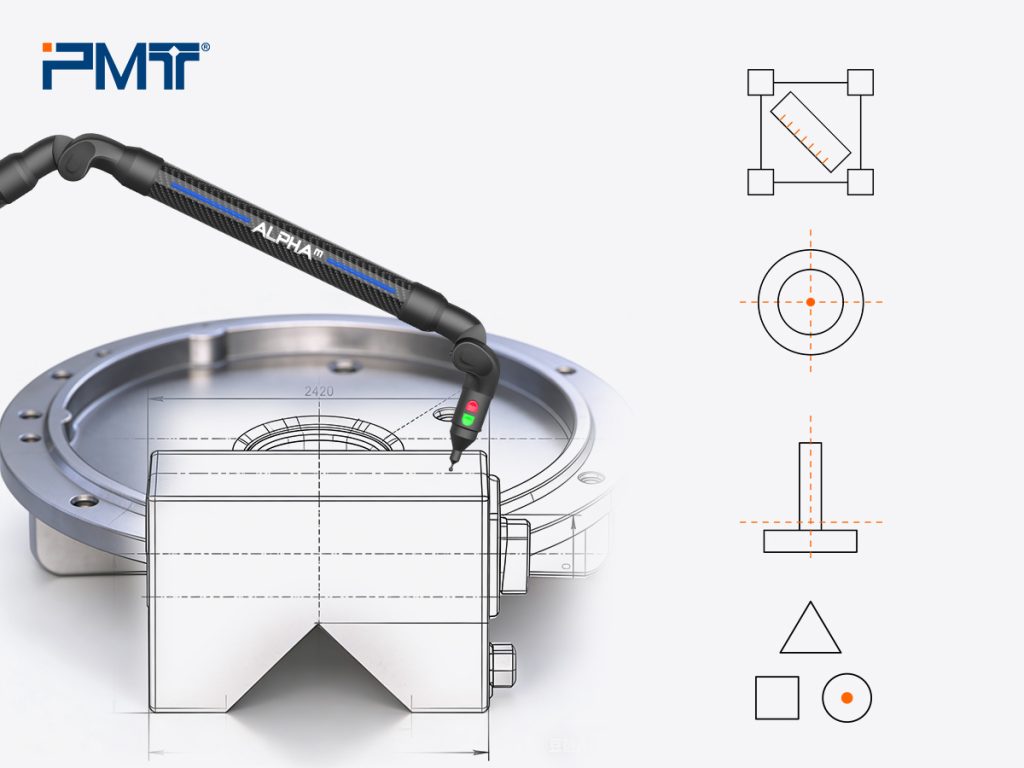
To better understand their value, it is useful to look at what portable CMMs are. A portable CMM is a mobile 3D measuring device, commonly available as a portable measuring arm or paired with a laser scanner. These tools allow operators to capture precise spatial data by touching the surface with a probe or scanning it with a non-contact sensor.
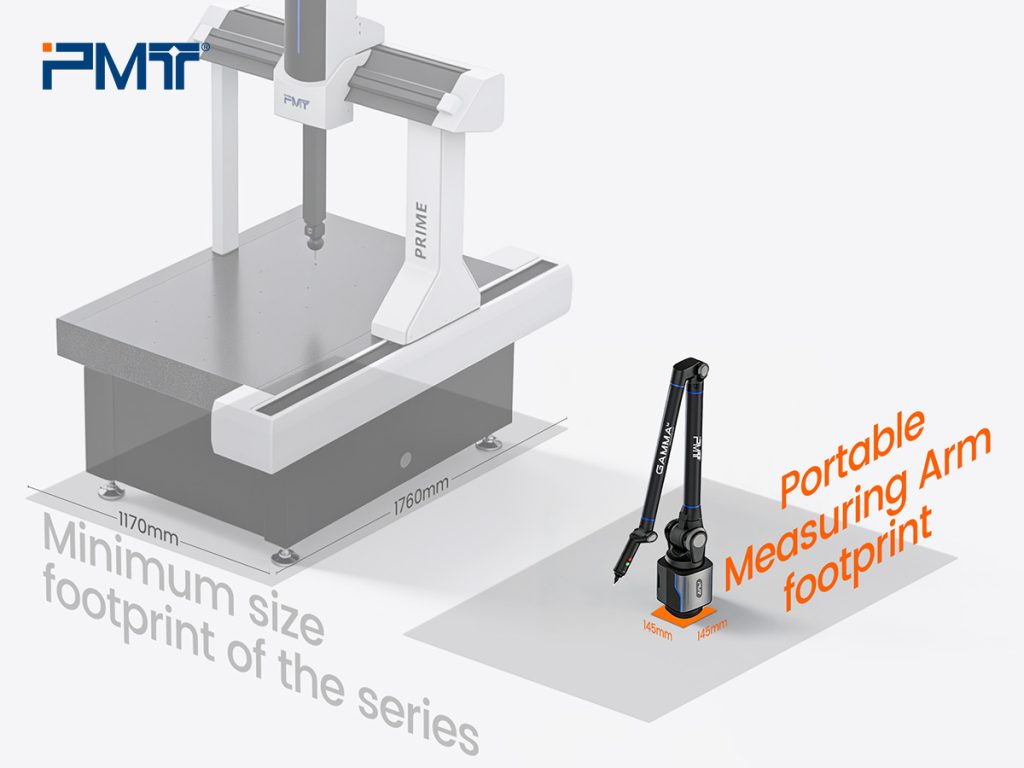
Because portable CMMs do not require a fixed installation or a special measuring room, they can be quickly deployed anywhere on the shop floor. This flexibility reduces downtime, supports multiple workstations, and improves responsiveness during mold validation, part inspection, or product development. In practical medical manufacturing environments, portable measuring arms such as PMT measuring arm?systems are often used to support flexible inspection tasks across different production stages.
Why Portable CMMs Fit Medical Manufacturing Requirements
As medical device manufacturing often involves small batch production, frequent design changes, and strict documentation requirements, portable CMMs align well with these needs. One major advantage is their ability to handle micro-scale components that require precise dimensional control. Whether it is a narrow cavity in a surgical guide or a curved surface on an orthopedic implant, portable CMMs can capture accurate 3D data.
Moreover, the portable CMMs?are not affected by the environment. Their compact structure and easy-to-sanitize surfaces make them suitable for regulated production spaces. The devices also support flexible inspection routines, allowing manufacturers to switch quickly between different product types without resetting a large machine.
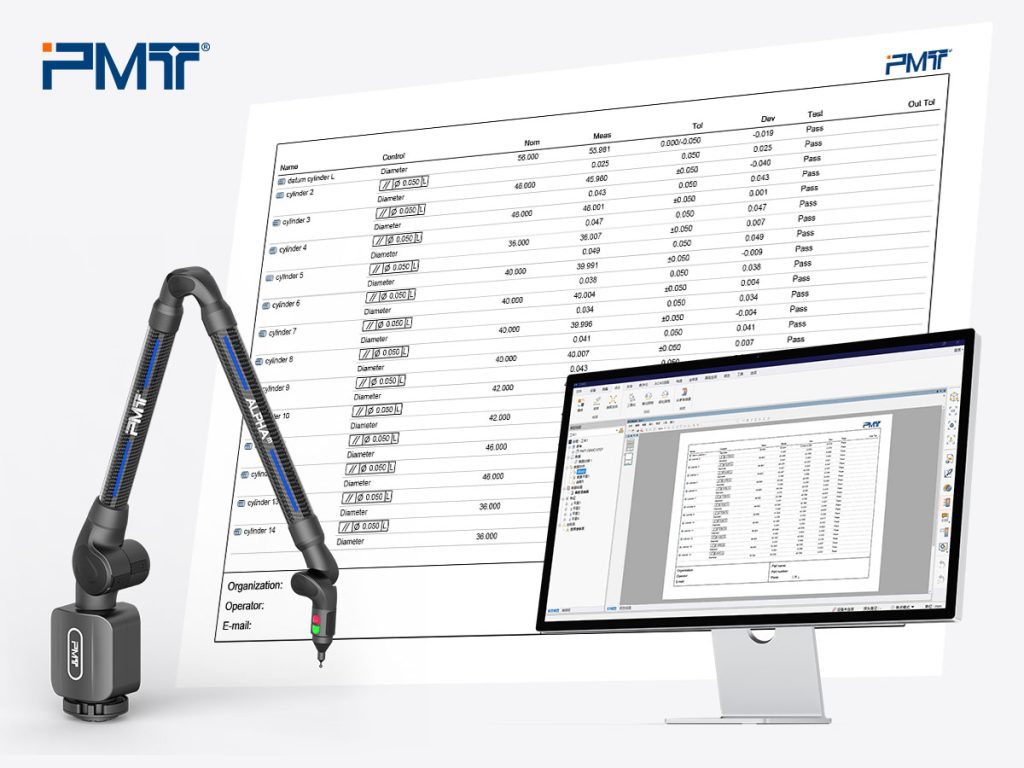
Another reason portable CMMs work well in this field is their strong data traceability. Modern systems store each measurement point, record operator actions, and generate standardized reports that support audits and compliance with international standards such as ISO 13485. For medical companies that must maintain detailed quality records, this documentation capability is critical.
Key Applications of Portable CMMs in Medical Device Production
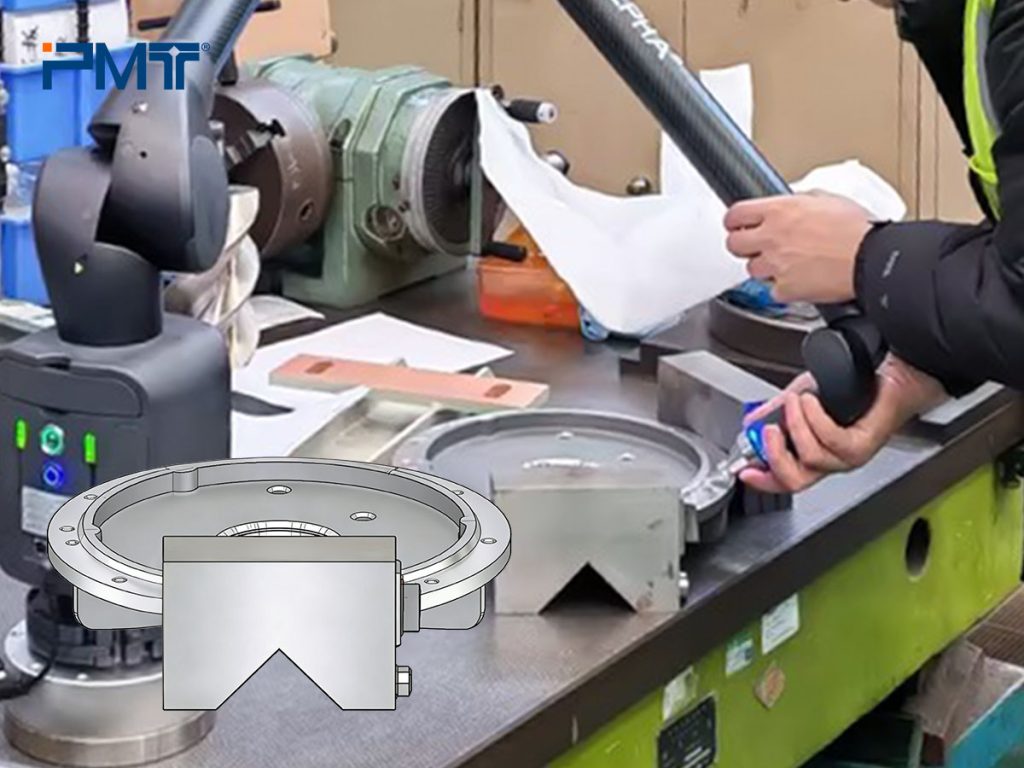
Because medical device manufacturing includes many different processes, portable CMMs play multiple roles throughout the production chain. For example, in precision mold manufacturing, they help verify core, cavity, inserts, and functional surfaces during machining and assembly. Rapid 3D data collection allows manufacturers to detect dimensional deviations early and reduce the risk of rework.
In practice, portable measuring arms like the PMT measuring arm allow engineers to access narrow cavities, deep holes, and complex freeform surfaces commonly found in medical molds and implant components. This capability is particularly valuable when traditional fixed CMMs or manual gauges cannot easily reach hidden features.
Portable CMMs are also widely used in orthopedic implant production. Since hip joints, knee components, and spinal implants have complex freeform surfaces, laser scanning can capture high-density point clouds for accurate comparison with CAD models.
For minimally invasive surgical tools or dental components, portable CMMs help inspect small geometries that require tight tolerances. Their non-contact measurement capability also avoids damage to delicate surfaces.
In addition, during product development and prototype testing, portable CMMs shorten the iteration cycle. Engineers can quickly verify design changes, perform fit-and-function analysis, and reduce delays between prototype versions.
Portable CMMs vs Traditional CMMs: A Practical Comparison
Although both types of CMMs provide precision measurement, their strengths differ. Portable CMMs offer mobility and ease of use, making them ideal for workshop inspection, mold validation, and real-time analysis. They allow operators to measure large parts or assembled products without moving them to a fixed room.
Traditional CMMs, on the other hand, deliver ultra-high accuracy under strictly controlled conditions. However, they require dedicated space, stable temperature, and trained operators, making them less convenient for flexible medical production environments.
When comparing cost, portable CMMs generally require lower investment in infrastructure. They do not rely on a fixed machine room and can serve multiple production lines. Their adaptable measurement range also supports wide product variation—an advantage in medical manufacturing where each project may differ in size or complexity.
Overall, portable CMMs provide a balance between precision, flexibility, and cost-effectiveness that matches the needs of modern medical plants.
How Portable CMMs Improve Quality Control and Workflow Efficiency
Beyond flexibility, portable CMMs significantly enhance quality control. Laser scanning systems can generate dense point clouds that allow engineers to compare surfaces with the original CAD model within seconds. This helps identify deviations in dimensions, roundness, flatness, or contour shape.
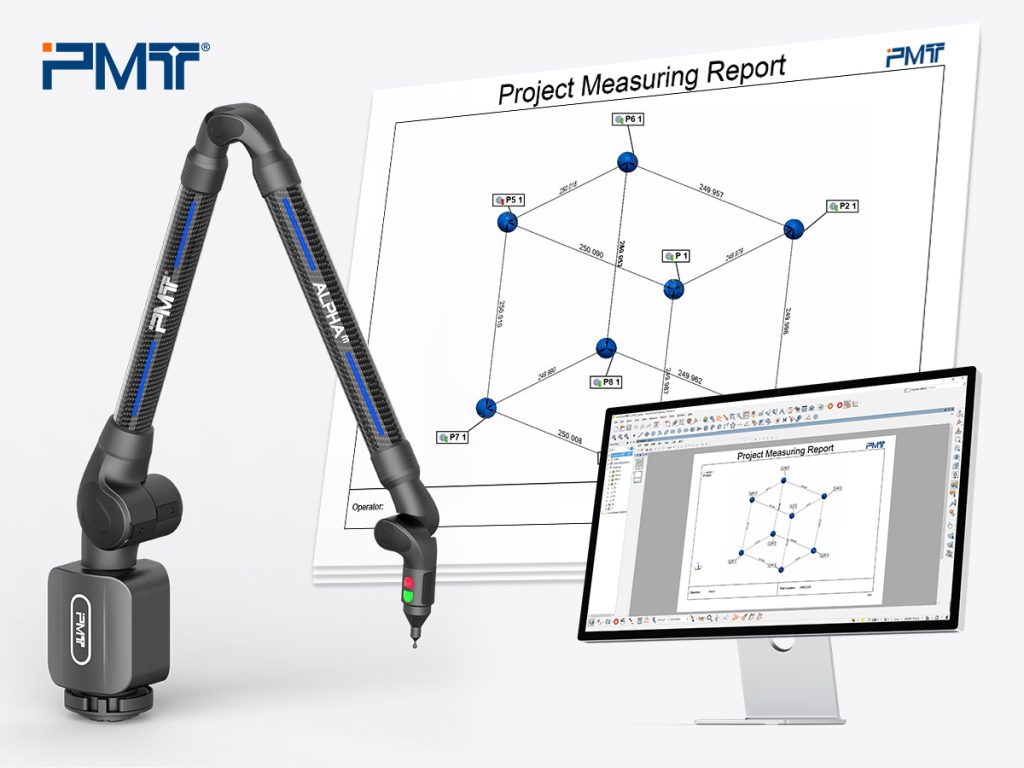
Additionally, portable CMMs support a complete digital workflow. From measurement collection to data analysis and reporting, every step can be automated or standardized. For example, PMT measuring arm systems combined with inspection software enable fast data acquisition, CAD comparison, and standardized report generation directly on the shop floor, reducing reliance on external metrology labs.
By supporting on-site verification and fast measurement cycles, portable CMMs also shorten production lead times. Operators can measure molds immediately after machining, check assembly accuracy on the line, or validate final parts before packaging—without sending them to a metrology lab. This improves response time and reduces overall manufacturing costs.
Choosing the Right Portable CMM for Medical Manufacturing
Because each medical manufacturer has different workflows and product types, selecting the right portable CMM requires considering several factors. First, the measurement range should match the size of the workpieces, whether they are small surgical tools or larger orthopedic molds. Second, accuracy and repeatability must meet industry requirements.
Manufacturers should also consider whether they need probe-based measurement, laser scanning, or a hybrid solution. Probe systems are suitable for high-accuracy single-point measurements, while scanning is ideal for complex surfaces and full-shape analysis.
Software capability is another key factor. A strong platform should support GD&T analysis, generate automatic reports, handle CAD data, and offer stable data management functions. Many manufacturers evaluate portable measuring arms, such as PMT measuring arm solutions, based on software compatibility, accuracy stability, and long-term technical support, especially in regulated medical environments.
Conclusion: Portable CMMs as a Catalyst for Quality and Compliance
In summary, portable CMMs have become an essential tool in medical device manufacturing. Their ability to deliver precise measurements, adapt to flexible workflows, and support regulatory requirements helps manufacturers improve efficiency and maintain consistent product quality. As the industry continues to evolve toward greater customization and faster development cycles, portable CMM technology will continue to play a central role in supporting accurate, reliable, and compliant production processes.
If you are looking for a trusted portable CMMs supplier, PMT provides high-quality measurement solutions designed for demanding medical applications. Contact PMT to learn how portable CMMs can enhance your inspection efficiency and product quality.
The post Portable CMMs in Medical Device Manufacturing appeared first on PMT Technologies.
]]>The post Ultimate Guide: How to Use Leapfrog with Measuring Arm for Large Parts appeared first on PMT Technologies.
]]>
What Is Leapfrog?
- A part moves during measurement, requiring data correlation before and after the move.
- A part exceeds the machine’s range, requiring segmented measurement.
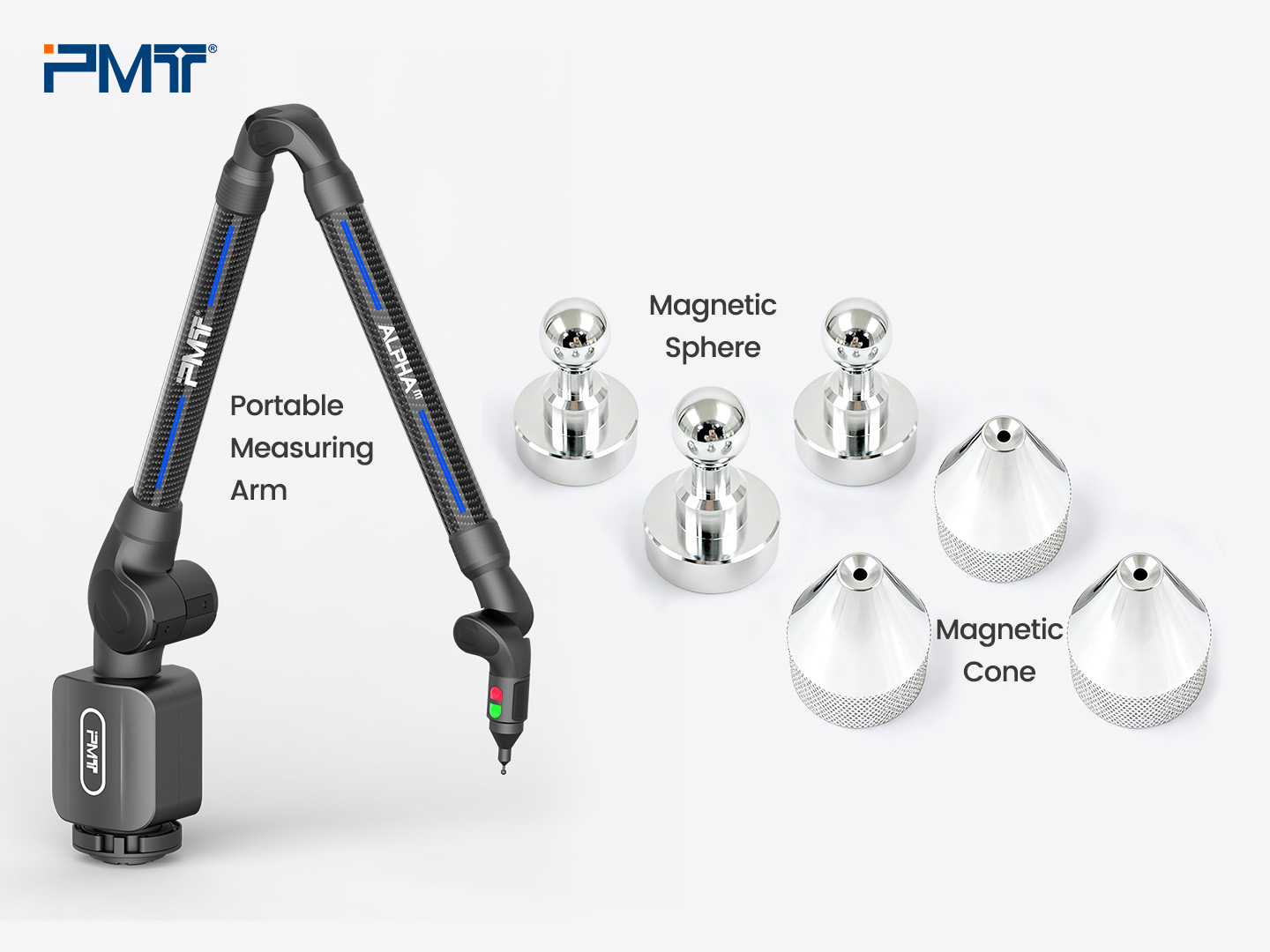
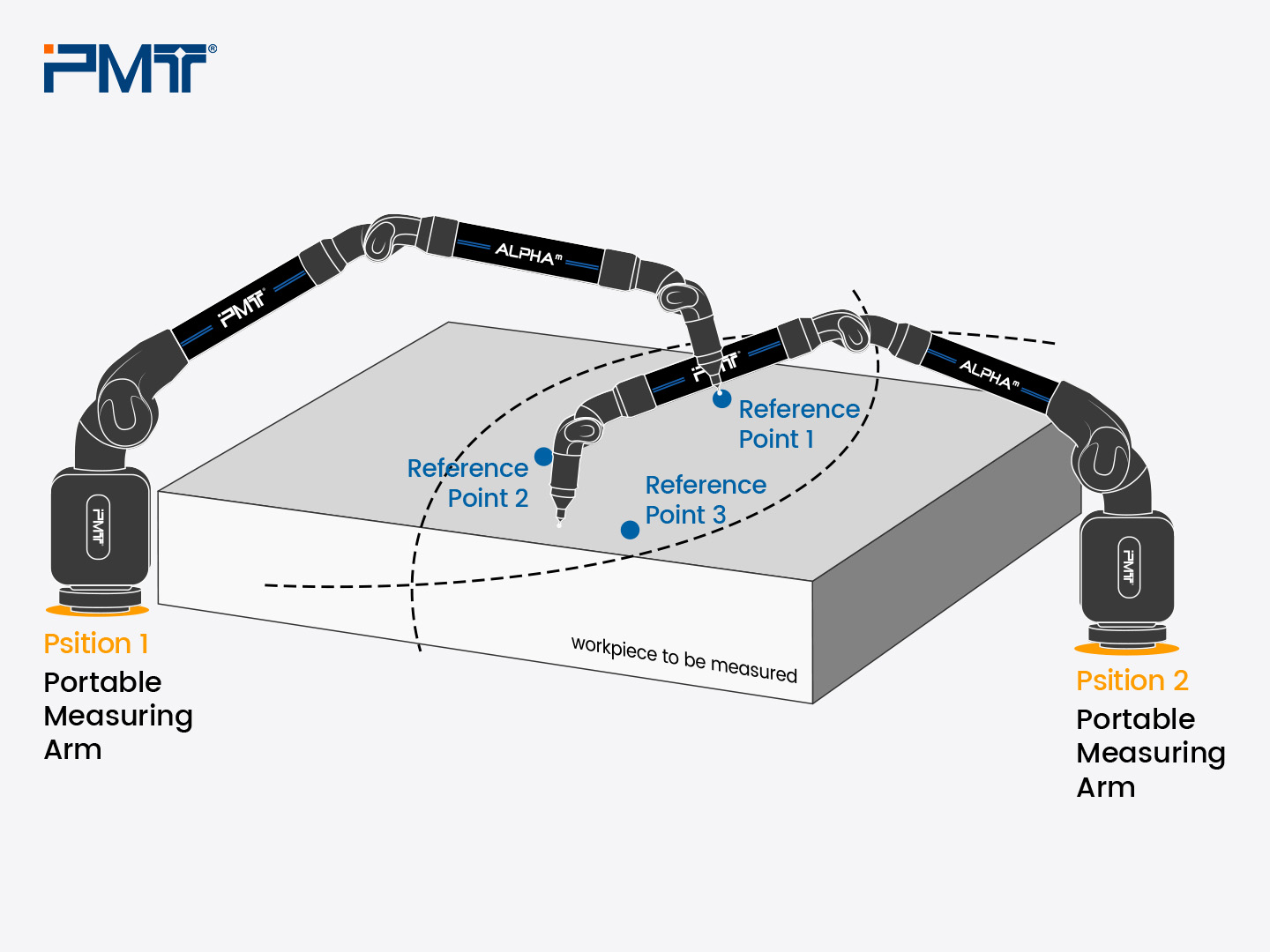
By using leapfrog, you can effectively extend the working volume of the measuring arm. The arm is relocated between measurement positions, and the data is integrated into one unified coordinate system, which ensures seamless, accurate measurements across multiple positions.
How Does Leapfrog Work?
The measuring arm offers great flexibility, enabling measurement in narrow spaces and making it ideal for on-site applications and mass production verification. When combined with leapfrog, the portable arm becomes even more versatile, expanding its operability.
Typical applications include:
- Measuring large molds across different regions.
- Outer contour and assembly measurements of vehicle body structures.
- Inspection of large equipment that cannot be moved during online production.
- Measuring aircraft fuselages and tight spots within equipment.
Step-by-Step: How to Perform Leapfrog Measurement
I. Preparation: Setting Up Reference Points
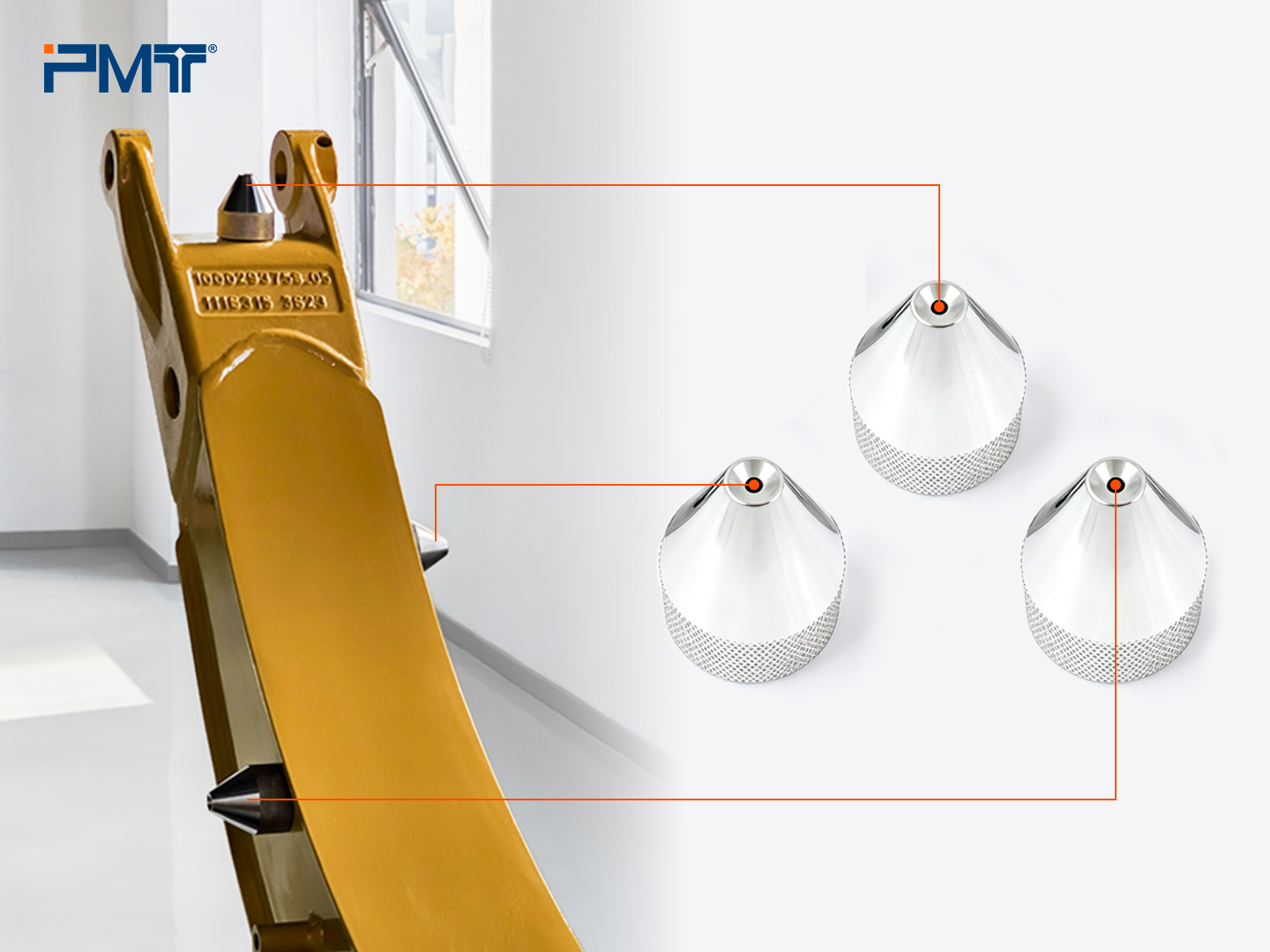
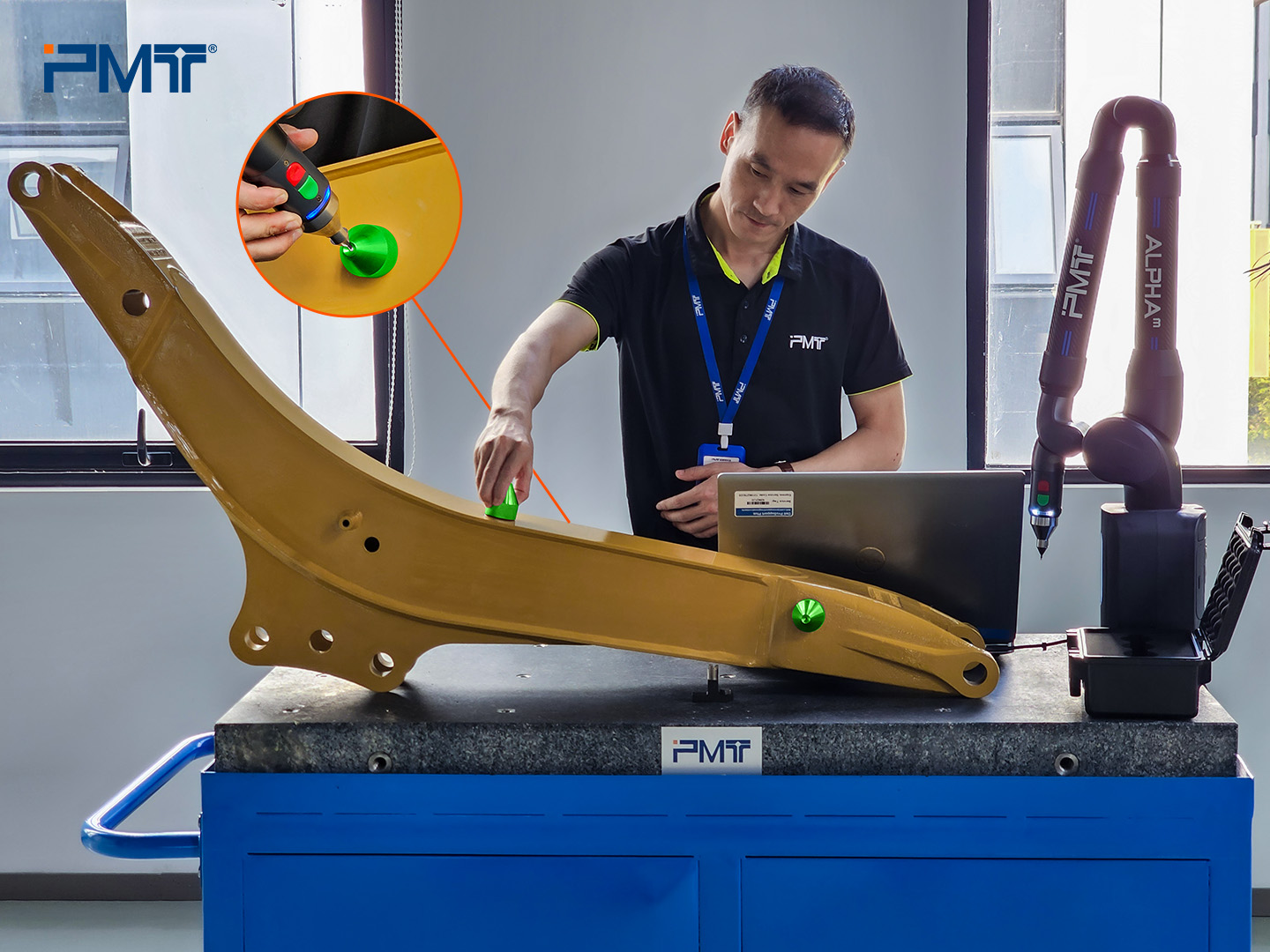
- Mensurability: Points must be measurable from both initial and subsequent positions.
- Dispersibility: Points should be evenly distributed.
- High Precision: Choose points corresponding to high-precision features (e.g., holes, spheres).
- Rigidity: Ensure that cones are firmly fixed.
B. Secure the measuring arm at Position 1.
II. Formal Leapfrog Procedure
A. Initial Leapfrog
a. Establish the Coordinate System
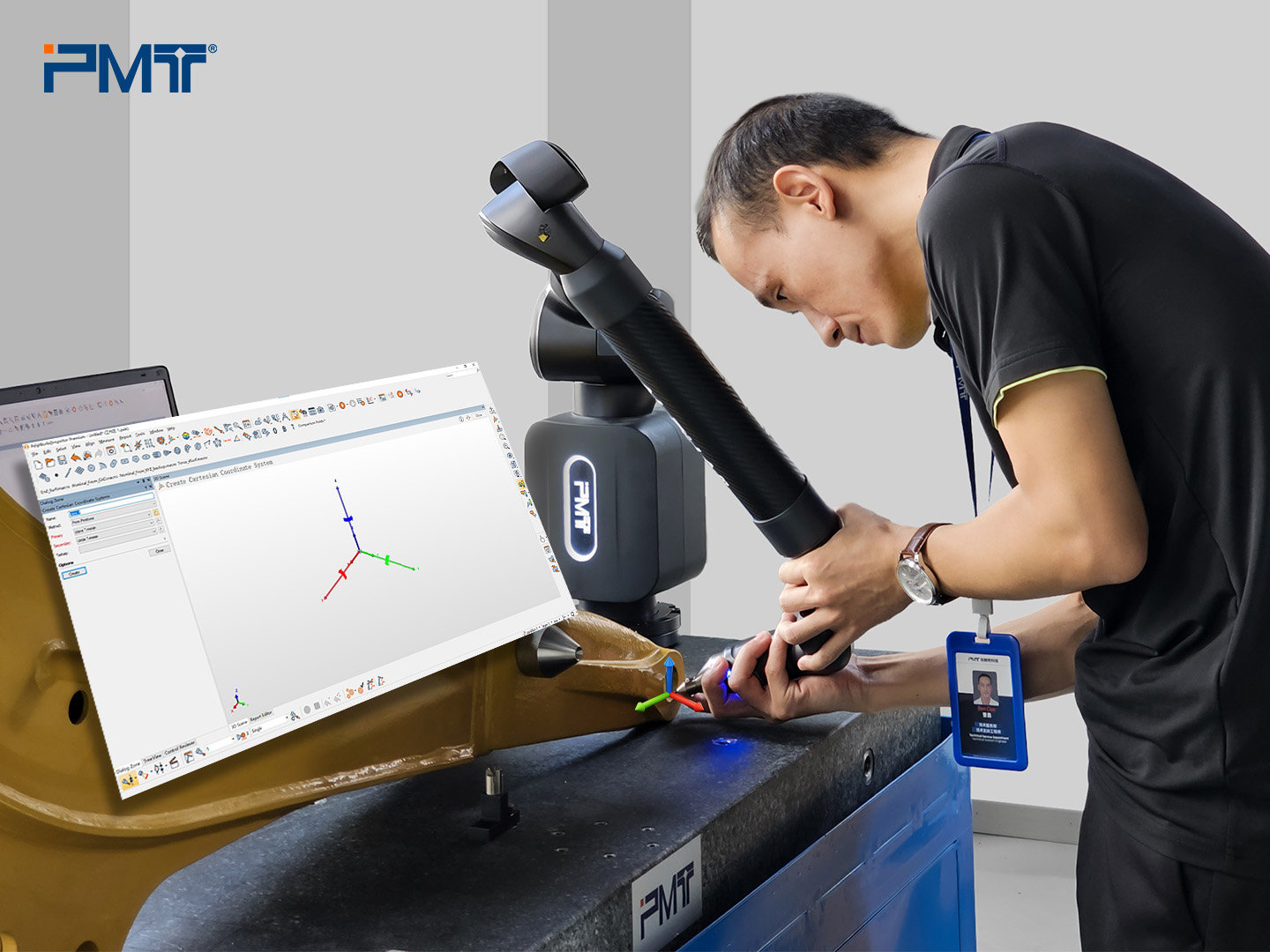
Using Position 1 as the origin to establish the coordinate system.
b. Feature Capture
Probe all required features at Position 1.
c. Define Position Target
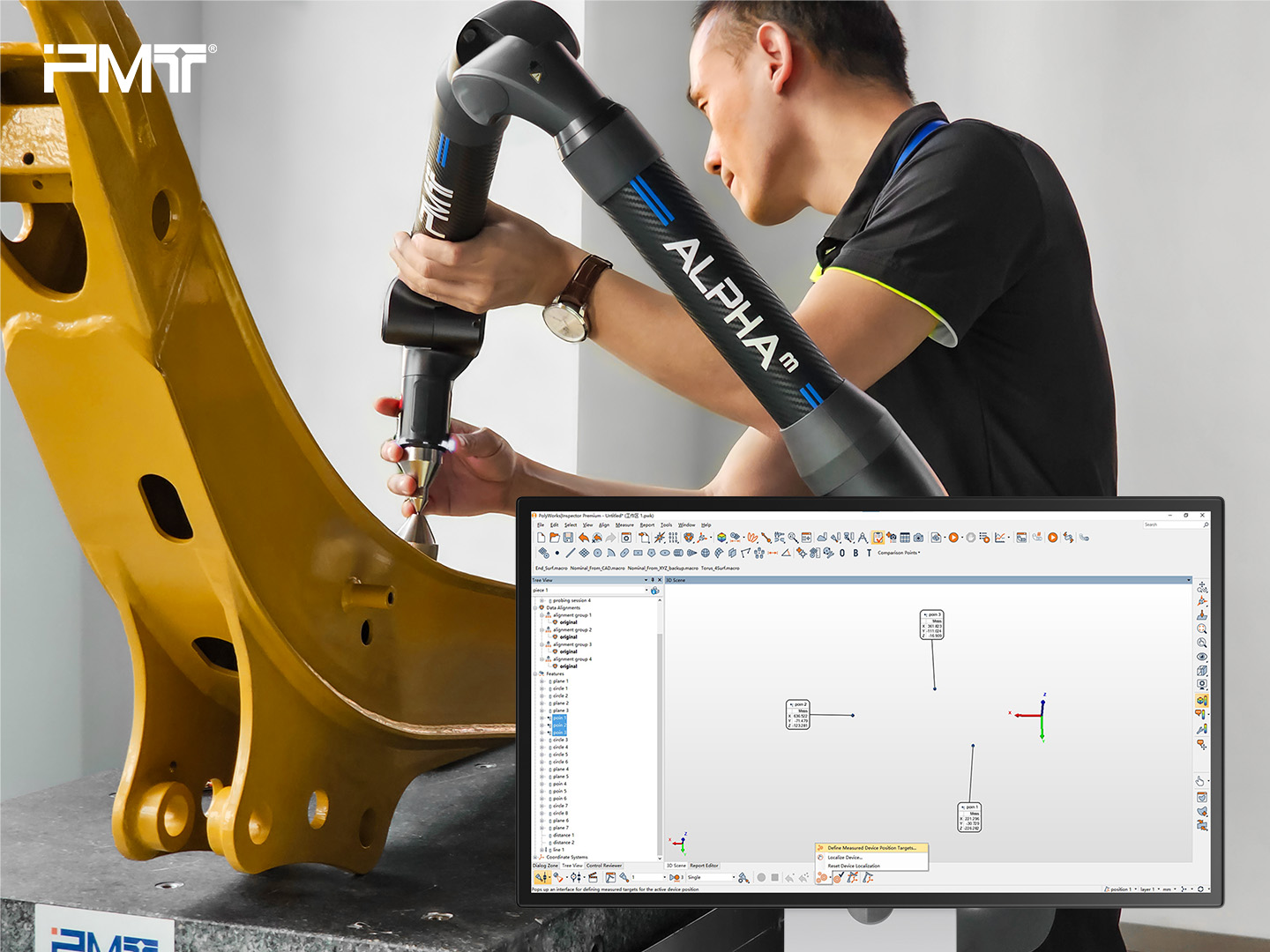
In the software, select “Define Measured Device Position Targets”, then probe Points 1-3. Click “Move Device” to relocate the arm to Position 2 and re-probe the points. The software calculates the leapfrog deviations.
d. Re-check Features
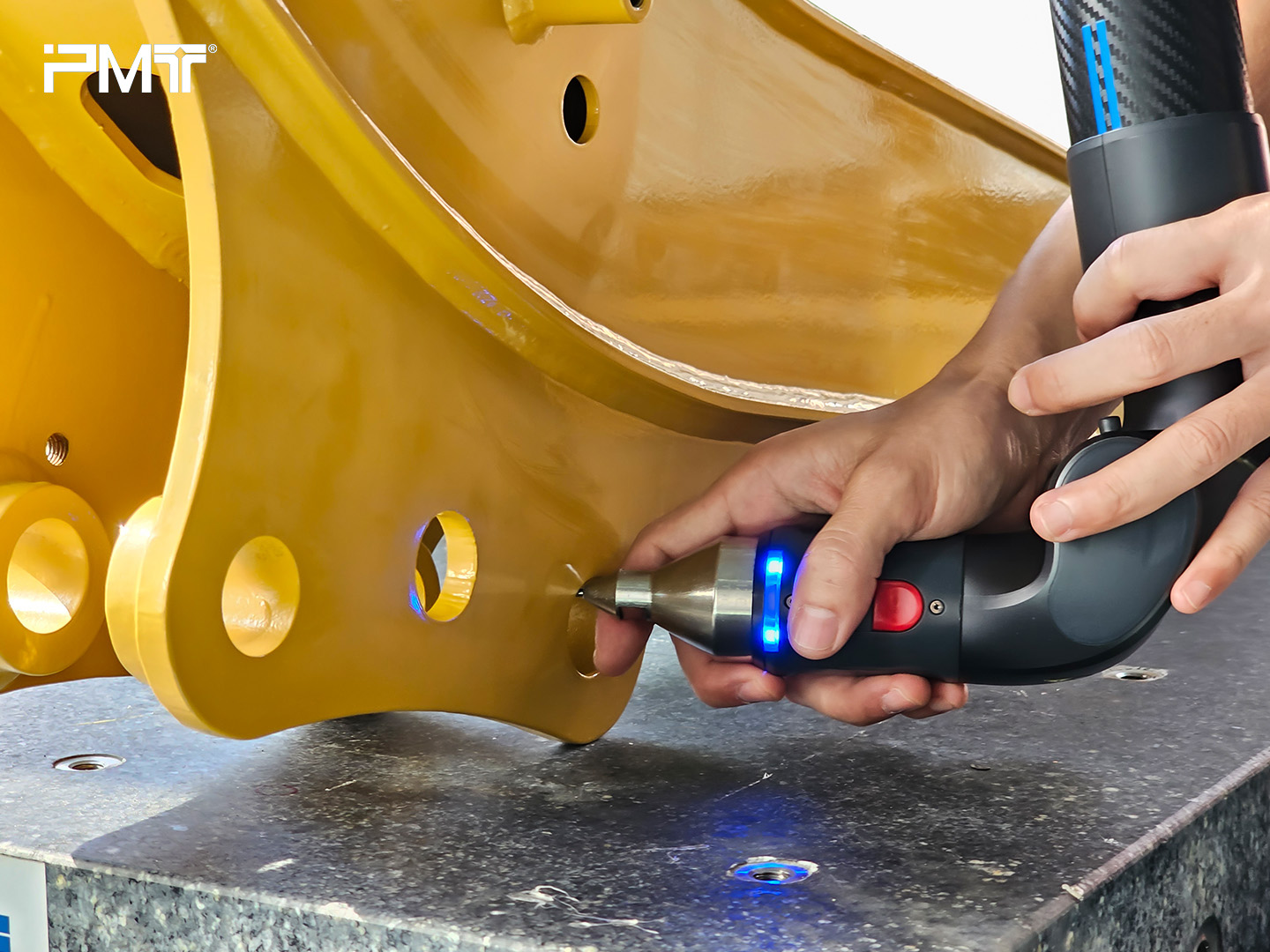
Re-check the features measured at Position 1 and 2. Verify that the feature deviations align with the leapfrog deviations, and perform a GD&T analysis of the features within the Position 2 range. If combined measurements between Position 1 and Position 2 are required, leapfrog can easily facilitate this.
B. Multiple Leapfrog Operations
If a single leapfrog does not capture all required features, such as checking distance or parallelism, repeat the process as needed until all features are measured and the entire part has been inspected.
Why Choose Leapfrog?
- Extended Measurement Range: Allows you to measure larger parts beyond the normal reach of the measuring arm.
- Increased Efficiency: No need for redefining the coordinate system, speeding up the measurement process.
- High Flexibility: Ideal for confined spaces, complex parts, and on-site inspections.
- Cost Savings: Solves range limitations, reducing production costs while maintaining high accuracy.
Conclusion: Using Leapfrog for Efficient Large-Scale Measurements
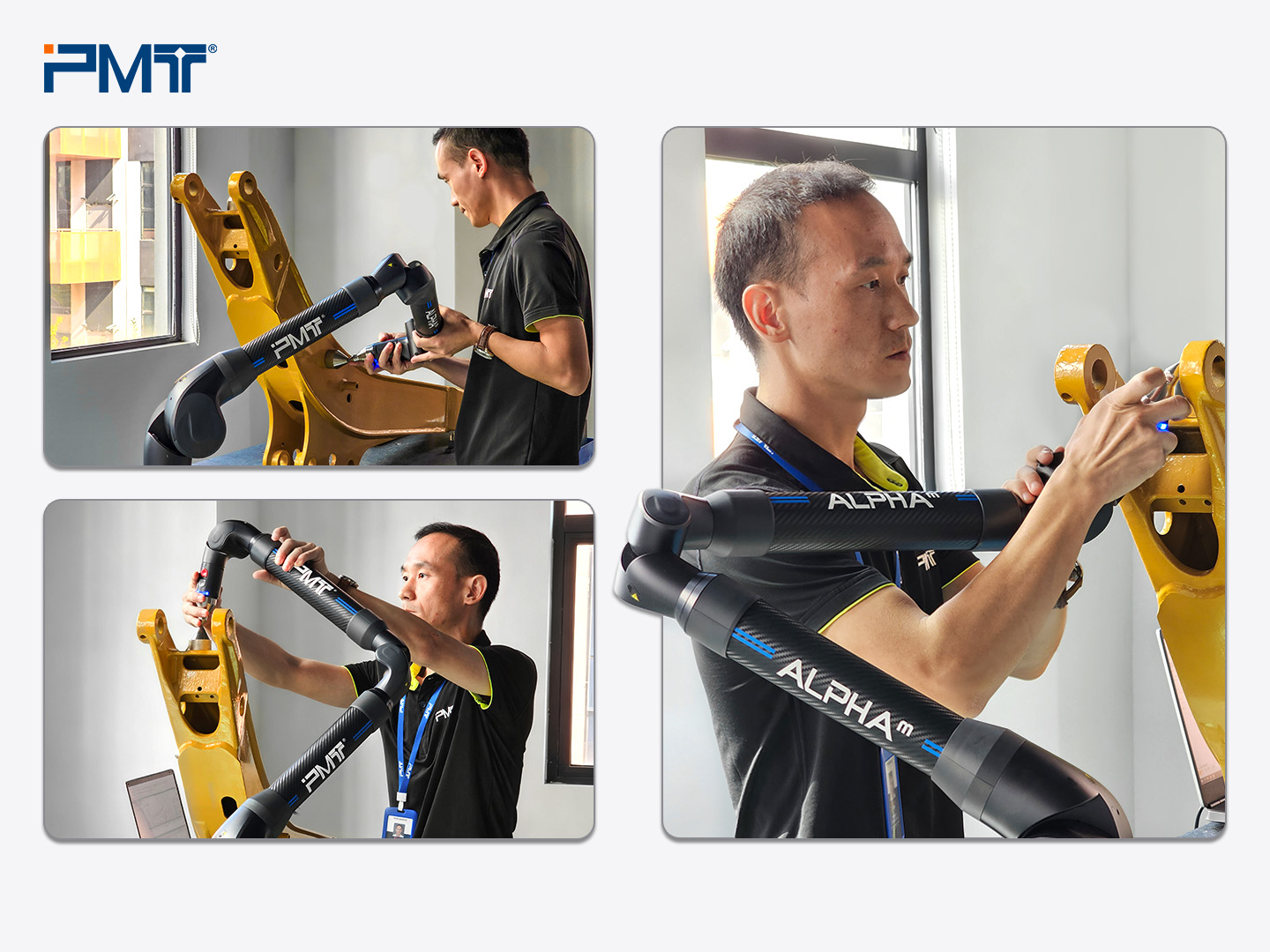
Leapfrog technology enables portable measuring arms to gather data from multiple positions, enabling “small arm, large part” measurements. While slight accuracy loss may occur, careful planning—taking into account workpiece size, precision requirements, environment, and leapfrog frequency—can minimize errors. By integrating leapfrog with portable arms, enterprises gain an efficient solution for large-scale part measurements, optimizing both precision and workflow.
The post Ultimate Guide: How to Use Leapfrog with Measuring Arm for Large Parts appeared first on PMT Technologies.
]]>The post PMT Showcases Portable Measurement Solutions at AIMC 2025 appeared first on PMT Technologies.
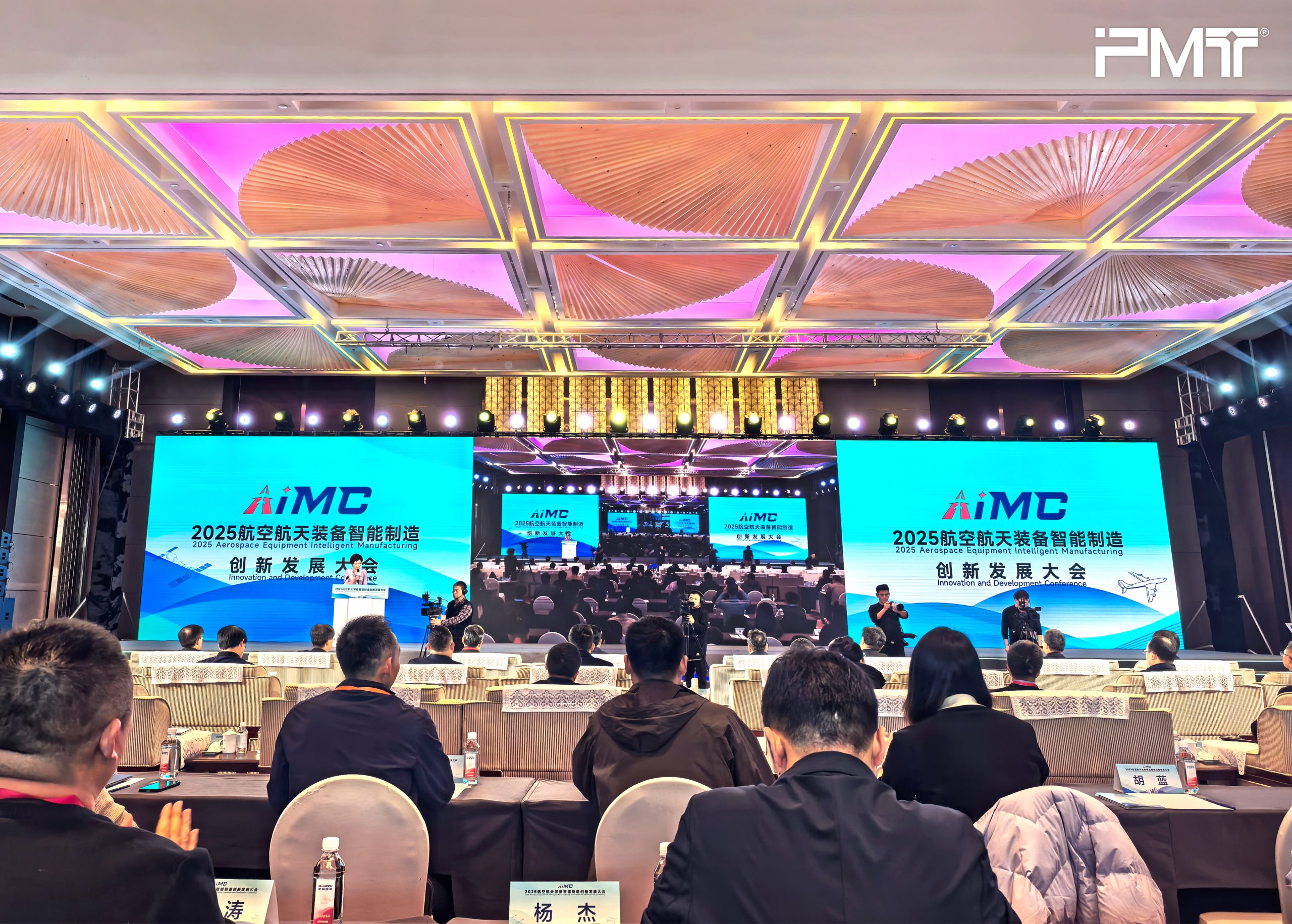
]]>On November 30, 2025, the Aerospace Equipment Intelligent Manufacturing Innovation and Development Conference (AIMC) wrapped up in Shandong province, hosted by the People’s Government of Fushan District, Yantai City, and Nanjing University of Aeronautics and Astronautics. With the theme “Intelligent Manufacturing Leads the Future of Aerospace,” the conference attracted over 350 experts, academics, and enterprises, with PMT invited as a key player in high-precision 3D measurement technologies.
Live Demos Highlight the Power of Measuring Arms
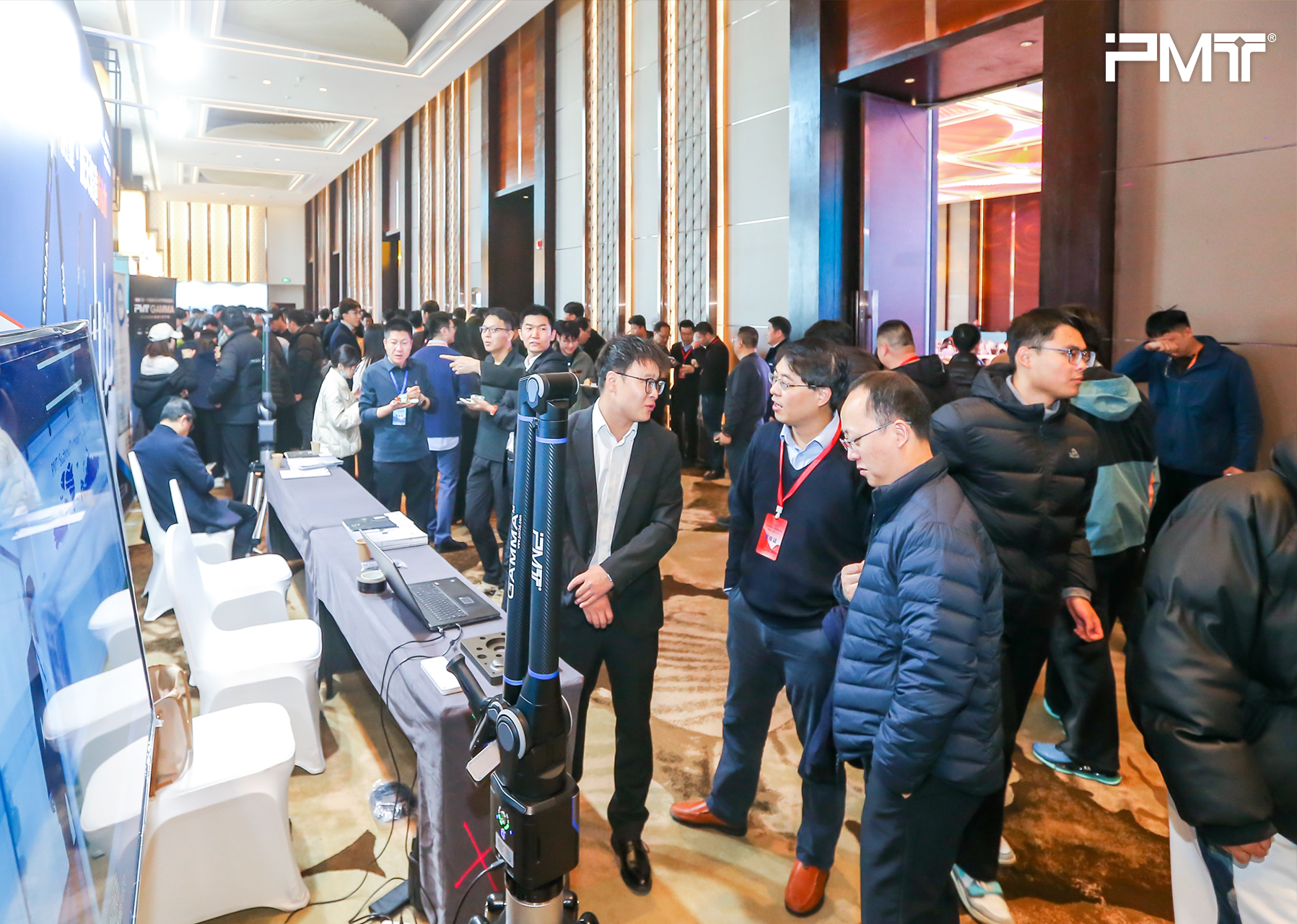
In the technical exhibition zone, PMT conducted dynamic on-site demonstrations, showcasing the core capability of its portable measuring arm solutions: performing accurate measurement anytime, anywhere.
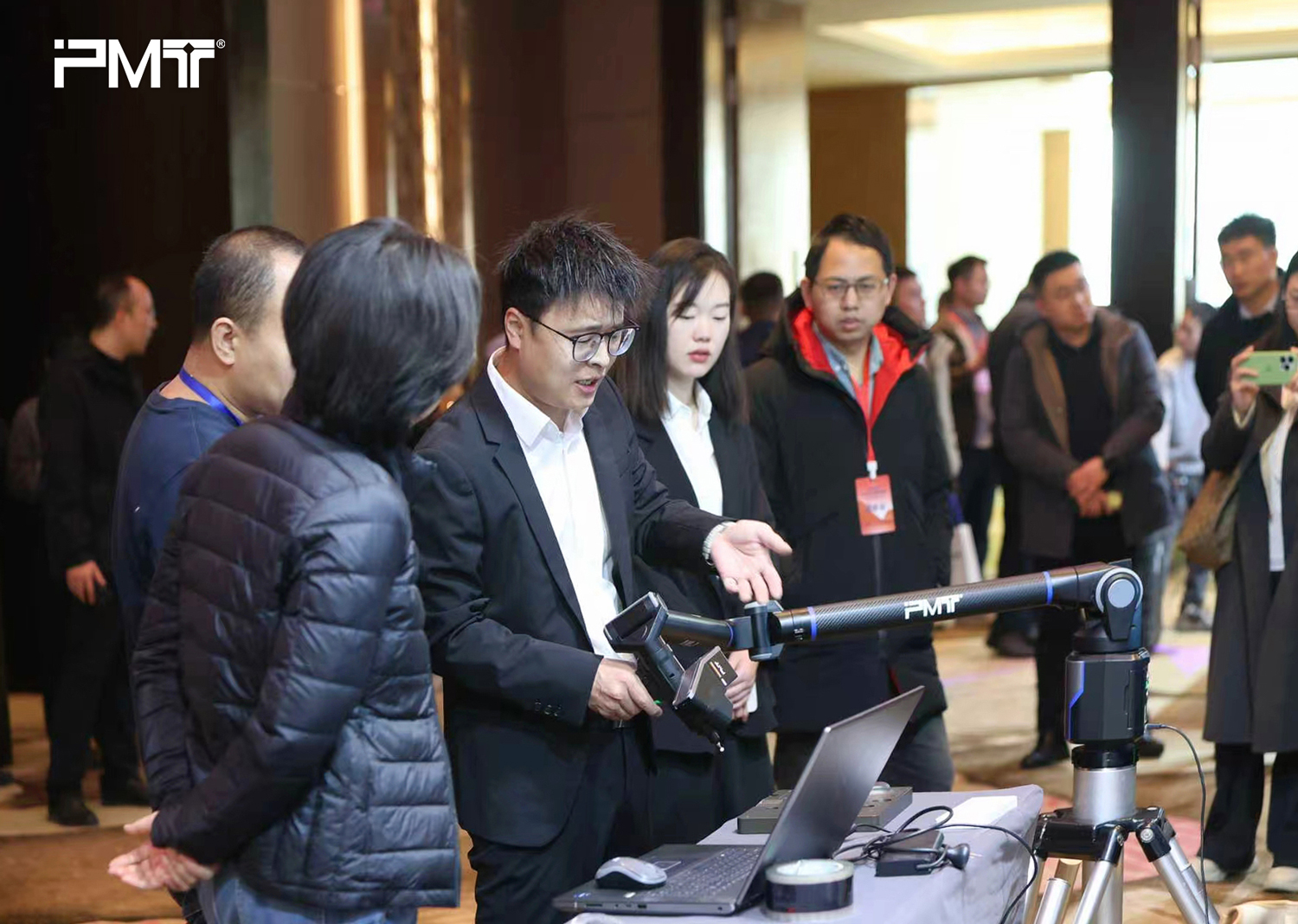
The demonstration featured the scanning and inspection of typical aerospace components. It clearly displayed the outstanding performance of PMT’s blue light scanners integrated with the GAMMA and ALPHA measuring arms. These portable arms excel in high precision, high efficiency, and true portability. What’s more, PMT’s Portable CMM Arm solution is capable of capturing complex surfaces, comparing inspection data with CAD models in real-time, and generating reports rapidly. The versatility of the PMT Arm was also highlighted by its detachable 3D scanners, which enhance measurement accuracy and broaden the scope of inspections across various aerospace applications.
PMT’s Technological Leadership Sparks Industry Dialogue
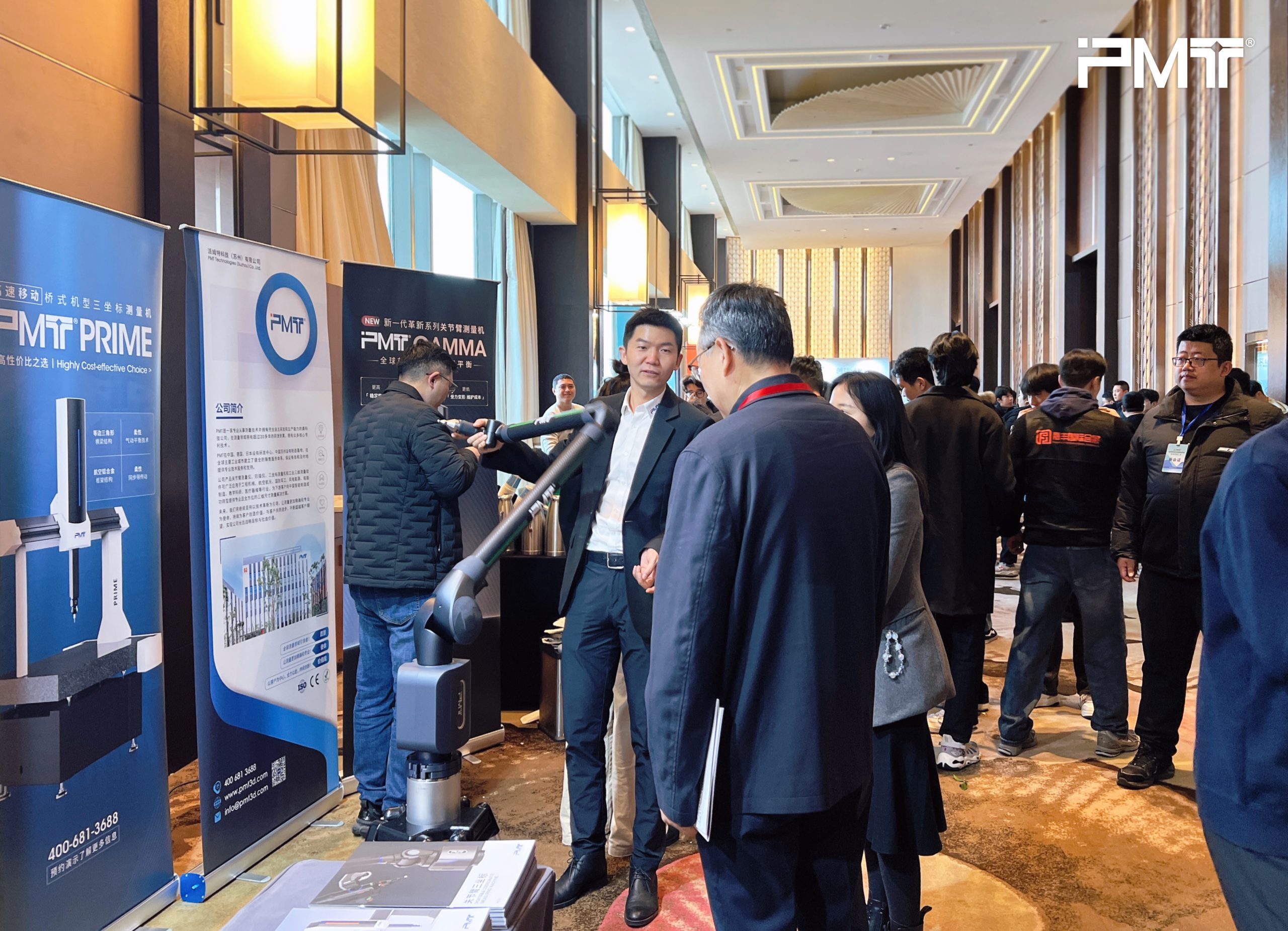
During the event, PMT’s booth attracted a continuous stream of visiting experts. Mr. Chen Zhonggui, Researcher at the China Academy of Space Technology and Chief Designer of the Beidou-3 satellite, held an in-depth and productive discussion with PMT’s Founder and CEO, Tom Tai. They explored specific measurement challenges in aerospace quality control, first-article inspection, and other areas. PMT’s independent technological capabilities in providing portable measurement solutions generated strong interest from many enterprises seeking to build efficient and secure digital inspection loops, laying a solid foundation for potential future collaboration.
Insights into Advanced Technologies and Industry Trends
The conference agenda focused on three core areas: “Advanced Forming, Intelligent Manufacturing, and Smart Inspection,” featuring high-level keynote speeches and expert reports.
To bolster innovation in domestically developed technologies, discussions on intelligent manufacturing covered critical topics such as customization for non-standard aerospace components and key CNC machining technologies. A consistent emphasis was placed on the practical application and indispensable role of intelligent inspection—powered by tools like portable coordinate measuring machines—within integrated product design, manufacturing, and production lines.
Conclusion: PMT’s Role in the Future of Aerospace Manufacturing
PMT’s participation in AIMC 2025 not only showcased its leading-edge portable measuring arms but also reinforced its commitment to driving innovation in the aerospace sector. By offering highly accurate and portable measurement solutions, PMT is positioned as a leader in precision measurement technology, playing a vital role in the future of intelligent aerospace manufacturing. The event also laid the foundation for future collaborations, reinforcing the importance of continued innovation and partnerships in the rapidly evolving aerospace industry.
The post PMT Showcases Portable Measurement Solutions at AIMC 2025 appeared first on PMT Technologies.
]]>The post What to Pay Attention to When Measuring Sheet Metal Parts appeared first on PMT Technologies.
]]>
Understand the Material Properties
To begin with, it is important to recognize that sheet metal has unique characteristics compared to thicker or more rigid parts. Its thin structure makes it more sensitive to pressure, temperature changes, and external force. This means that when measuring sheet metal, the wrong setup or technique can easily cause distortion, leading to inaccurate results. Therefore, the first step in successful measurement is to fully understand the properties of the material and adapt the method accordingly.
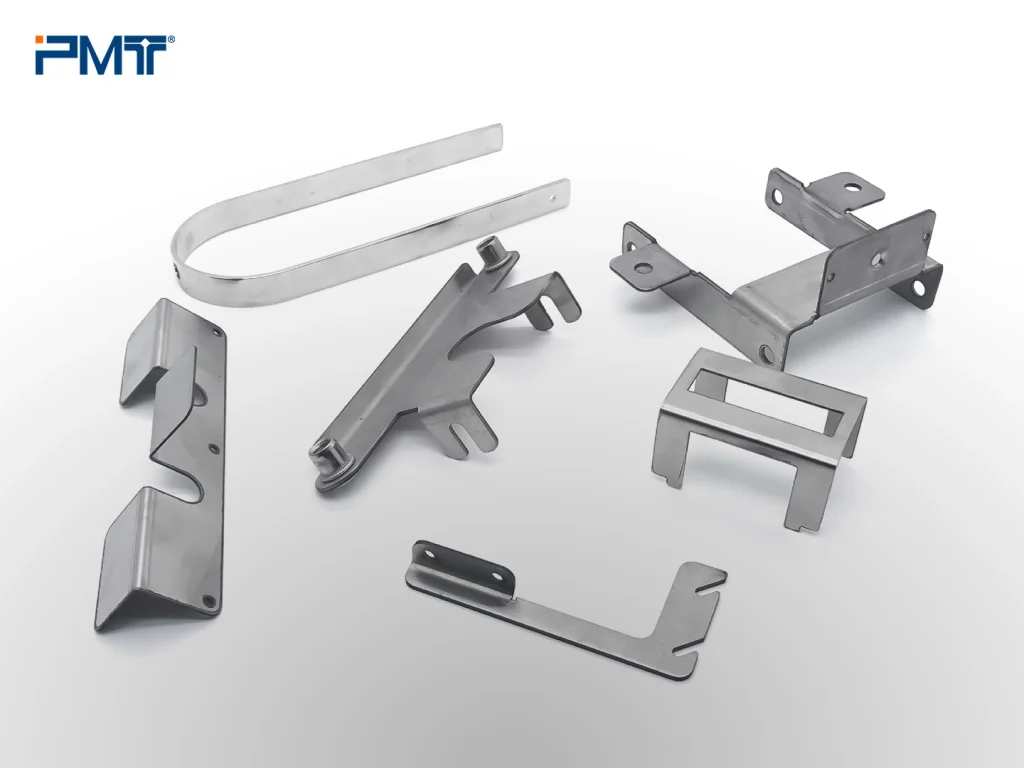
Control the Measurement Environment
Moving from material understanding to conditions, the environment in which measurements are taken plays a big role in accuracy. Sheet metal can expand, shrink, or warp when exposed to changes in temperature or humidity. Vibrations in the workshop can also affect sensitive measuring tools. For this reason, it is recommended to use a stable environment with controlled temperature and minimal external interference. Proper environmental control ensures consistent and reliable data.
Choose the Right Measuring Tools
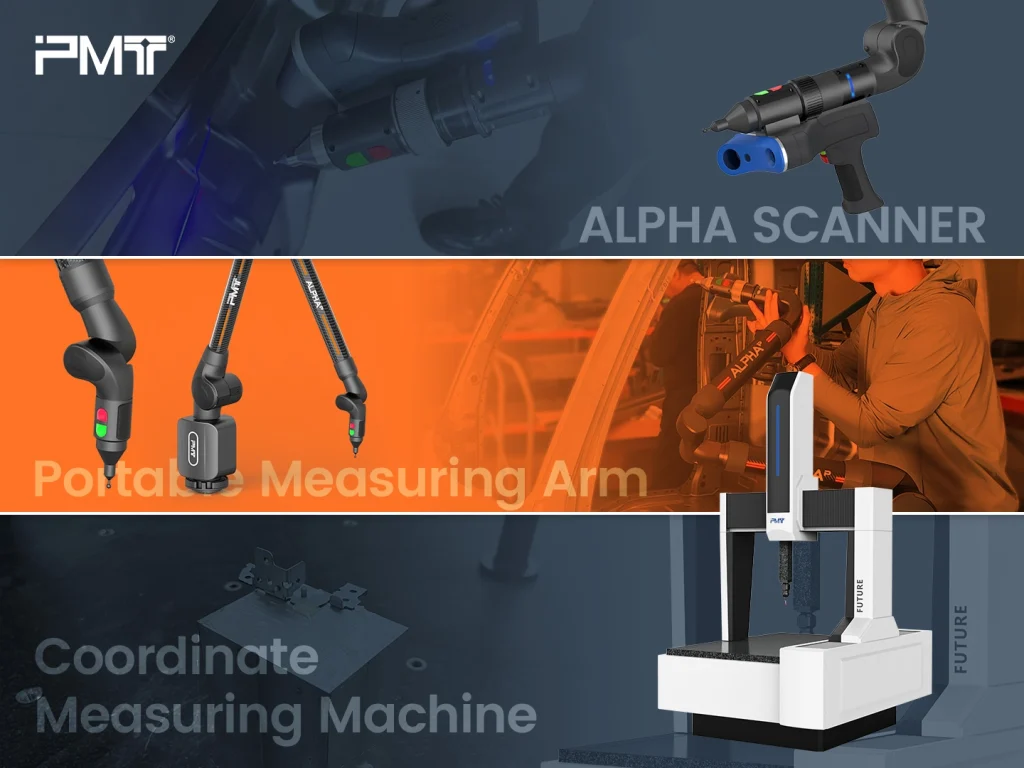
Another key factor is selecting the right measuring equipment. Traditional gauges and calipers may not always deliver the precision required for complex sheet metal parts. Instead, advanced solutions such as portable measuring arms and coordinate measuring machines provide higher accuracy and flexibility. Portable Measuring Arms allow operators to measure large or irregular parts directly on the shop floor, while?CMMs?are ideal for highly detailed dimensional inspections. Choosing the right tool depends on the shape, size, and tolerance requirements of the sheet metal part.
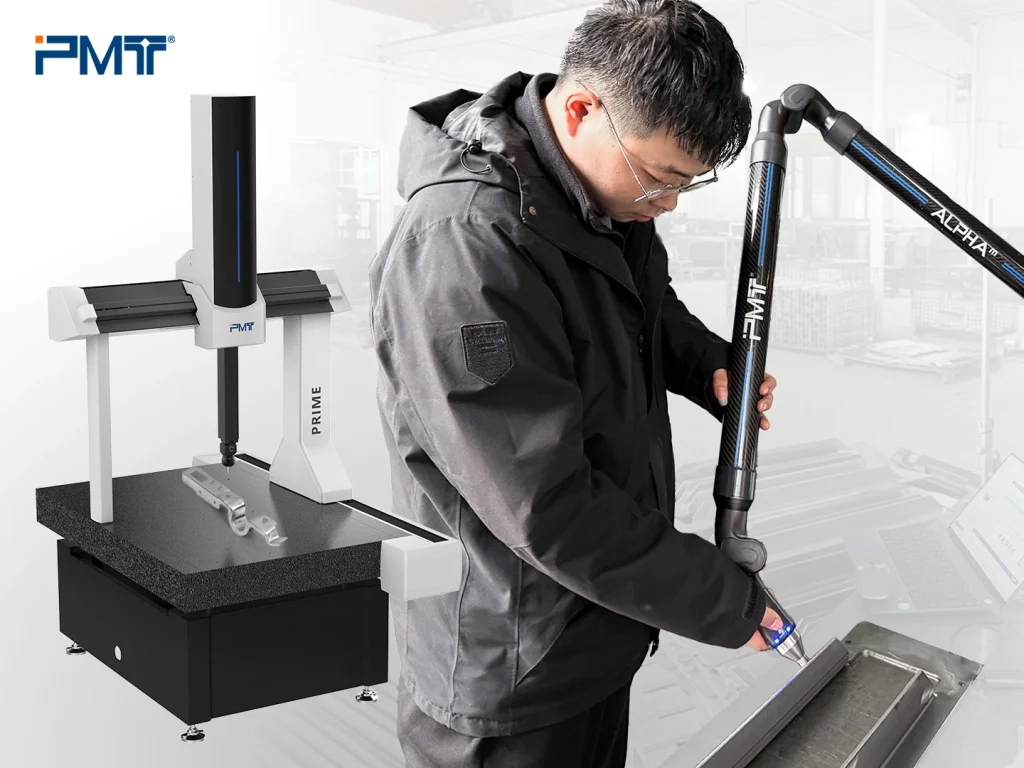
Prevent Deformation During Measurement
As we shift from tools to technique, preventing deformation becomes critical. Even light pressure from a probe or clamp can bend thin sheet metal, resulting in false readings. To avoid this, non-contact methods, such as laser scanning attached to a portable measuring arm, can be used for delicate areas. If contact methods are required, ensure the part is properly supported to maintain its natural shape during inspection. Handling the part carefully throughout the process minimizes errors caused by deformation.
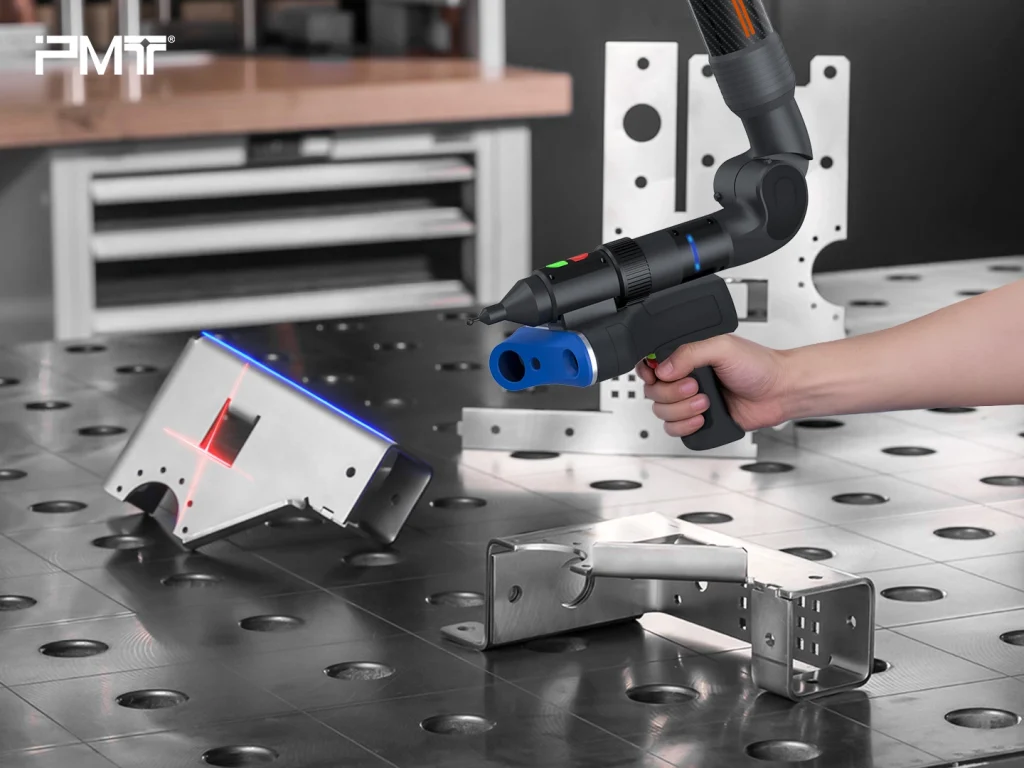
Pay Attention to Clamping and Positioning
Beyond the measuring process itself, clamping and positioning also deserve careful consideration. Incorrect fixturing can distort the part before measurement even begins. Fixtures should be designed to hold the part securely without adding stress or force that changes its geometry. Positioning must also allow clear access for the measuring tool to reach all critical points. A well-designed setup improves efficiency and accuracy, especially when working with complex or large sheet metal structures.
Use Consistent Measurement Standards
Finally, consistency in measurement standards ensures reliable results across different processes and teams. Always follow industry standards, customer requirements, or company guidelines when inspecting sheet metal parts. Aligning with these standards not only reduces the chance of error but also ensures that measurements can be compared and verified. Documenting the process and using the same reference points during each inspection helps maintain quality control over time.
Conclusion
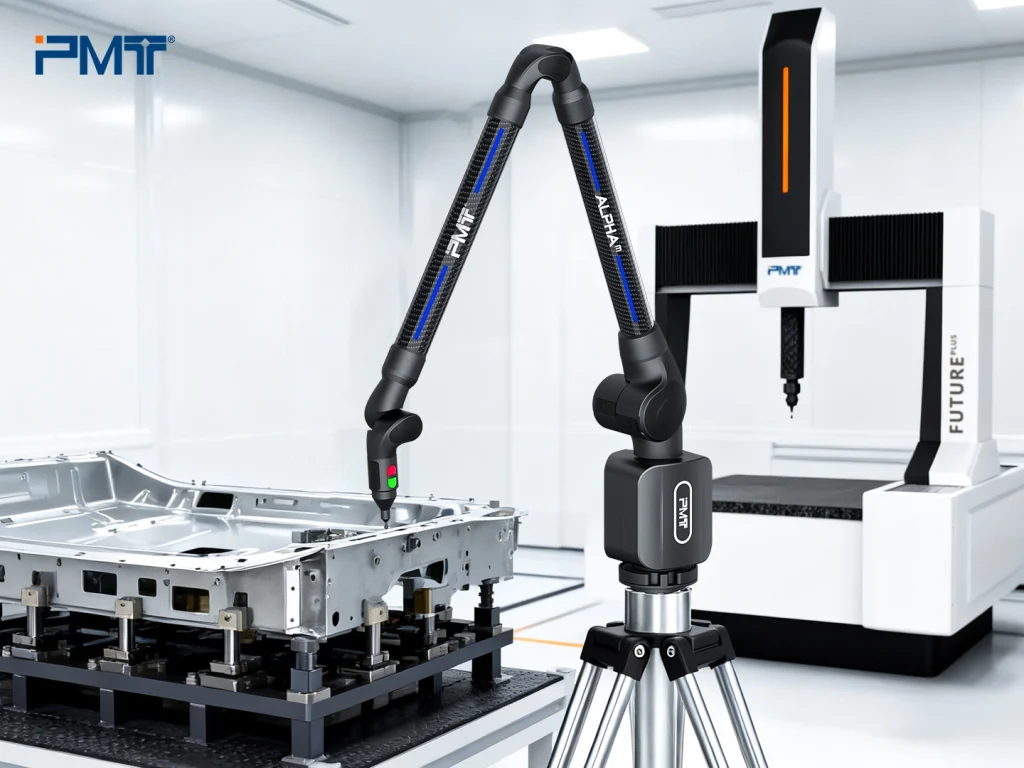
Measuring sheet metal parts requires more than just accurate equipment—it demands attention to material properties, environment, clamping, and technique. By choosing the right tools, such as Portable Measuring Arms and Coordinate Measuring Machines, manufacturers can achieve precise results while avoiding common challenges like deformation. Careful planning and consistent standards will help maintain high quality in sheet metal production.
If you are looking for a reliable coordinate measuring machines supplier, PMT offers advanced solutions with strong expertise in measurement technology. Contact PMT today to learn more about how our products can support your quality control needs.
The post What to Pay Attention to When Measuring Sheet Metal Parts appeared first on PMT Technologies.
]]>The post Why CMM Calibration Is So Important appeared first on PMT Technologies.
]]>Understanding CMM Calibration
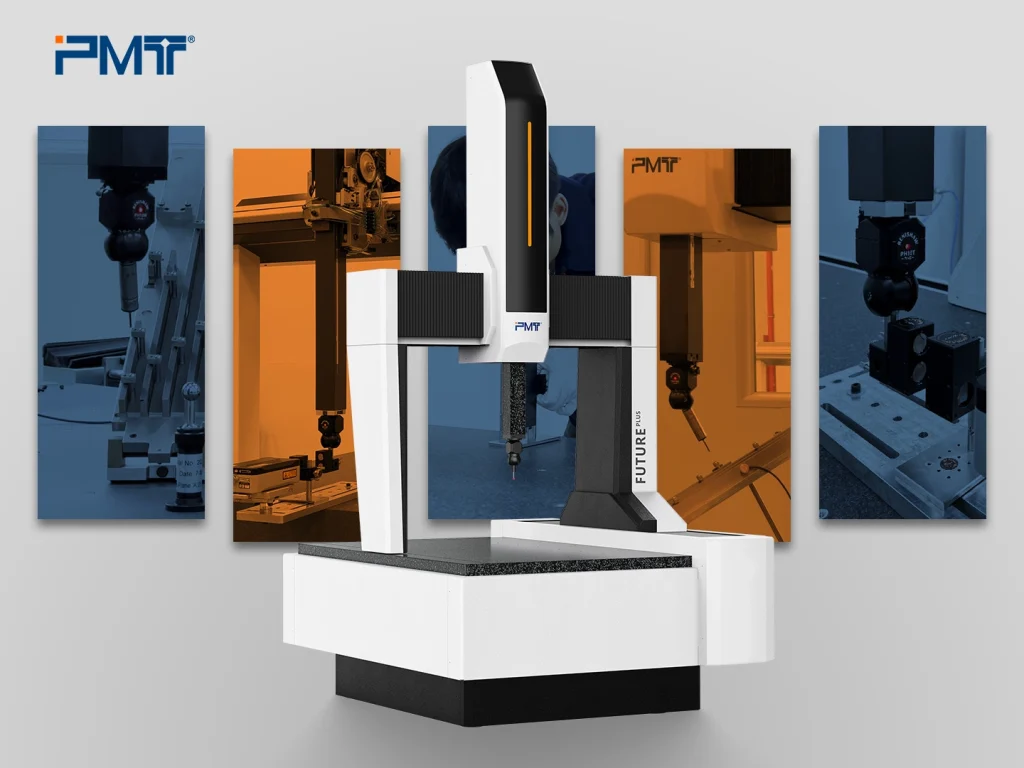
To begin, it is important to understand what CMM calibration means. Calibration is the process of comparing the measurements of a CMM?with known standards to verify its accuracy. If any deviation is found, adjustments are made to bring the machine back to the required precision level.
In simple terms, calibration ensures that the measurements your CMM provides are both accurate and reliable. Without it, even the best coordinate measuring machines can drift out of tolerance, leading to errors in quality control.
Why CMM Calibration Matters for Quality Assurance
One of the main reasons calibration is so critical is its direct impact on quality assurance. Manufacturers rely on CMMs to validate that every part produced meets design specifications. If the CMM is inaccurate, faulty parts can pass inspection and reach customers.
This not only damages trust but can also result in expensive recalls, safety risks, and production delays. With regular calibration, companies can ensure their CMMs deliver trustworthy results, maintaining consistency across all measurement tasks.
Compliance With Industry Standards
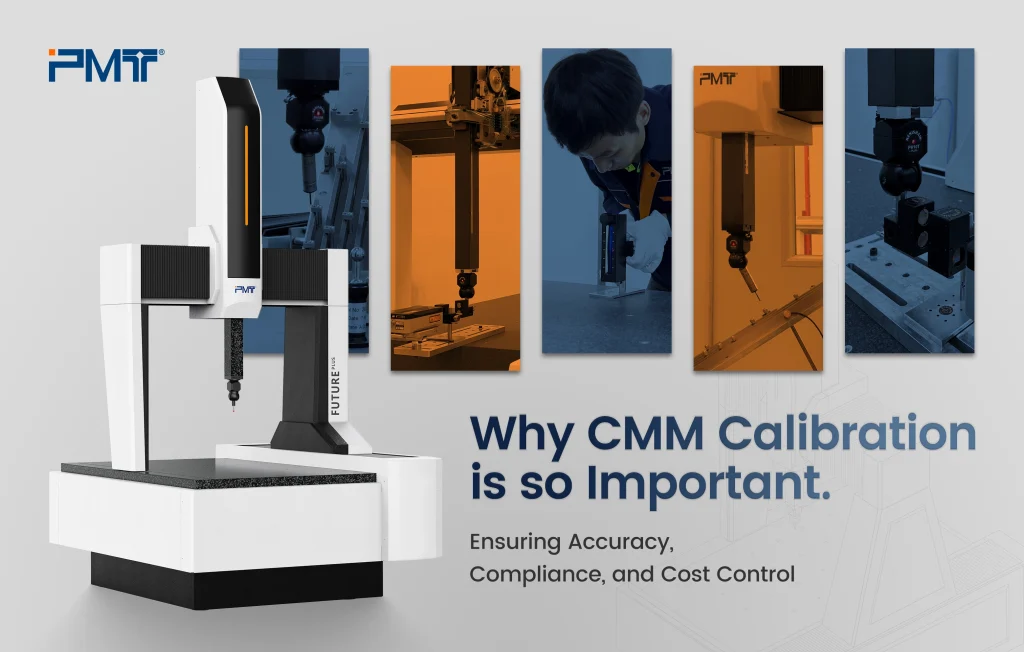
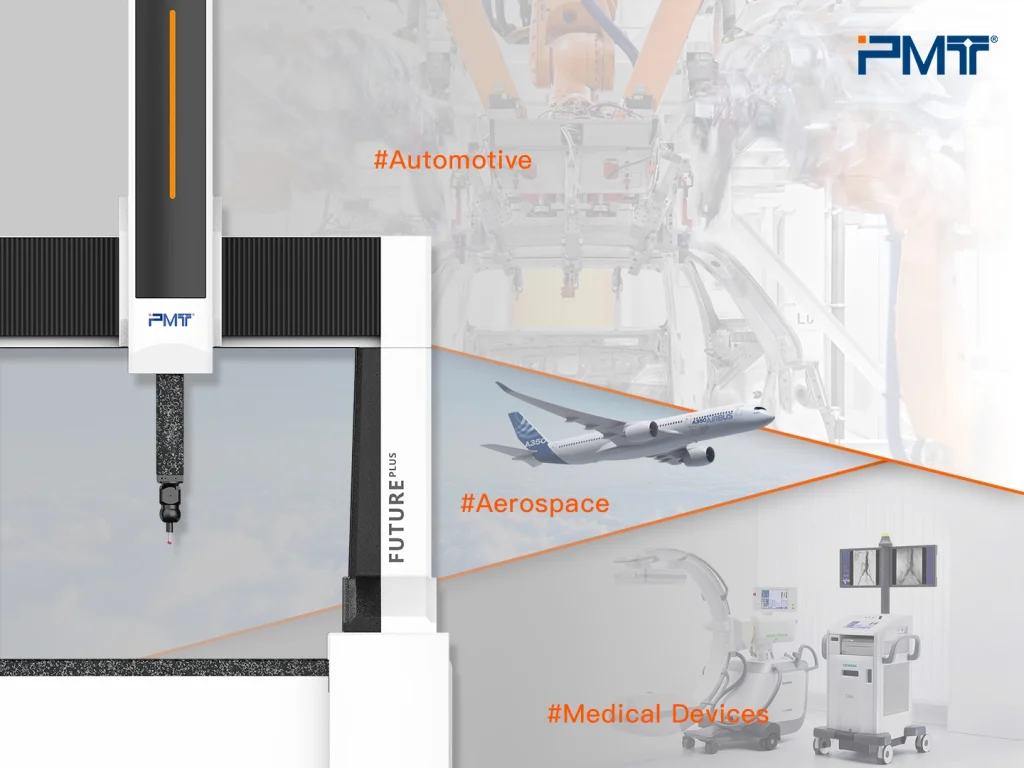
In addition to quality assurance, CMM calibration is essential for meeting industry standards. Many sectors, such as aerospace, automotive, and medical device manufacturing, have strict requirements for measurement accuracy. Standards like ISO and ASME require companies to provide documented proof that their measurement equipment is properly calibrated.
Without calibration records, companies may fail audits, lose certifications, or face legal and contractual consequences. Regular calibration therefore helps manufacturers not only maintain precision but also stay compliant with international regulations.
Reducing Costly Errors and Downtime
Another reason calibration is important is the financial impact of measurement errors. If a CMM produces inaccurate data, entire production batches may be rejected, reworked, or recalled. This results in wasted time, higher costs, and potential loss of business.
By keeping CMMs calibrated, manufacturers minimize these risks. A well-calibrated machine prevents incorrect measurements, reduces rework, and lowers scrap rates. In addition, calibration helps detect potential machine issues early, avoiding unexpected downtime and repair costs.
How Often Should CMMs Be Calibrated?
The frequency of calibration depends on several factors, including how often the CMM is used, the type of parts being measured, and the environmental conditions of the workspace. For example, machines used in high-precision industries or harsh environments may require more frequent calibration.
While manufacturers often follow annual calibration schedules, best practices involve monitoring usage and performance closely. Any signs of measurement drift or changes in machine performance should prompt recalibration to maintain accuracy.
The Role of Professional Calibration Services
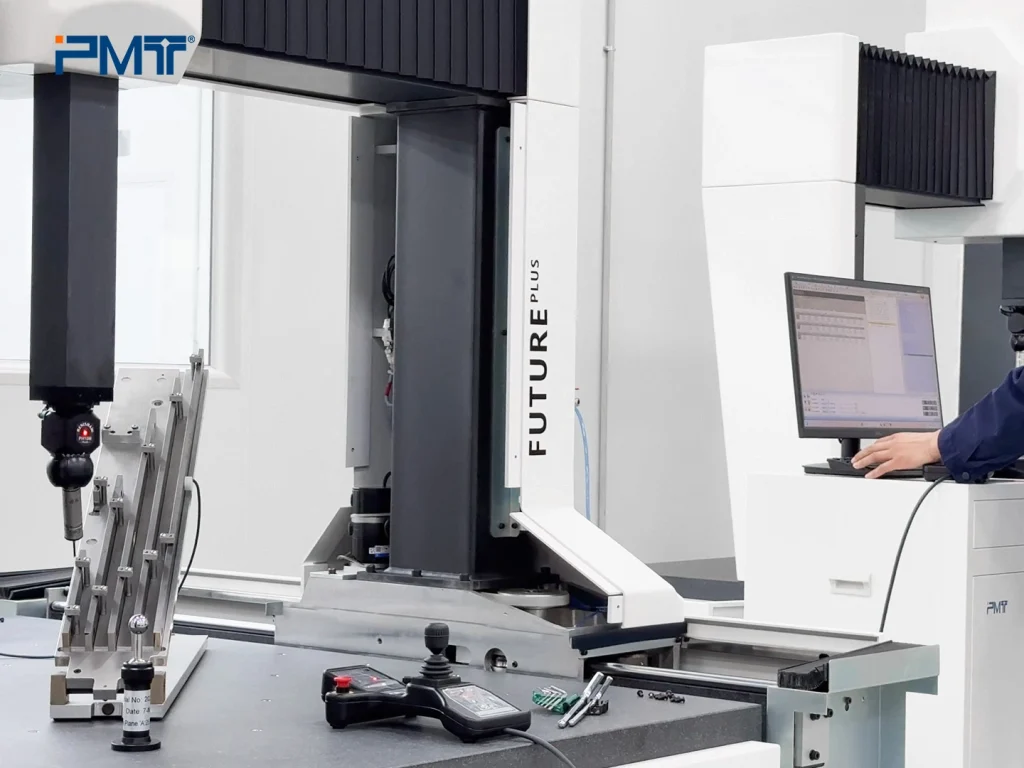
It is also important to note that calibration should always be carried out by trained professionals using certified equipment. Professional calibration services follow international standards and use traceable measurement tools to ensure reliable results.
Attempting to calibrate a CMM without the right knowledge or equipment can lead to further errors. Partnering with qualified providers guarantees that the machine continues to perform at its highest level, giving manufacturers peace of mind.
Building a Culture of Precision
Ultimately, CMM calibration is not just a technical requirement but a part of building a culture of precision and quality in manufacturing. By treating calibration as a routine necessity, companies reinforce their commitment to accuracy, reliability, and customer satisfaction.
In today’s competitive industries, where tolerances are tighter and demands are higher, a calibrated CMM can make the difference between meeting client expectations and falling short.
Conclusion
In summary, the importance of CMM calibration cannot be overstated. It ensures accuracy in measurements, supports quality assurance, maintains compliance with industry standards, reduces costly errors, and protects business reputation. By investing in regular calibration, manufacturers safeguard their operations and strengthen their competitive edge.
If your company is looking for reliable solutions in precision measurement, PMT is a trusted coordinate measuring machines supplier. With expertise in portable measuring arms, laser scanners, and advanced CMMs, PMT provides high-quality products and services that help manufacturers maintain accuracy and efficiency. Get in touch today to learn how PMT can support your measurement needs.
The post Why CMM Calibration Is So Important appeared first on PMT Technologies.
]]>The post PMT Portable Measuring Arm: A Key Solution in Driving Precision of Industrial Grippers in Automation appeared first on PMT Technologies.
]]>An octagonal tube gripper is a fixture designed for industrial automation lines, enabling robots to automatically grip and handle workpieces. The gripper’s main structure is made of octagonal aluminum alloy tubes, available in various sizes with evenly spaced mounting holes. The tubes are assembled using blind rivet nuts and connectors, allowing gripping units to be installed at multiple angles and positions. This flexibility allows them to handle workpieces of various shapes and sizes, streamlining the design process and enhancing production efficiency.
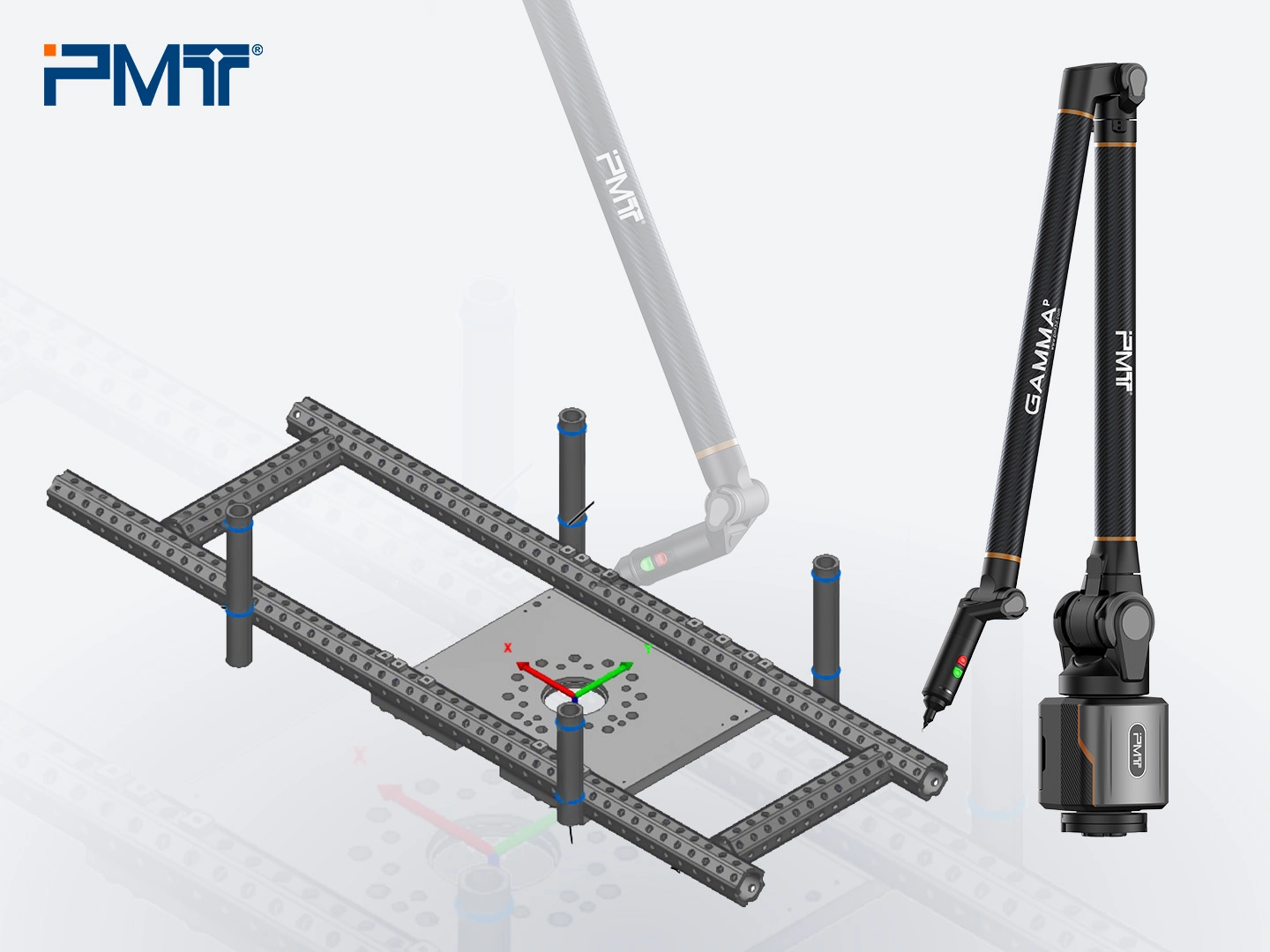
Measurement Challenges
Despite the clear advantages of octagonal tube grippers, what challenges arise during the pre-assembly and re-measurement processes?
1. Human Assembly Errors
Octagonal tubes are uniform in shape, and during assembly, the connector positioning depends on manually calculated hole placements. This human-driven process can lead to misaligned holes, preventing proper grip and accurate workpiece handling.
2. Force Majeure
The sequence in which screws are tightened can cause slight, uncontrollable rotations between connected tubes, affecting the gripper’s ability to maintain precise alignment and grip on the workpieces.
3. Gravity-Induced Deformation
For larger parts (e.g., automotive side panels), the gripper may exceed 2 meters in length. During robotic movement and angle adjustments, gravity can cause deformation, impacting the gripping accuracy.
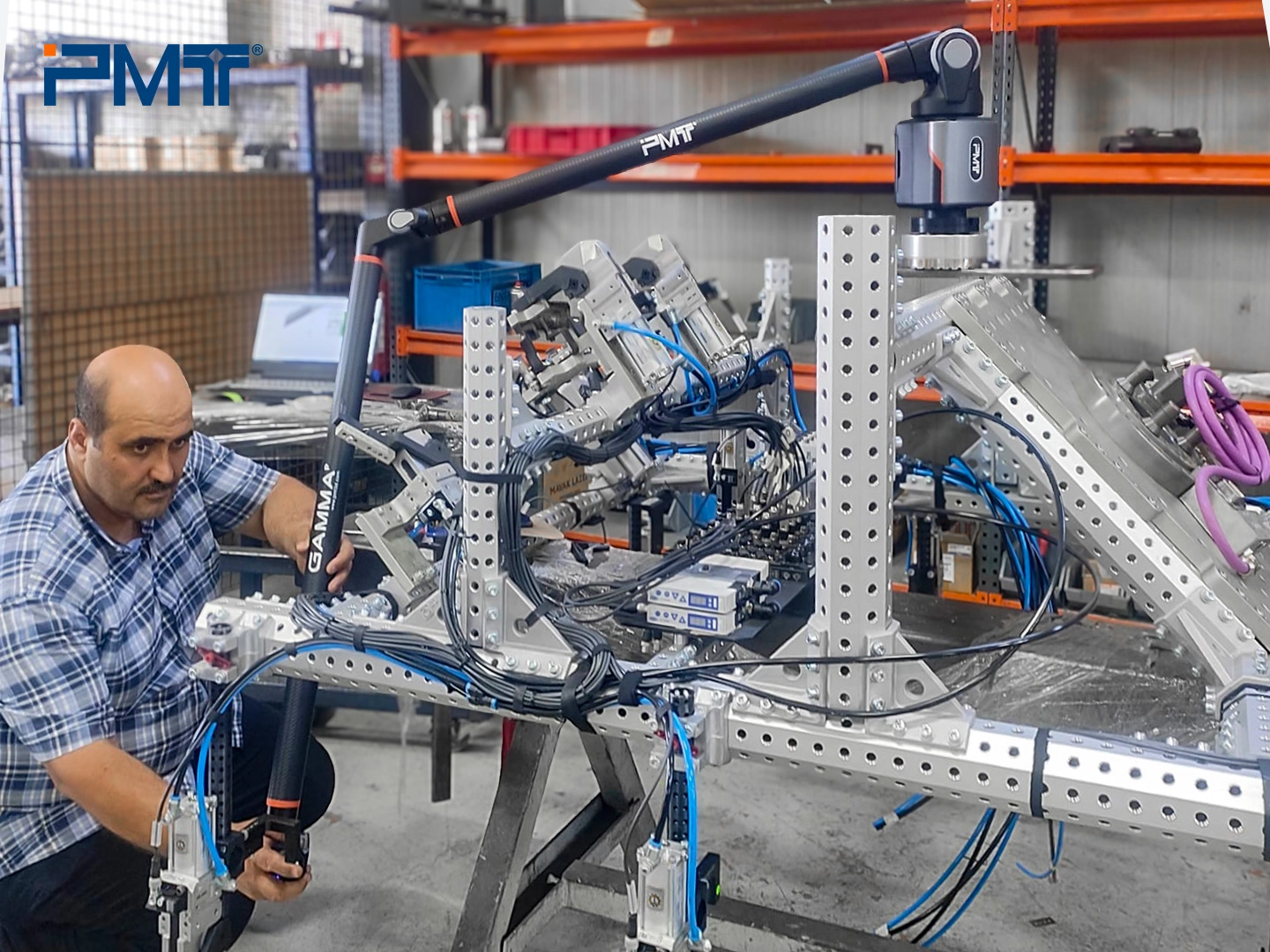
Measurement Solution with PMT Portable Measuring Arm
To tackle the challenges mentioned above, the portable measuring arm provides an ideal solution, offering portability and high efficiency for both the assembly and inspection processes of octagonal tube grippers. This case study highlights how a leading automation solutions provider in Turkey used the PMT portable measuring arm to solve critical production issues, enhancing accuracy and efficiency in their manufacturing process.
A. Measurement Solution for the Assembly Process
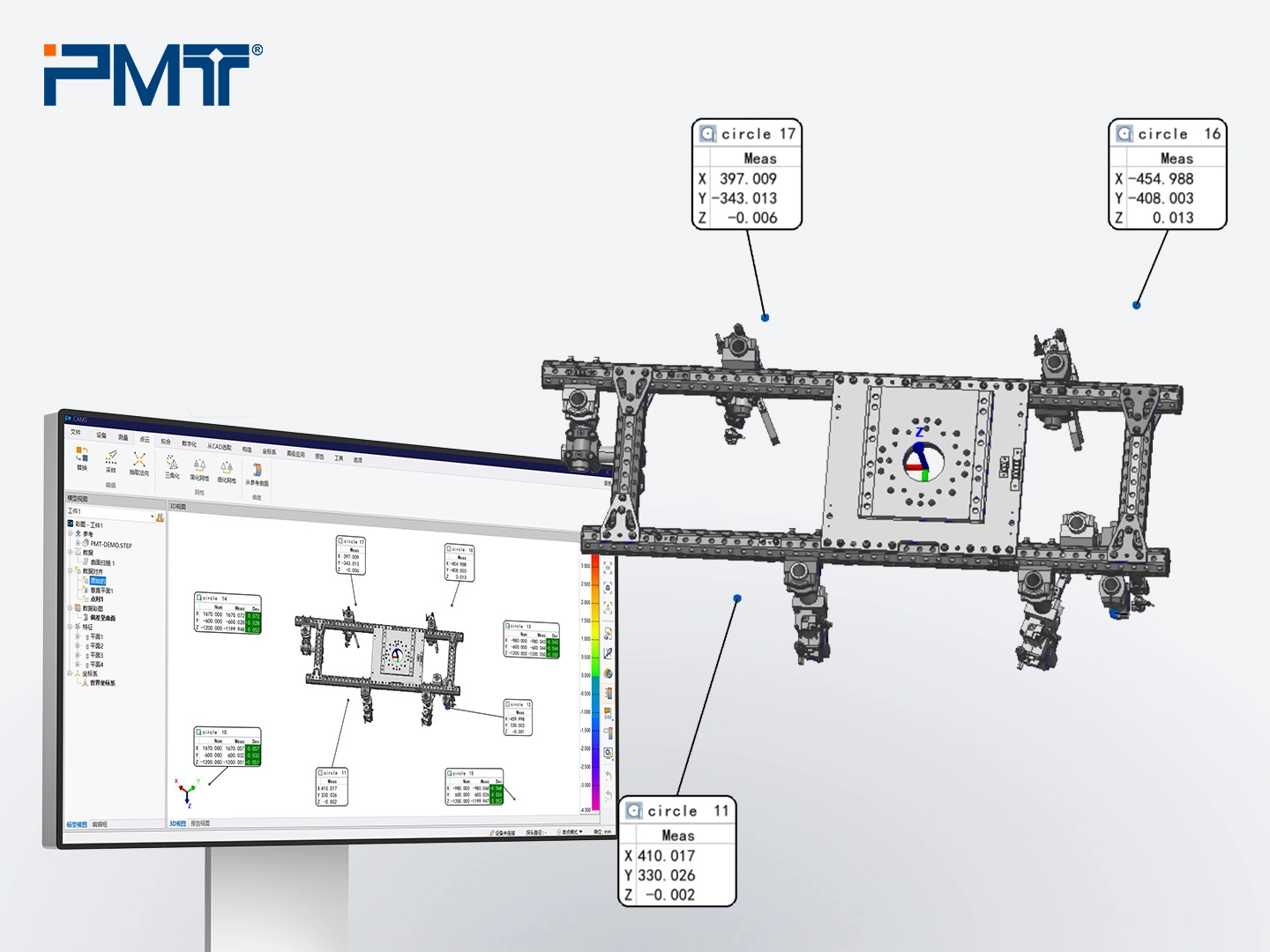
The PMT measuring arm enables real-time inspection of the concentricity and perpendicularity between the gripper and robot flange, as well as the parallelism and perpendicularity between tubes. This helps detect and prevent failures caused by accumulated errors.
By aligning the pinholes on the connecting plate with the CAD model, misaligned holes in the assembly can be quickly detected and corrected, ensuring rapid response and maintaining assembly accuracy.
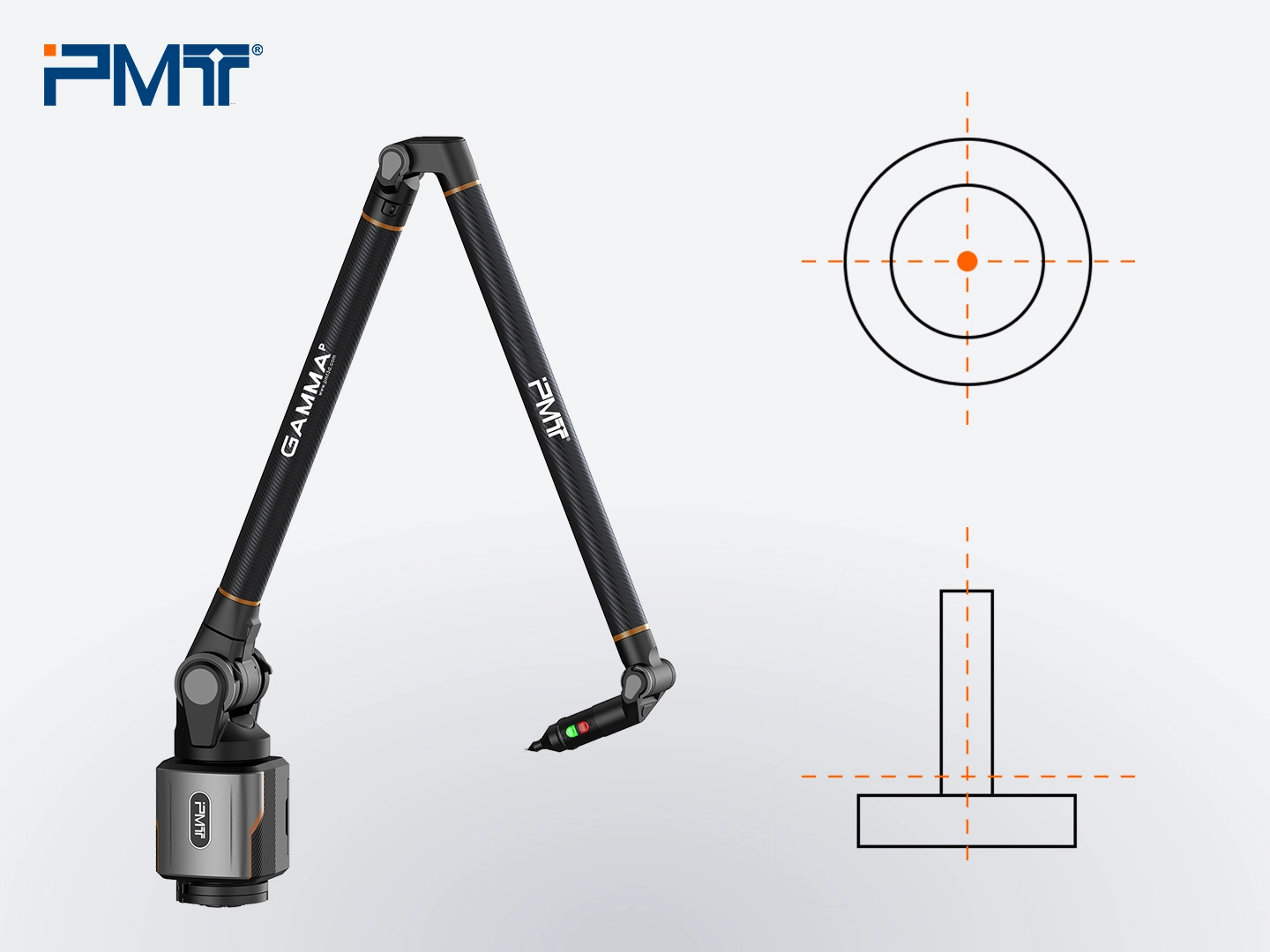
Measurement Steps
1. Use the portable measuring arm’s probe to contact the reference holes on the connector plate, then apply Best-Fit to align the gripper with the CAD model in 3D measurement software.
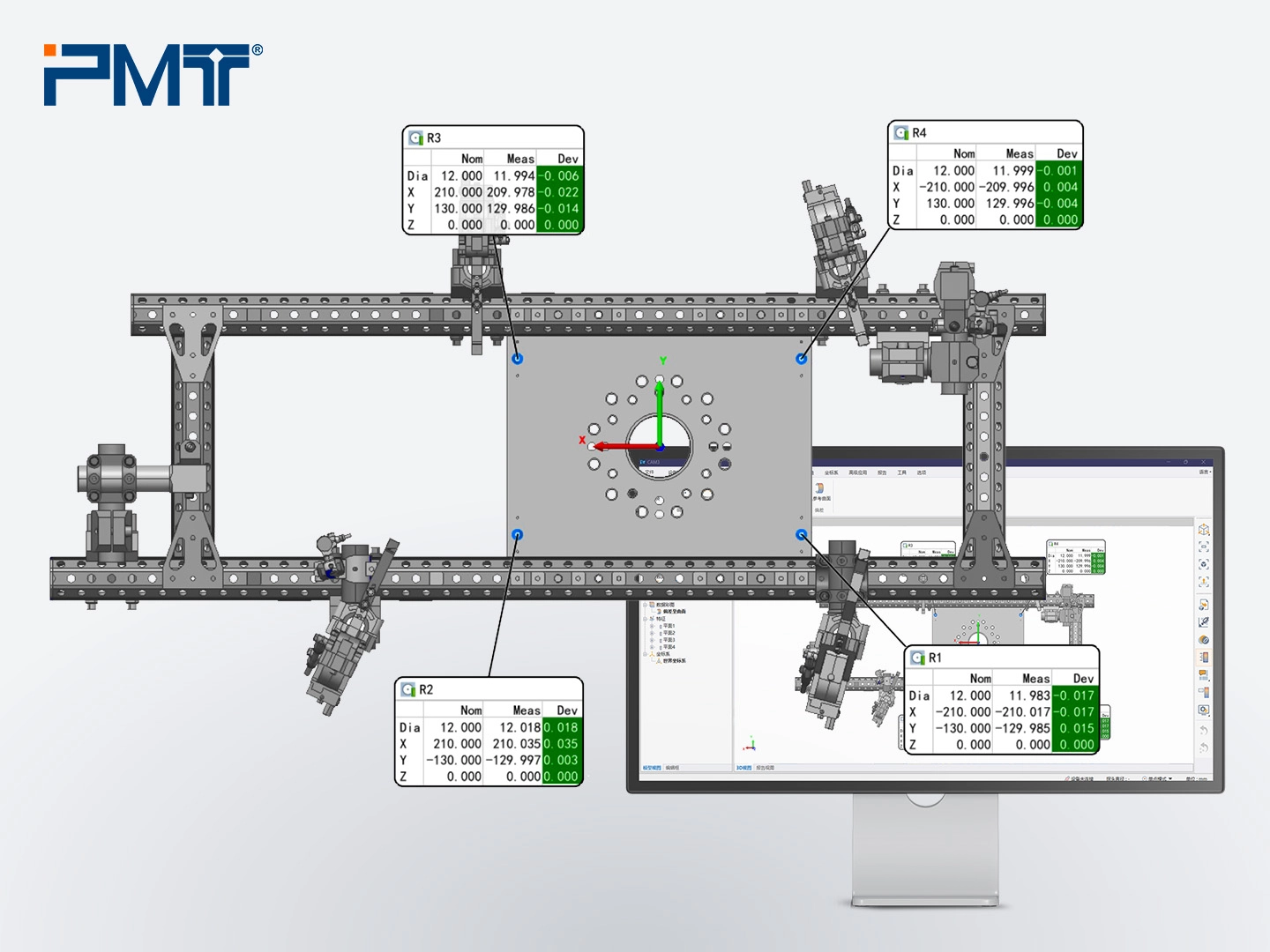
2. Measure the connector plate plane and define it as Datum A. Then measure the main frame plane and the cylindrical vertical tubes of other grippers to assess parallelism and perpendicularity.
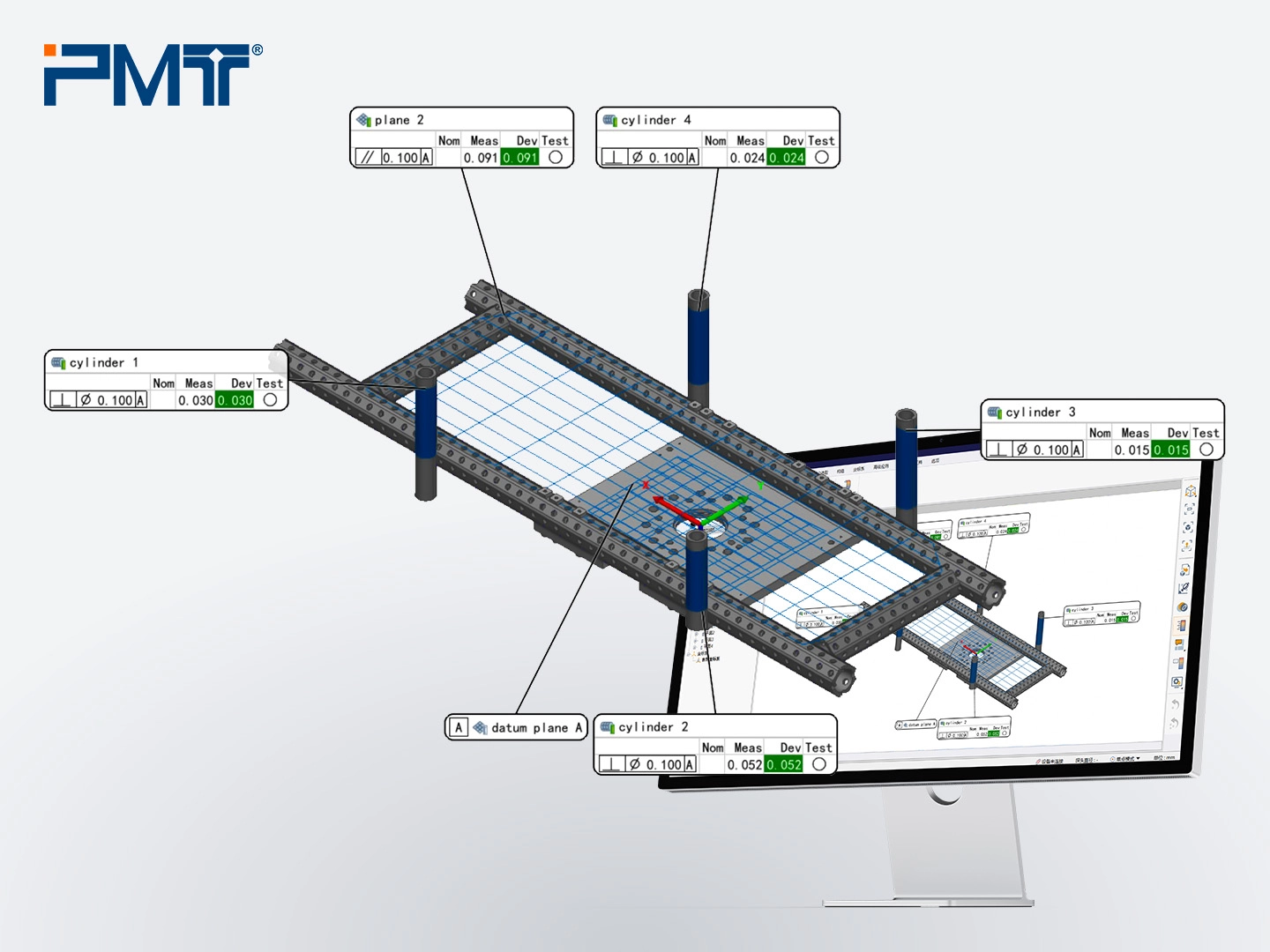
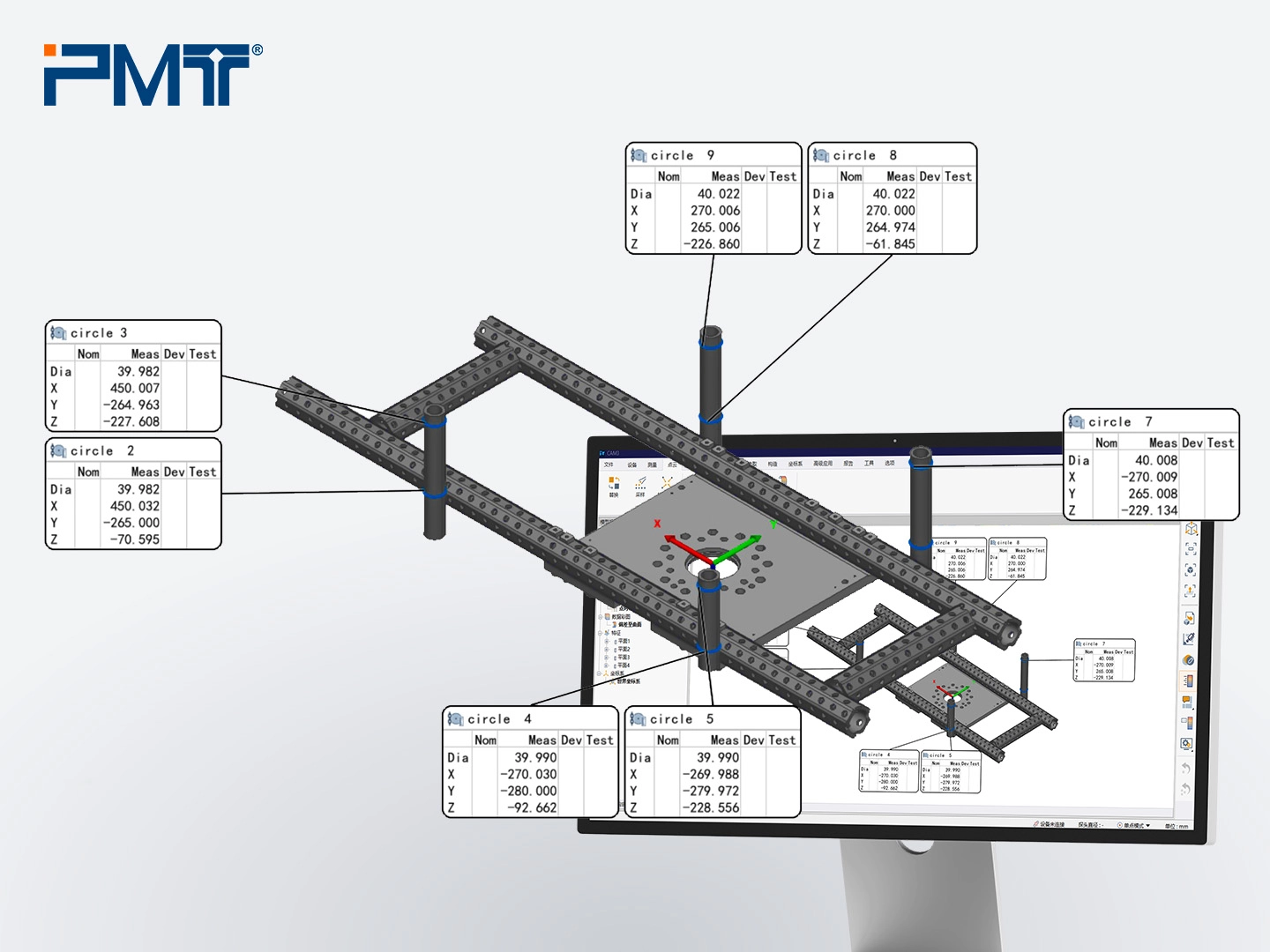
3. If deviations exceed tolerance, construct features (e.g., circles on cylindrical tubes) and compare XY coordinates at different heights to calculate required adjustments. This step ensures assembly accuracy.
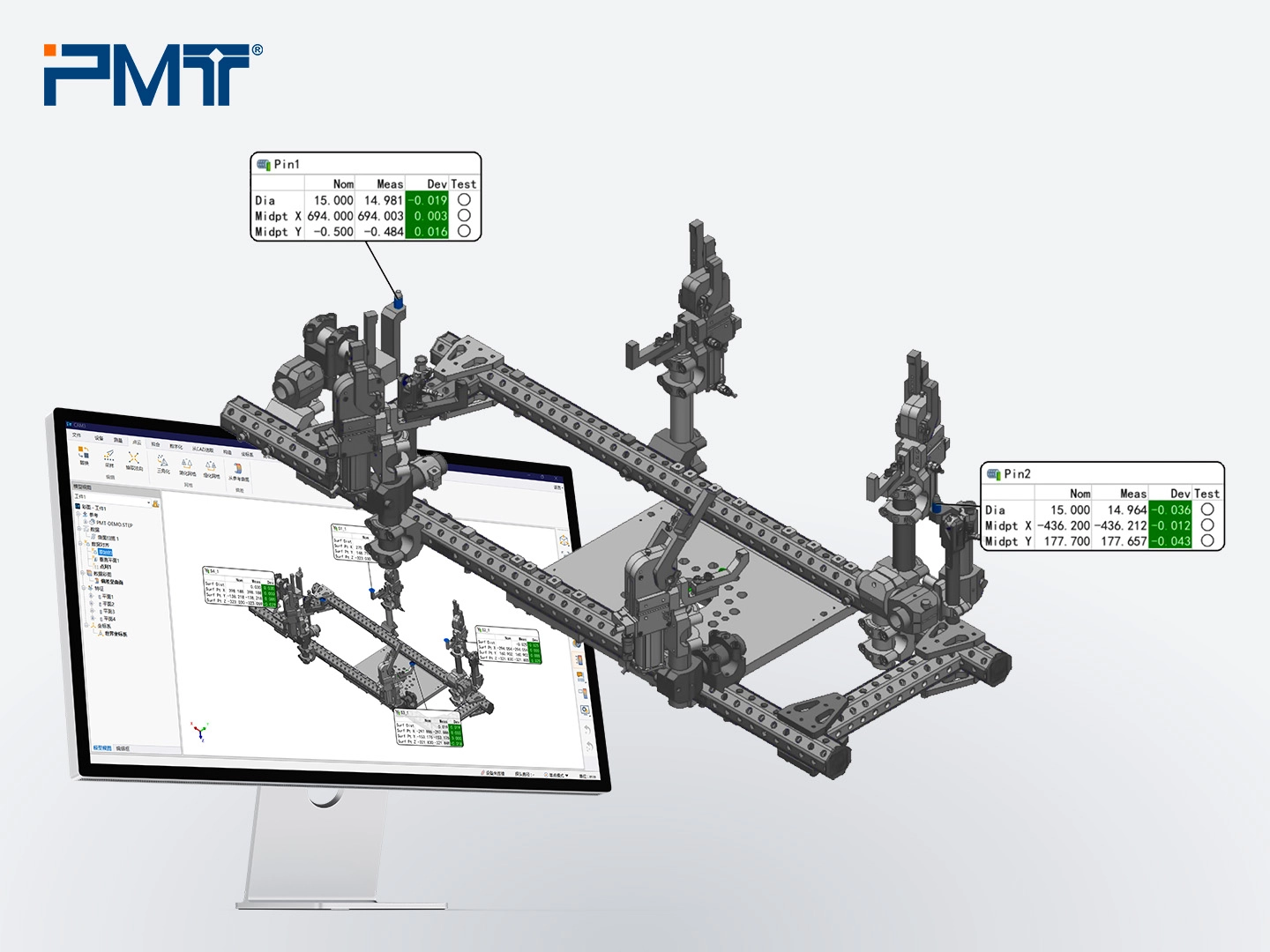
4. Measure gripping unit. The gripping units typically includes cylindrical locating pins, fixing blocks, and chuck blocks. Measure the locating pins using the cylinder feature, and use Build/Inspect to measure the fixing blocks. Chuck blocks are adjusted relative to the blocks and don’t require direct measurement. Compare all measured features with the CAD model to determine necessary adjustments.
5. Adjust the gripping modules according to the 3D comparison results until all deviations are within tolerance. Then, export the export in PDF format.
B. On-Site Re-Measurement of the Gripper
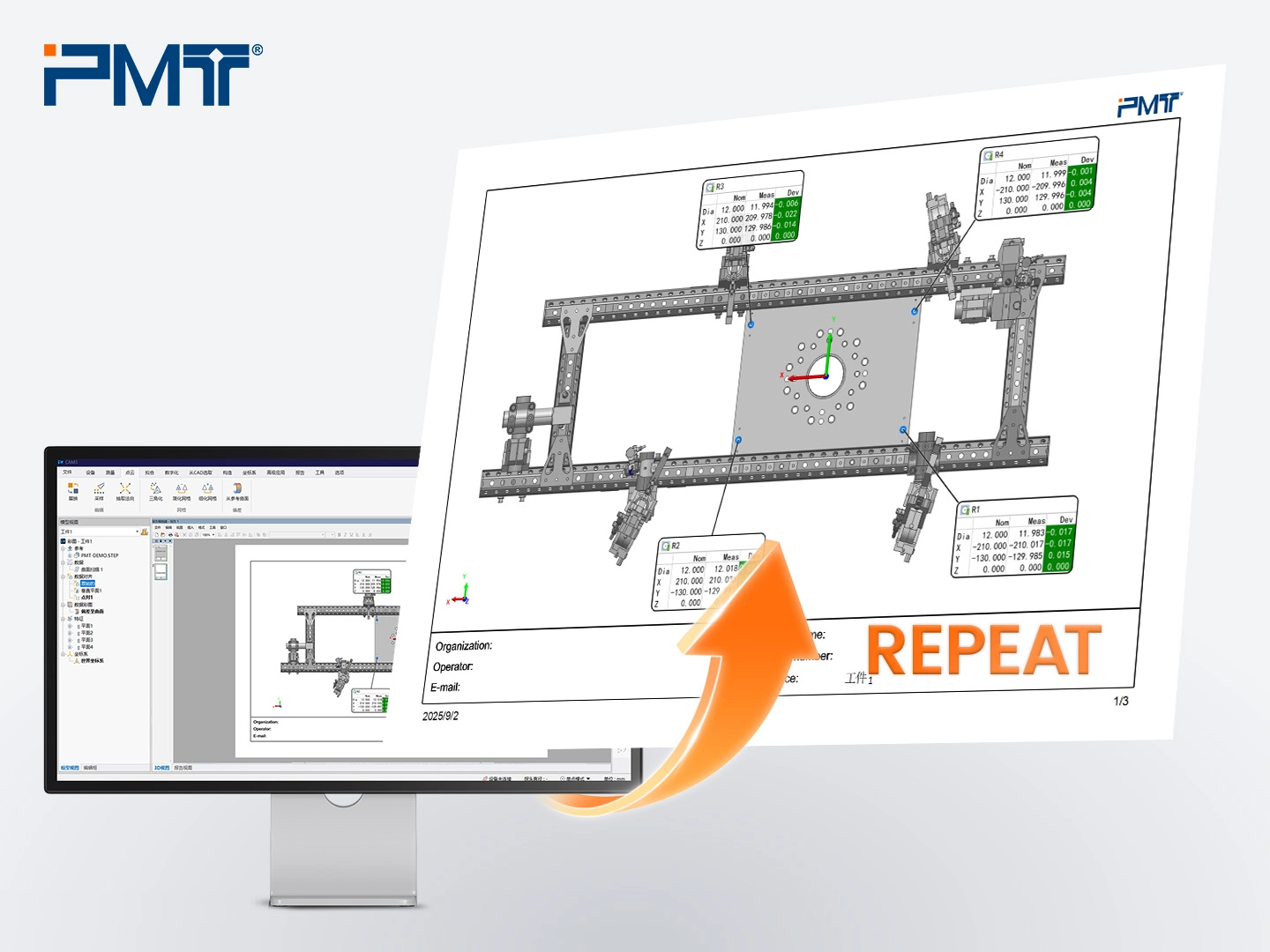
After the octagonal tube gripper passes initial measurements, it may still undergo slight deformation due to vibrations or external forces during transportation. Therefore, re-measuring the gripper on-site with a portable CMM is essential after installation. This ensures the gripper’s performance and confirms its precision.
The re-measurement process mirrors the initial factory checks, typically requiring only a 3D comparison to verify the gripping unit’s accuracy.
C. Robot Calibration Assistance
Once the gripper’s accuracy is confirmed, robot calibration can be performed on the welding fixtures. First, establish a coordinate system using the gripper’s fixture and define the robot’s movement trajectory. Next, use a portable measuring arm to measure the coordinates of at least four fixed datum holes along the trajectory. Finally, input these values into the robot’s system to complete the calibration.
Customer Feedback
The Turkish customer shared that before purchasing the PMT portable measuring arm, they outsourced most measurement tasks. However, since a recent surge in orders, shorter delivery times, and externally sourced materials made scheduling measurements difficult, which significantly driving up production costs.
Since acquiring the PMT Arm, these issues have been resolved. After just two days of training, the company’s fitters quickly mastered the device. The integrated workflow has eliminated installation errors and significantly reduced costs on outsourced measurements.
Conclusion
Octagonal tube grippers are widely used in the automotive welding and automation industries for their modular design, high strength, easy assembly, and long lifespan. Moreover, the portable coordinate measuring machine ensures high precision, portability, and rapid 3D inspection, making it crucial for both verifying the gripper’s accuracy before shipment and shortening delivery times while reducing costs. Therefore, the measuring arm has become an indispensable tool in the production process of octagonal tube grippers.
The post PMT Portable Measuring Arm: A Key Solution in Driving Precision of Industrial Grippers in Automation appeared first on PMT Technologies.
]]>The post Portable Measuring Arm: A Professional Solution for Large-Diameter Valve Inspection appeared first on PMT Technologies.
]]>The Challenge of Large-Diameter Valve Inspection
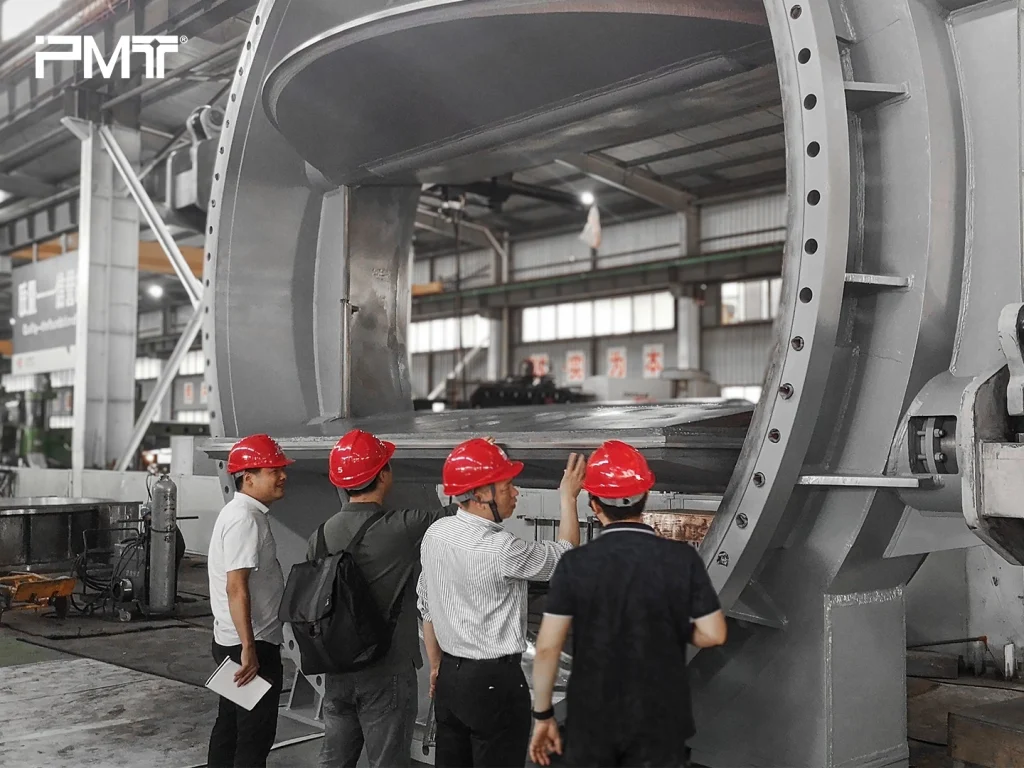
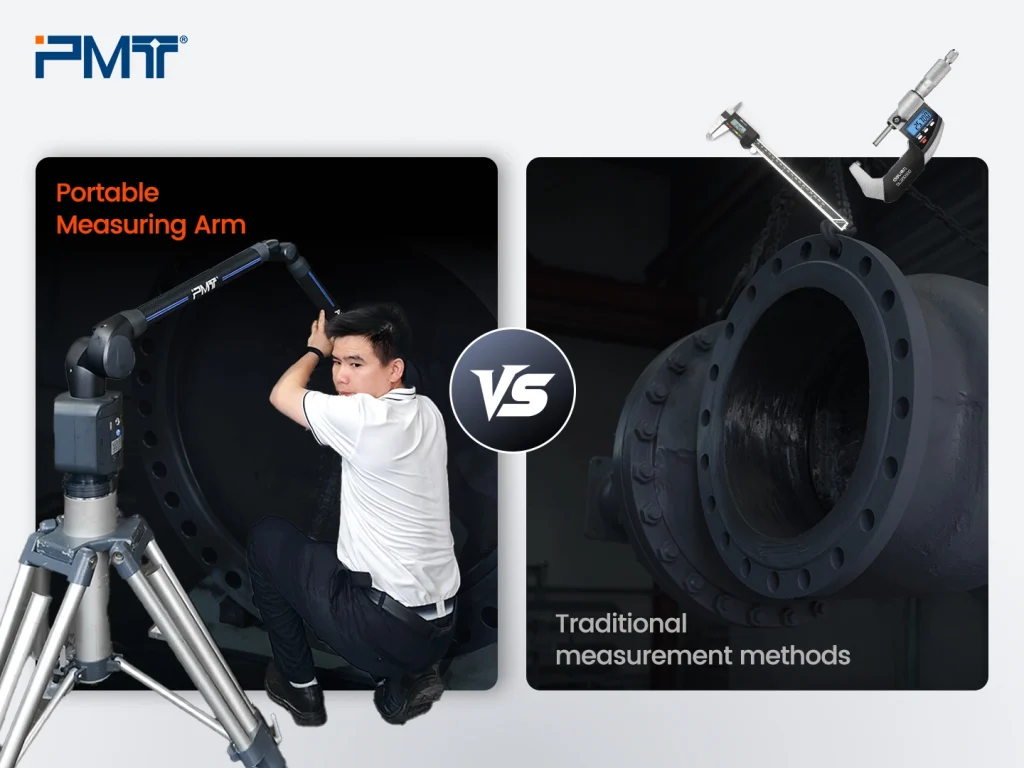
Large valves often feature wide openings, heavy structures, and intricate inner and outer surfaces. These characteristics make them difficult to inspect with conventional measurement tools such as calipers or fixed CMMs. The main issues include limited measuring range, difficulty in accessing hidden areas, and time-consuming setup processes. As a result, many industries face delays, higher costs, and risks of quality problems when relying solely on traditional methods.
Why Portable Measuring Arm is the Right Solution
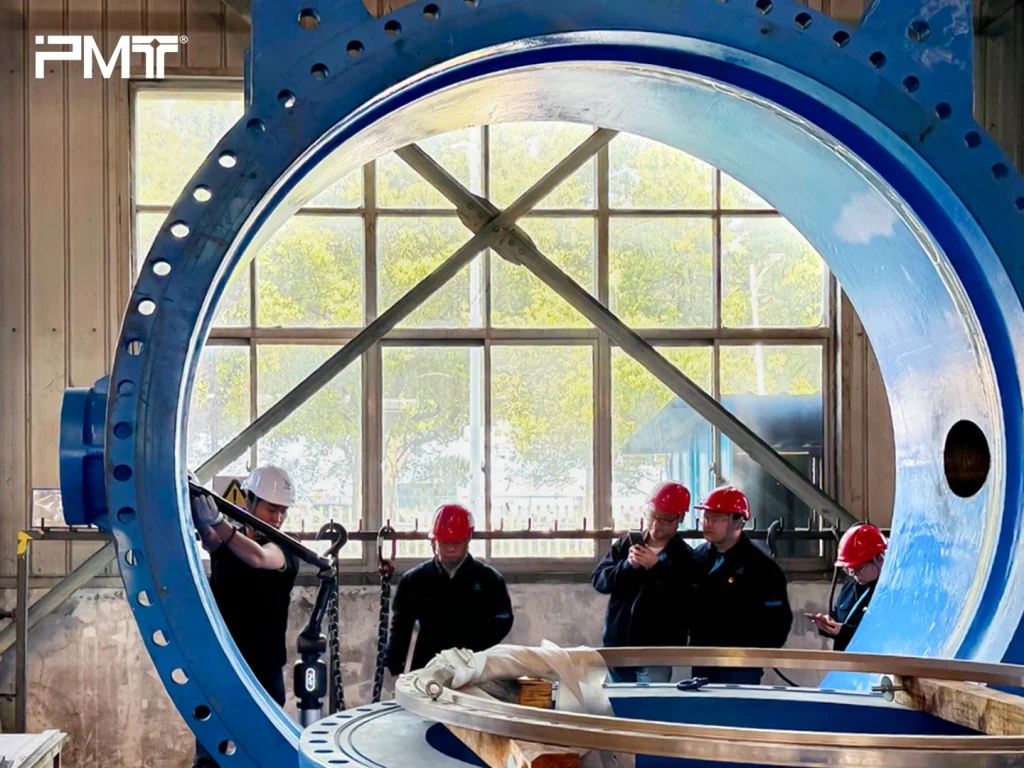
Compared with other inspection tools, the portable measuring arm?stands out because it is lightweight, easy to move, and flexible to use directly on the shop floor. It allows operators to measure large workpieces without moving them to a fixed inspection room, saving both time and effort. For large-diameter valves, this mobility ensures that even the deepest internal structures and widest external surfaces can be accurately inspected.
Key Advantages in Valve Body Measurement
To understand its value better, let’s look at the specific benefits of using a portable measuring arm in valve body inspection:
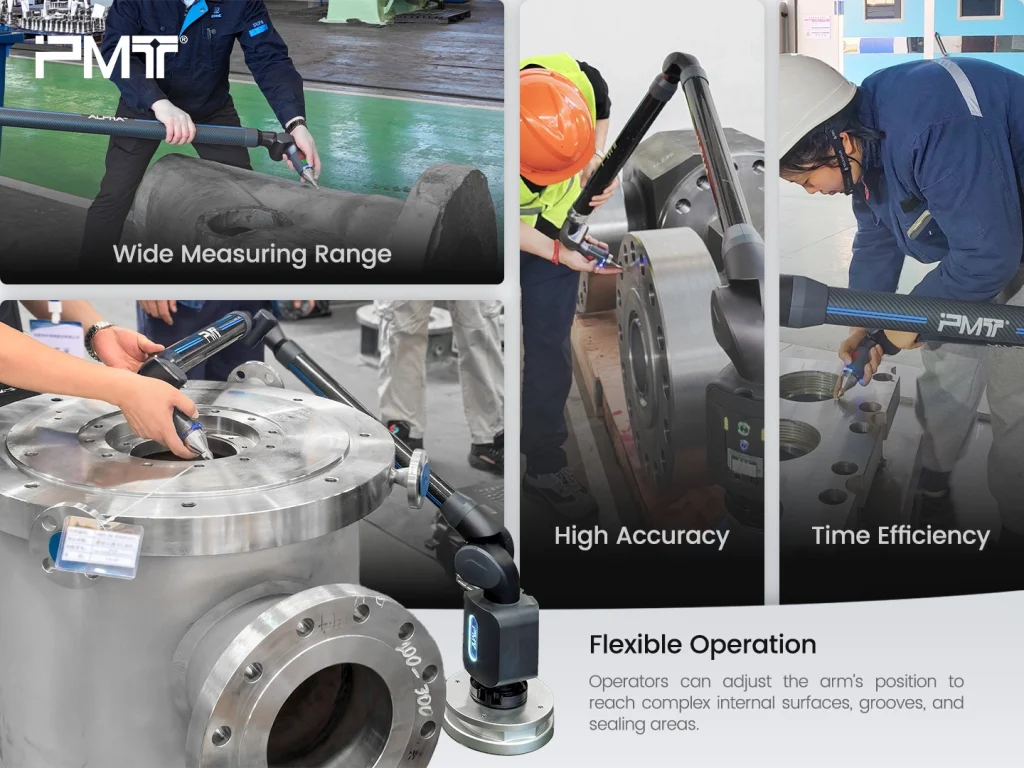
- Wide Measuring Range: The arm can easily cover large diameters that exceed the capability of standard gauges or handheld tools.
- High Accuracy: Despite its mobility, the system maintains strong precision, providing reliable data for quality control.
- Flexible Operation: Operators can adjust the arm’s position to reach complex internal surfaces, grooves, and sealing areas.
- Time Efficiency:?On-site inspection reduces downtime, as there is no need to transport heavy valves to a separate measuring facility.
These advantages directly help industries improve product quality and reduce inspection costs.
Practical Applications in the Valve Industry
In real-world applications, portable measuring arms are commonly used to measure valve body diameter, roundness, flange flatness, and alignment of internal passages. For example, when producing a high-pressure valve, every detail of the sealing surface must meet strict standards. With a portable measuring arm, technicians can quickly identify any deviation and make adjustments before final assembly. This ensures higher reliability and reduces the chance of leakage or operational failure in the field.
Improving Efficiency and Reducing Costs
Another key benefit of using portable measuring arms is the improvement in overall efficiency. Traditional methods require several tools and multiple steps, while portable arms allow all measurements to be performed in one setup. This not only saves time but also reduces human error. By cutting unnecessary processes and improving accuracy, manufacturers can significantly lower inspection and rework costs.
Future Outlook in Large-Scale Valve Inspection
Although many tools are used in industrial inspection, portable measuring arms are becoming increasingly important for large and heavy components. Their combination of precision, mobility, and efficiency makes them a valuable tool for valve manufacturers and end-users. As industries continue to demand higher quality and faster production cycles, the role of portable measuring arms in large-diameter valve inspection will only grow stronger.
Conclusion
Inspecting large-diameter valves has always been a difficult task due to their size and complexity. However, with the use of the Portable Measuring Arm, industries can achieve accurate, efficient, and reliable measurement results. From reducing inspection costs to improving product quality, this technology has proven to be an effective solution for one of the most challenging tasks in valve production. For manufacturers aiming to stay competitive, adopting portable measurement tools is no longer an option—it is a necessity.
The post Portable Measuring Arm: A Professional Solution for Large-Diameter Valve Inspection appeared first on PMT Technologies.
]]>The post Measuring Arm: Differences Between Contact and Non-Contact Measurement Methods appeared first on PMT Technologies.
]]>
Introduction to Measurement Methods
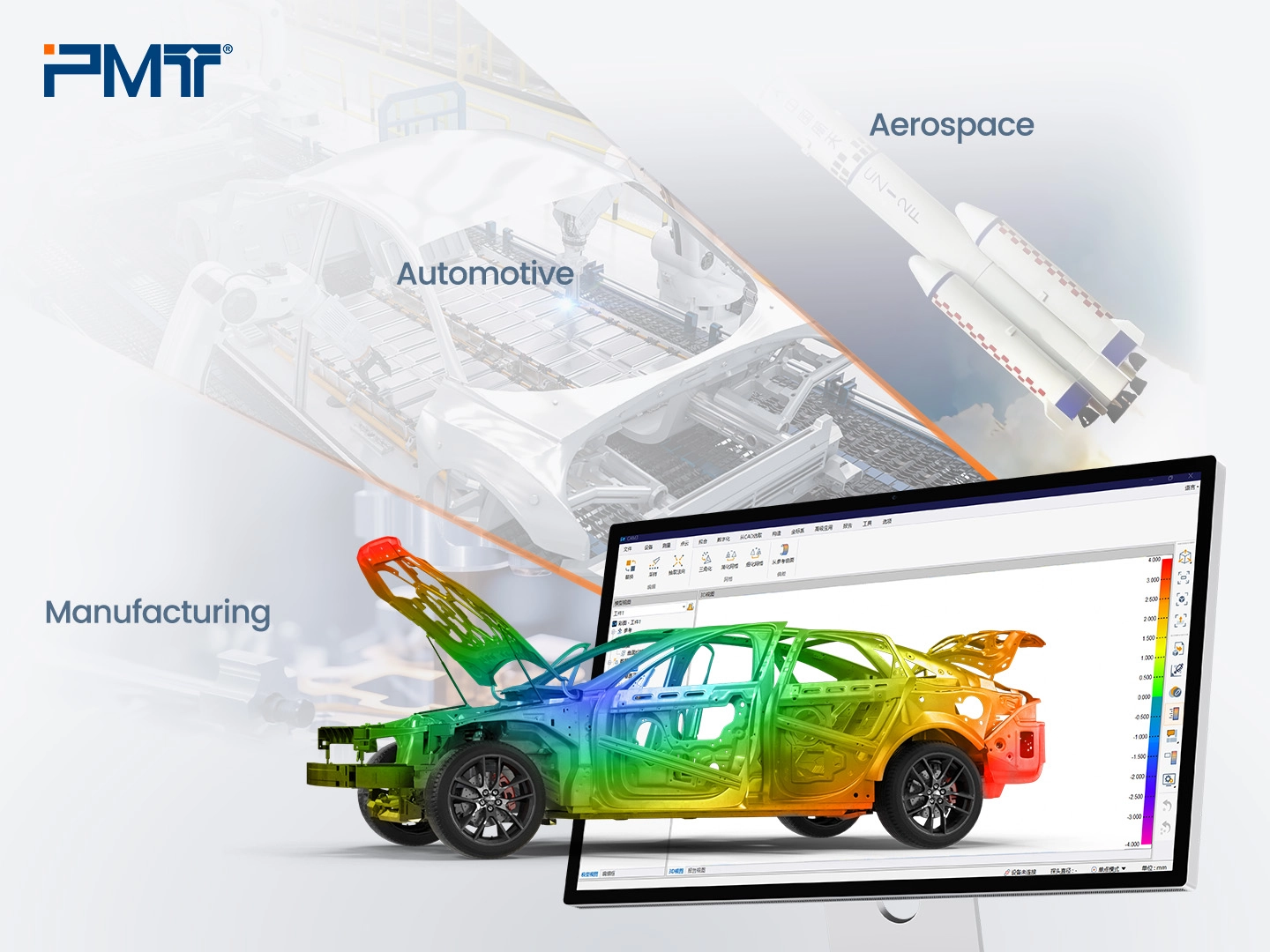
Measurement methods are used to capture the size, shape, and surface characteristics of an object. They are essential in industries such as manufacturing, automotive, aerospace, and electronics, where quality and precision are critical. While both contact and non-contact methods aim to deliver accurate results, their working principles and applications are very different.
What is Contact Measurement?
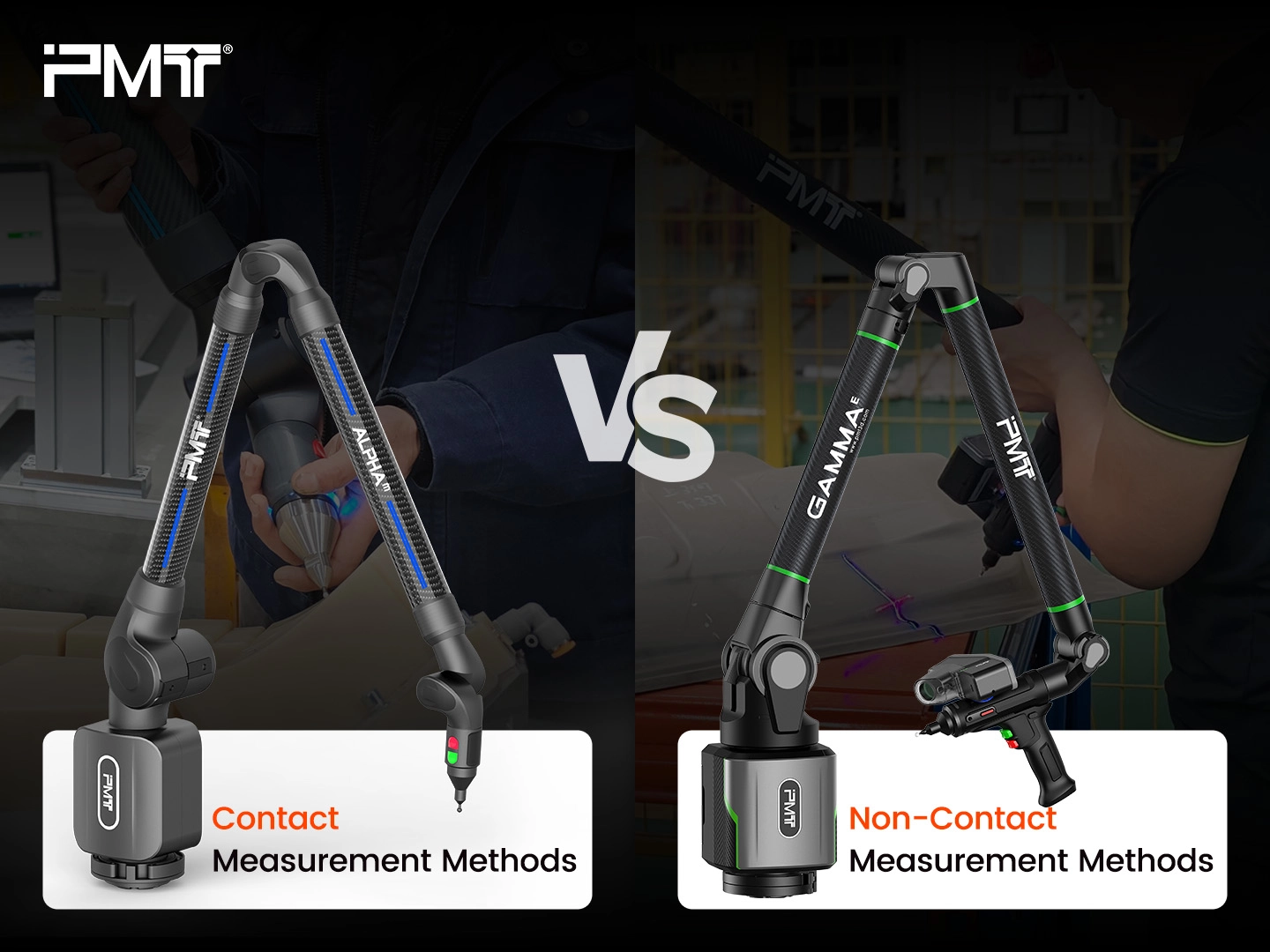
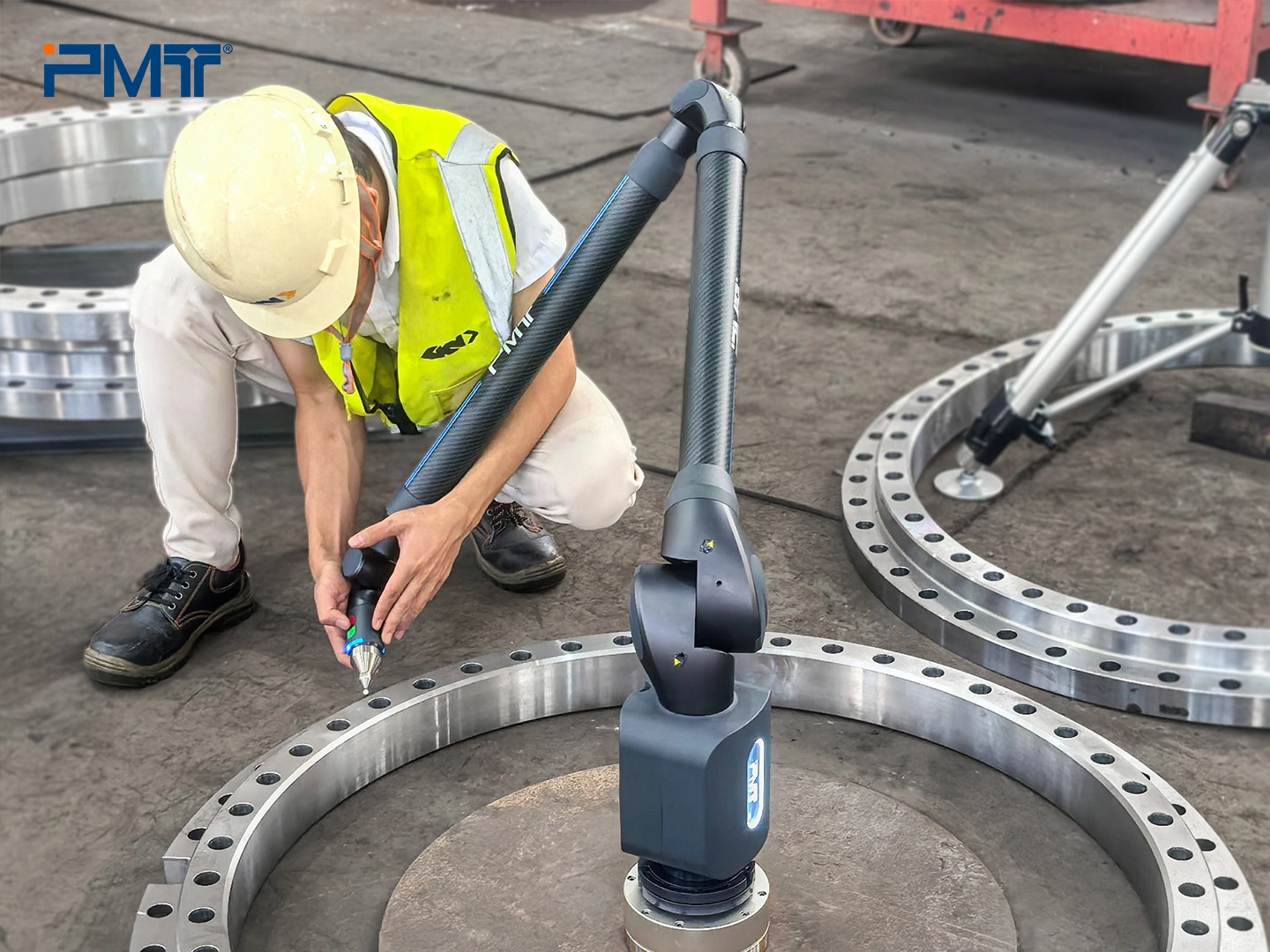
Contact measurement is a method in which a physical probe touches the object to record its dimensions. The most common example is the coordinate measuring machine (CMM), where a probe makes direct contact with specific points on the part. Portable measuring arms also use this principle to capture 3D data. This approach is valued for its high accuracy and reliability, especially when checking geometric tolerances.
Unlike traditional coordinate measuring machines (CMMs), measuring arms typically use zircon ball probes, while ruby ball probes may deliver superior performance in specific measurement scenarios. This versatility contributes to their ease of use and operational flexibility.
It should be noted that contact measurement with a measuring arm requires direct physical contact with the surface, which makes it less ideal for measuring delicate, deformable, or highly curved components.
What is Non-Contact Measurement?
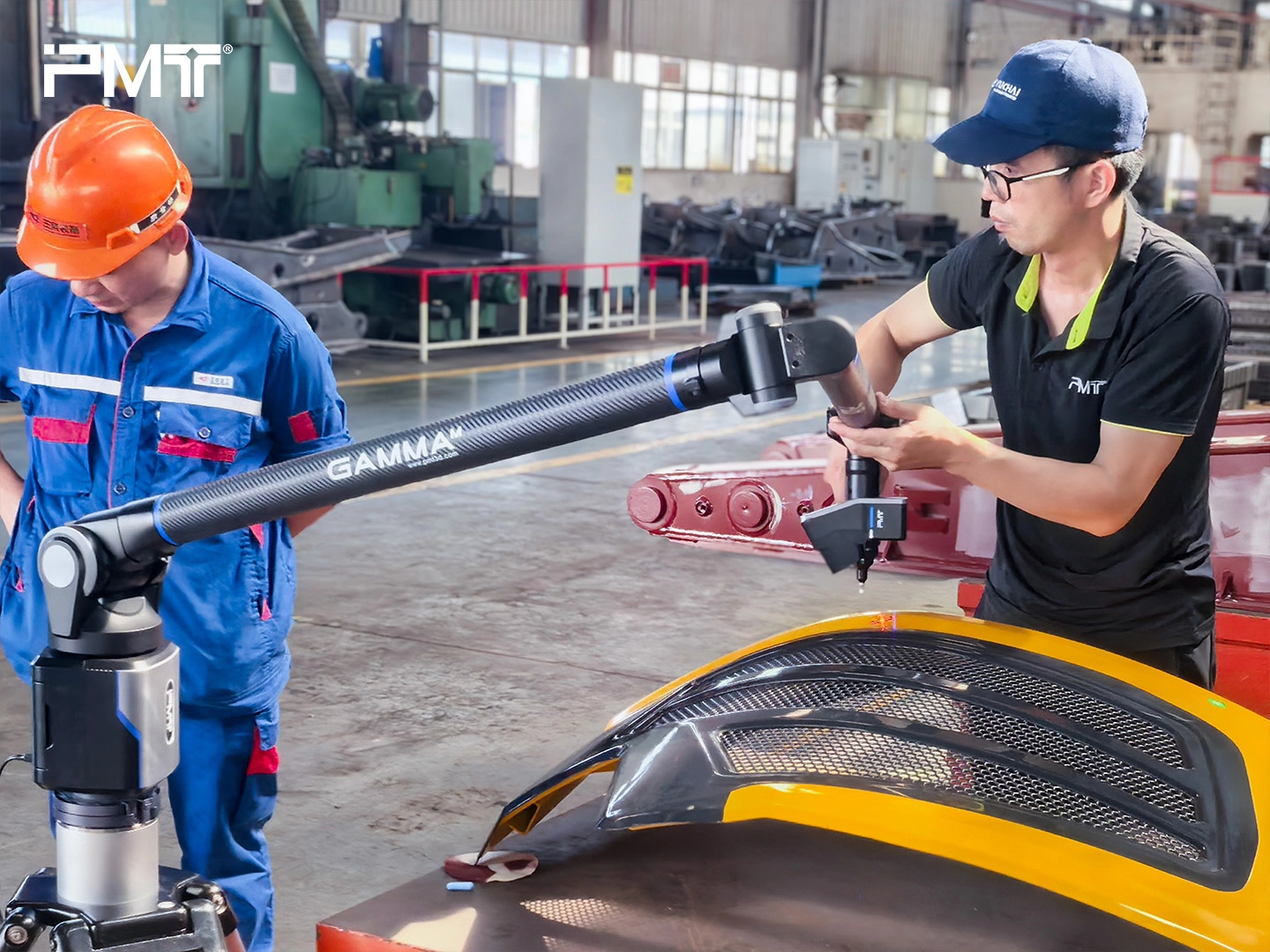
In non-contact measurement, laser measuring arms are used to capture data without physically touching the part. This method is much faster and can collect a large amount of data points in a short time. It is especially effective for measuring complex surfaces, fragile components, or soft materials that might be damaged by direct contact. Non-contact measurement is also widely used in digital modeling, reverse engineering, and quality inspection of free-form surfaces.
Measuring Arm VS. Scanner for Measuring Arm
When comparing accuracy, contact measurement usually provides the highest precision, making it suitable for critical applications that require tight tolerances. Non-contact systems, while slightly less accurate in some cases, are much faster and can handle large volumes of measurement data.
For example, a portable measuring arm with a probe may take time to check each point, whereas a laser scanner can capture thousands of points instantly. Companies often balance precision and efficiency depending on their needs.
| VS | Measuring Arm | SCANNER for Measuring Arm |
| Basic Principle | Touch the probe to the part surface, acquire each points’ 3D coordinates with axis encoders. | Laser projects onto surface; sensor captures reflected light to collect dense point cloud. |
| Measurement Accuracy | 0.12-0.55mm | 0.024-0.101mm |
| Measurement Speed | High, caution with curved and soft surfaces | Extremely high, capture 1,200,000 points/sec |
| Measurement Object | Regular features: holes, cylinders, planes, slots | Complex free-form surfaces, irregular shapes, soft/deformable objects: rubber parts, clay models |
| Impact on workpiece | Contact – low force with zircon probe | Non-Contact – zero force, no risk of surface damage |
| Application | Quality Inspection&Control:
machined parts, gears, bearings, fixtures, gauges; GD&T Report Generation. |
Reverse Engineering:
Digitizing parts without CAD models Inspection&Comparison: Sheet metal, sculptures, artifacts, automotive interiors; Digital Archiving. |
| Operation Difficulty | Easy, low training required | Easy, requires scan path planning & point cloud processing |
| Cost | Low | High |
| Environment Requirement | Temp: 5℃-45℃
RH: 0-95℃ |
Temp: 5℃-45℃
RH: 0-95℃ |
Choosing the Right Measurement Method
Different industries choose measurement methods based on their production demands. Except for specialized fields like cultural relics preservation, contact and non-contact measurement methods often overlap in application. The choice between them depends on factors such as material type, required accuracy, production speed, and cost efficiency. For industries that need detailed precision checks, contact measurement remains the first choice. Conversely, for applications involving complex geometries or rapid inspections, non-contact methods provide significant advantages.
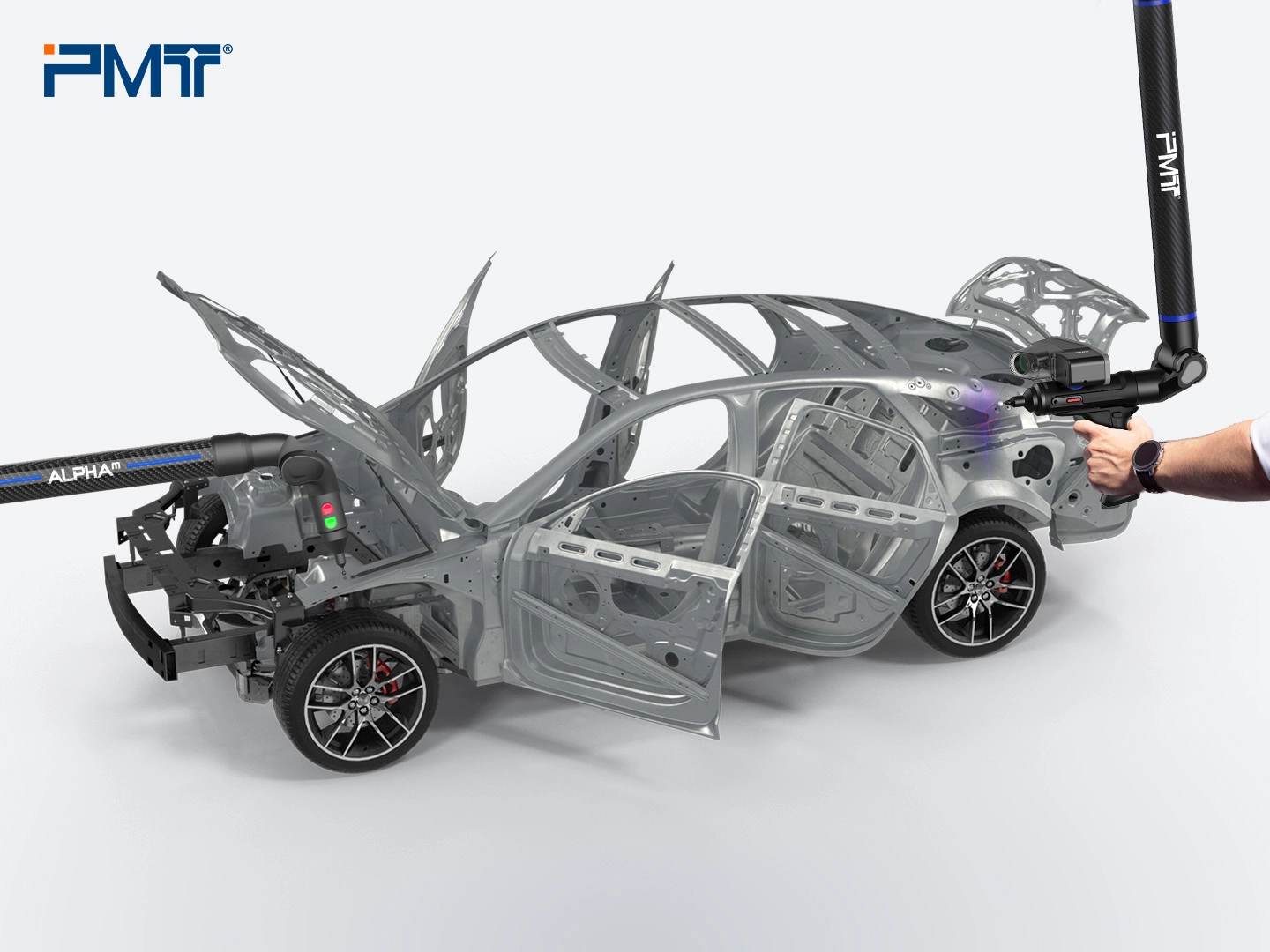
In many modern factories, a combination of both methods ensures the best balance of accuracy, speed, and flexibility.
Conclusion
In summary, the main differences between contact and non-contact measurement methods lie in their working principle, accuracy, speed, and applications. Contact methods provide unmatched precision, while non-contact methods offer speed and adaptability. Both play an important role in modern industry, and using them effectively ensures high-quality production and process efficiency.
The post Measuring Arm: Differences Between Contact and Non-Contact Measurement Methods appeared first on PMT Technologies.
]]>The post Today’s Topic: How PMT’s Portable Measuring Arm Benefits the Wind Energy Industry? appeared first on PMT Technologies.
]]>Amid the global energy transition and climate change, wind energy plays a crucial role as a key renewable source. To support the sustainable growth of wind energy enterprises, it is essential to establish databases of key components and performance indicators, integrate digital information into quality control systems, and shift from manual operations to intelligent, technology-driven manufacturing.
As a result, sustainable measurement solutions have increasingly become a reliable foundation for the industry’s continued development.
How does PMT Support the Wind Energy Industry?
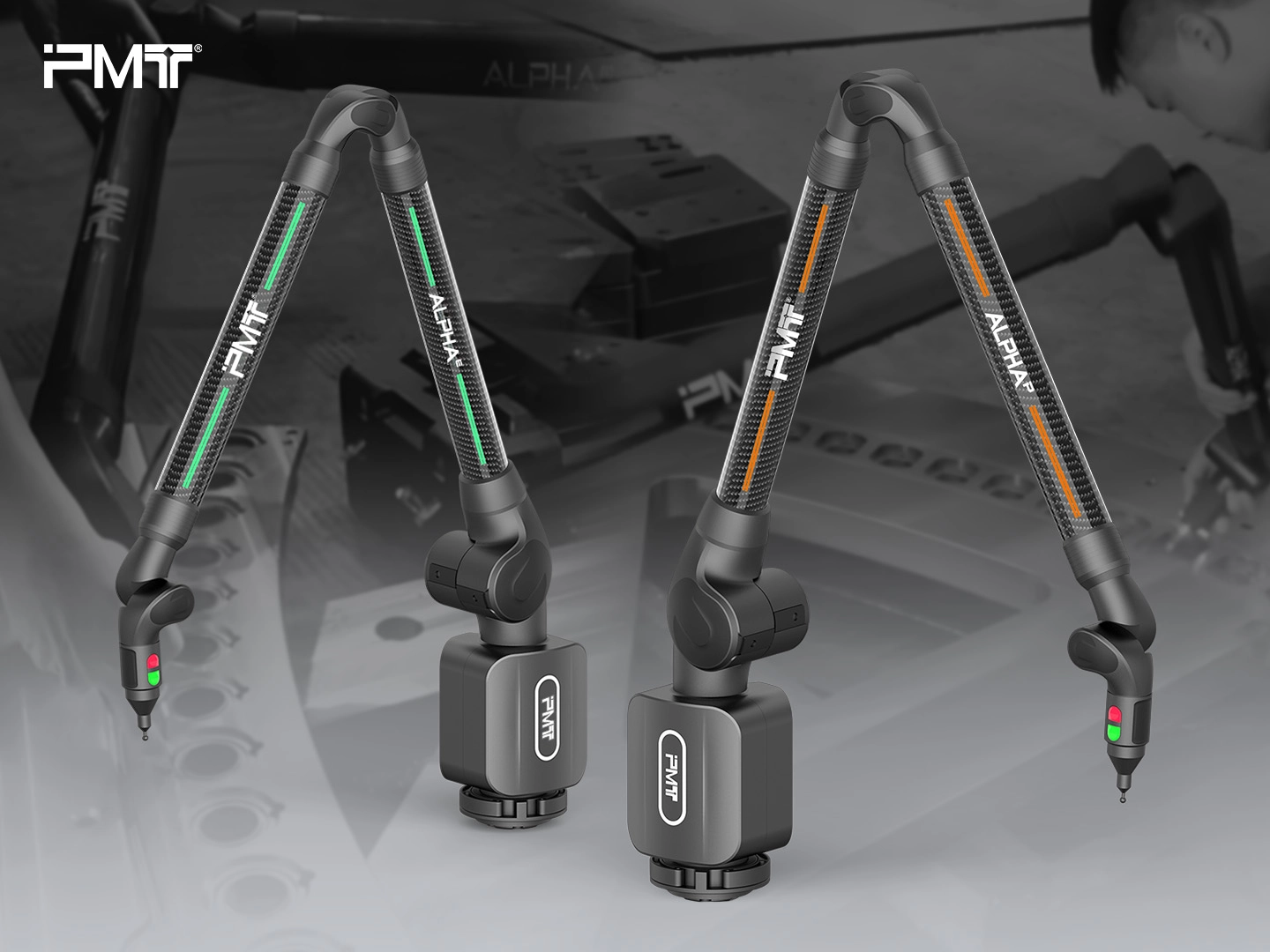
PMT’s independently developed portable coordinate measuring machine (CMM), also known as a portable measuring arm, has been widely used in the wind energy industry for its precise GD&T analysis and strong on-site adaptability. It significantly enhances manufacturing accuracy and installation quality, while enabling real-time inspection, rapid feedback, and timely correction.
By delivering accurate measurements anytime and anywhere, PMT portable measuring arm helps lower costs, enhance productivity, and ensure operation safety, making quality control more efficient and contributing to the sustainable growth of the wind energy industry.
Why Choose a Portable Measuring Arm?? Key Benefits of PMT Arm
During a visit to a customer site in Poland, a chief engineer was seen using the PMT portable measuring arm to inspect wind turbine blades alongside his technical team. To better understand user feedback and strengthen cooperation, PMT conducted a brief on-site interview.
PMT Technologies: What do you think about the PMT Arm so far?
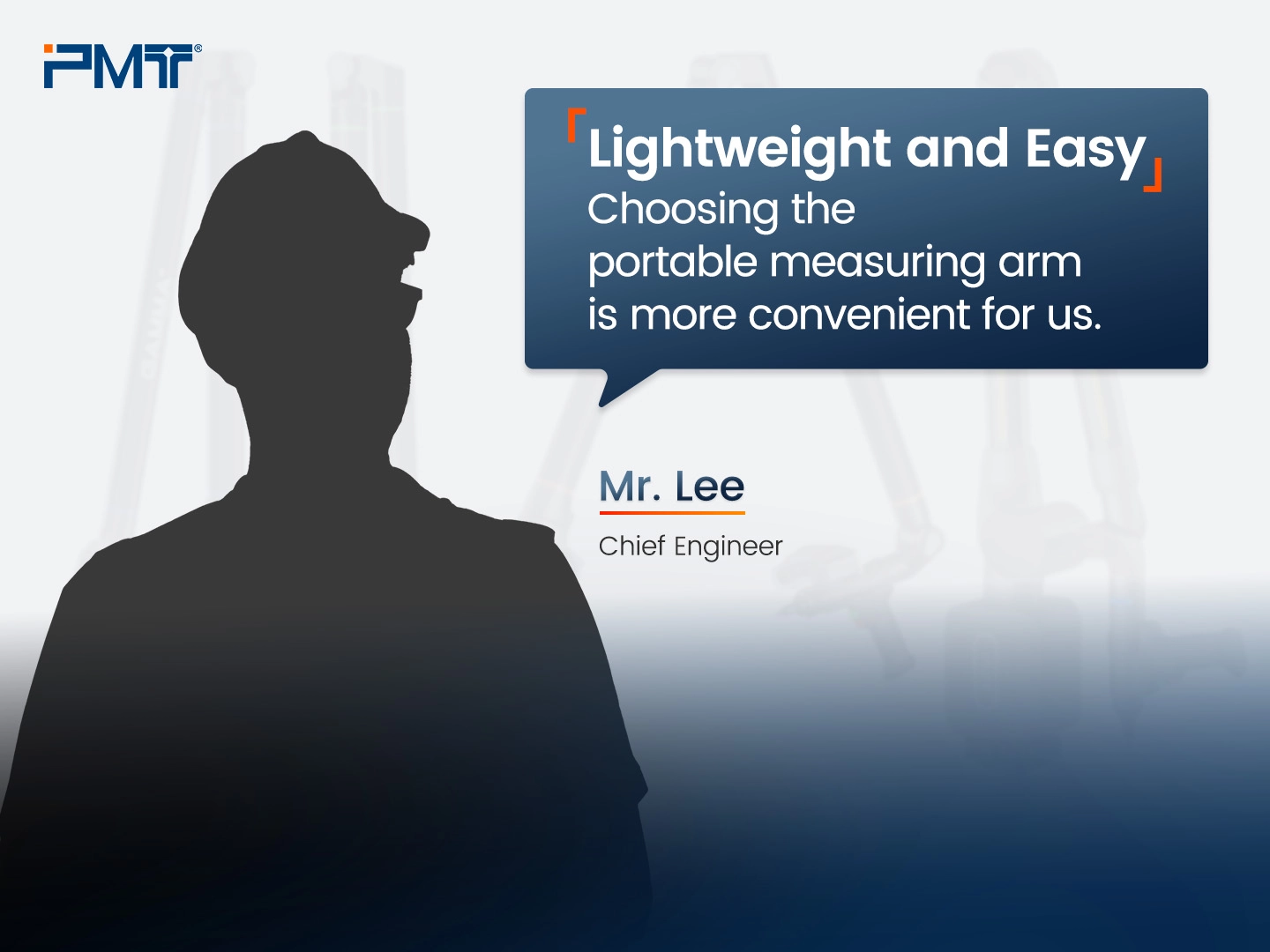
Chief Engineer: It’s lightweight and easy to move around the shop floor. As you can see, we have multiple production areas, it would be impossible to move a traditional CMM across several scenarios. That’s why we chose the portable measuring arm, which is more convenient for us.?
PMT Technologies: Exactly. The PMT portable measuring arm allows for on-site flexible measurement, saving both time and cost, especially in the wind power industry.
Chief Engineer: And it’s also very easy-to-use compared to a traditional CMM. Our engineers even don’t need to learn programming. They just touch the probe to the workpiece, then the 3D software collects data and constructs features quickly with its geometric functions.
PMT Technologies: Right. Even in environments where temperatures fluctuate, like during wind equipment manufacturing and installation, PMT Arm’s smart temperature compensation system automatically adjusts the data in real time. Unlike fixed coordinate measuring machines, the portable CMM doesn’t require a climate controlled room while still maintaining high accuracy.
How Easy is it to Use a Portable Measuring Arm for Measurement?
After a 3-day on-site training provided by a PMT technical engineer at the customer’s site, the operator will have mastered all measurement skills and will be fully capable of independently performing all measurement tasks.
1.Drawing Analysis & GD&T Feature Capture
Compare the workpiece with its drawing, analyze key requirements, and use the portable measuring arm to measure features like planes, circles, and cylinders quickly and accurately.
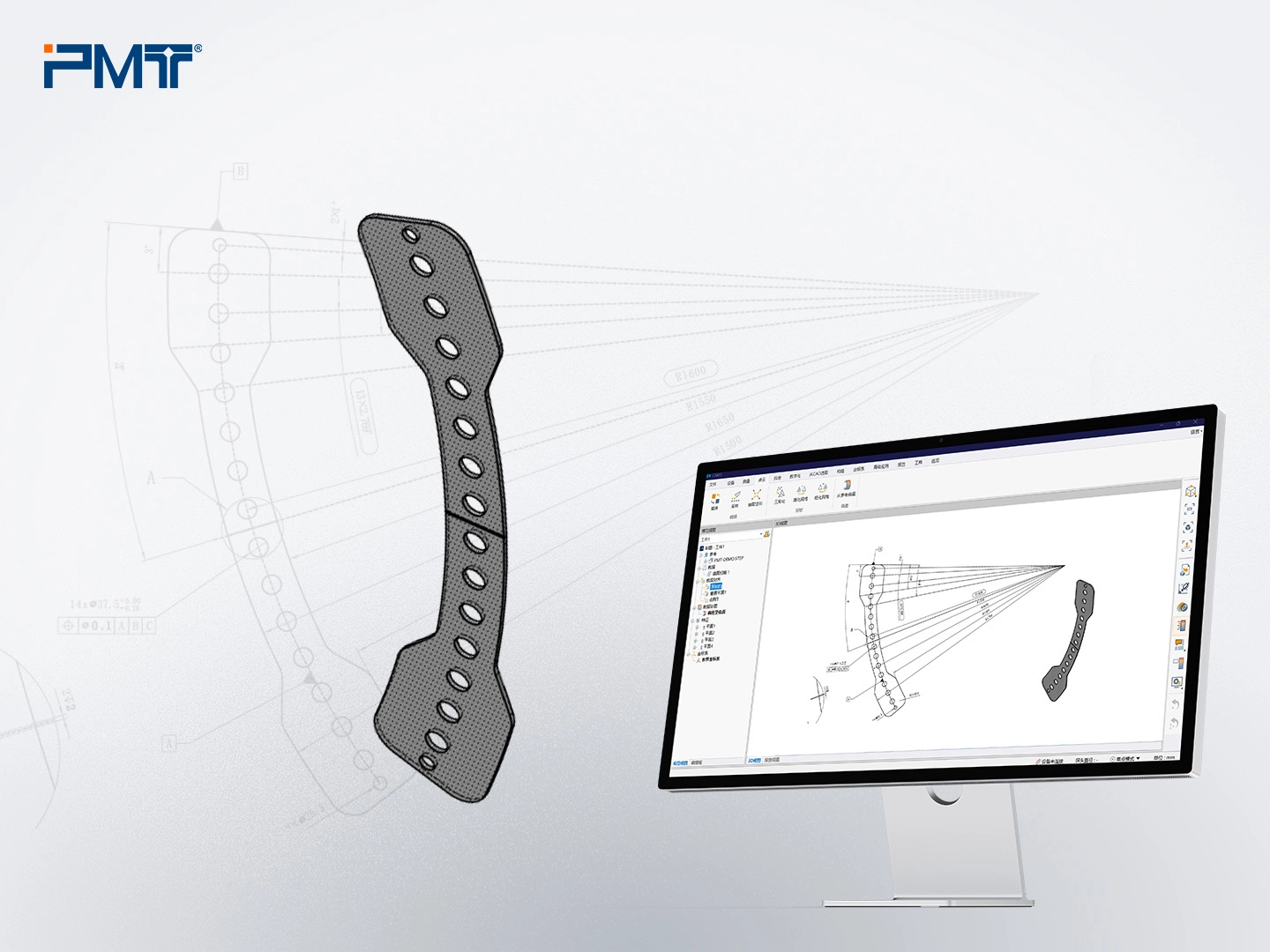
2.CAD Model Import & GD&T Evaluation
For complex parts with multiple sizes on site, import the CAD model and establish a coordinate system. This allows for precise GD&T analysis to verify assembly quality and dimensional accuracy.
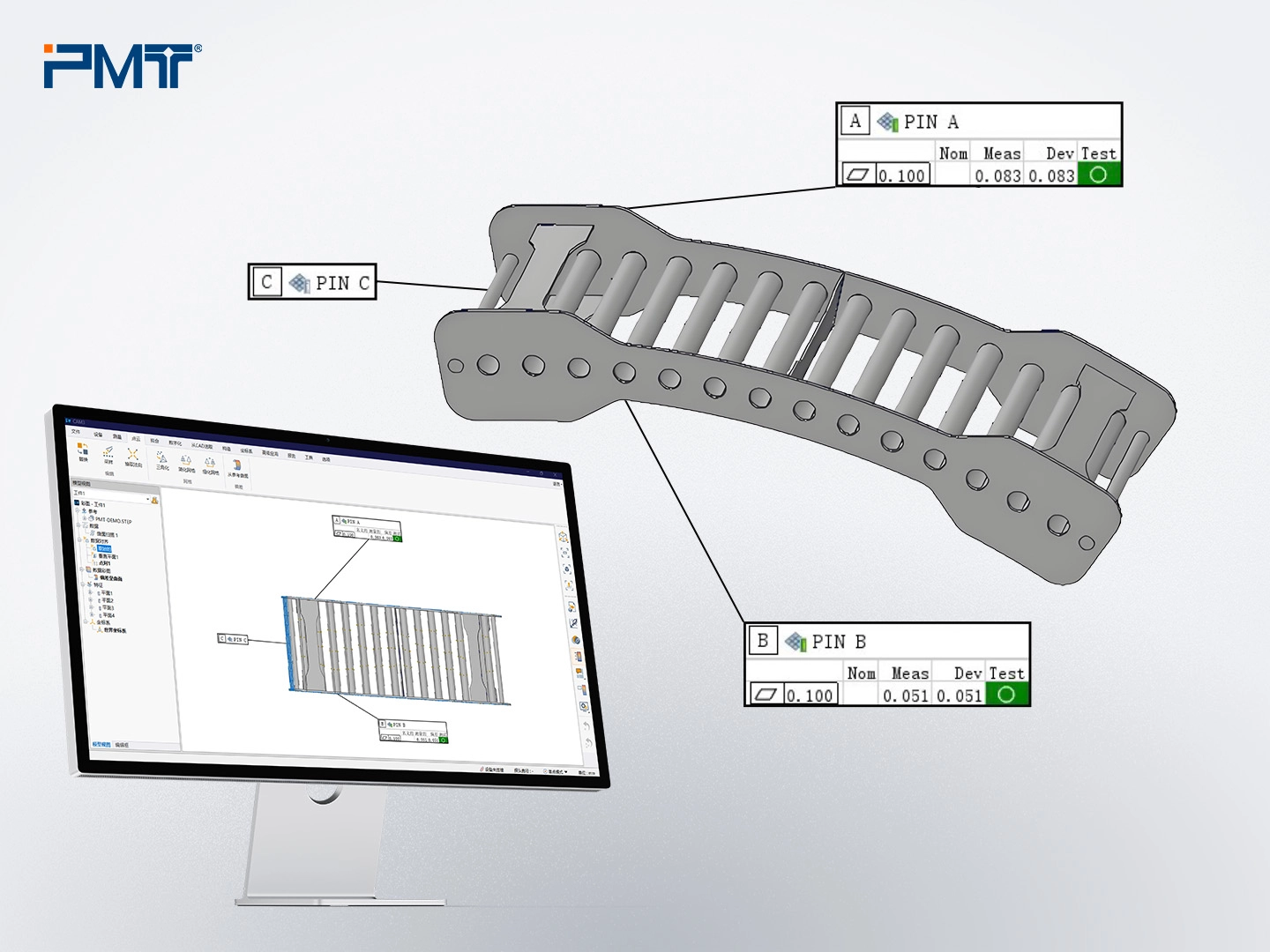
3.Data Collection & Analysis
Use the measuring arm to simply touch the surface of your workpiece, press button on the handle, and points will be automatically taken. Analyze the GD&T parameters such as holes, planes, and surfaces.
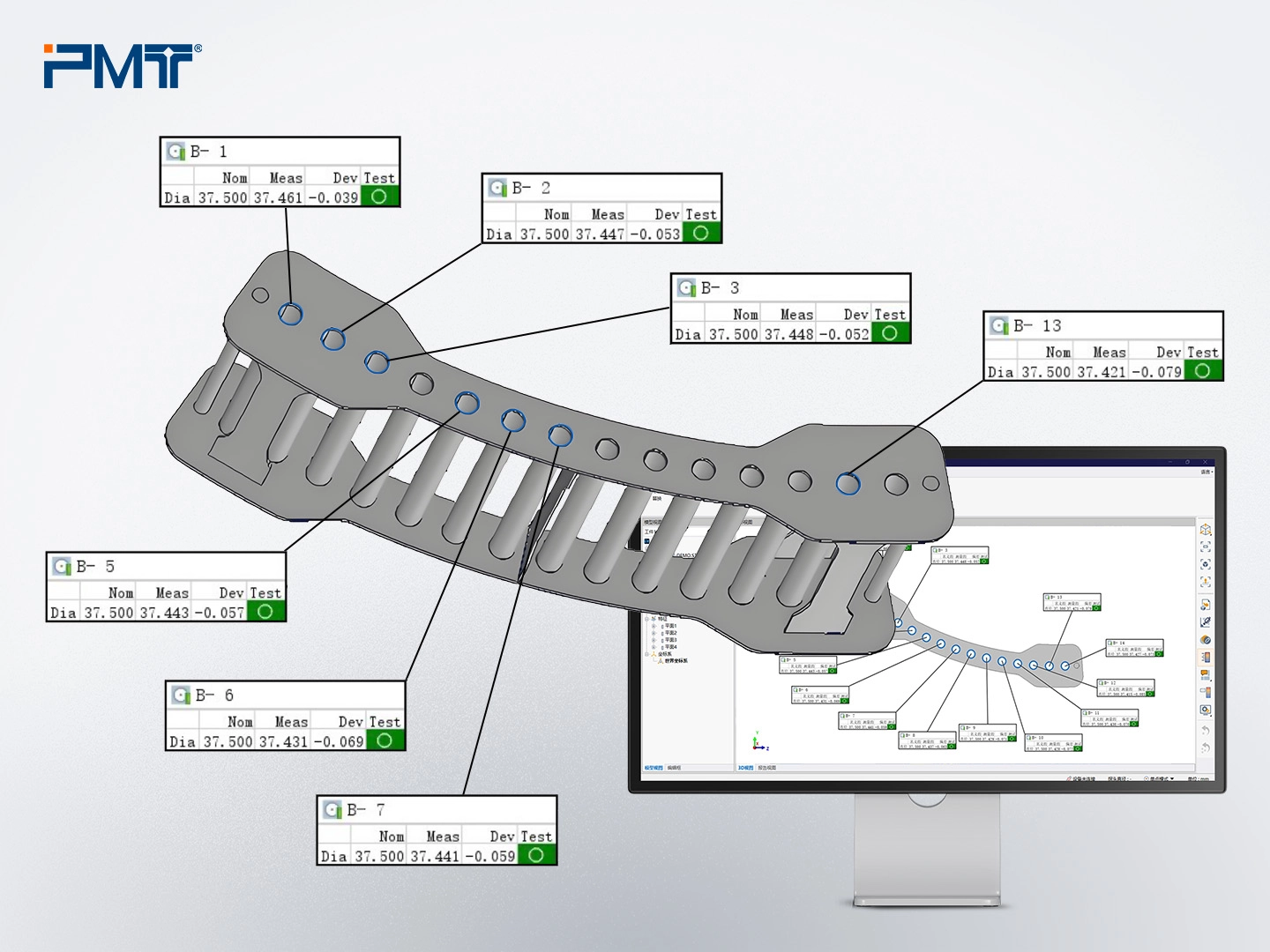
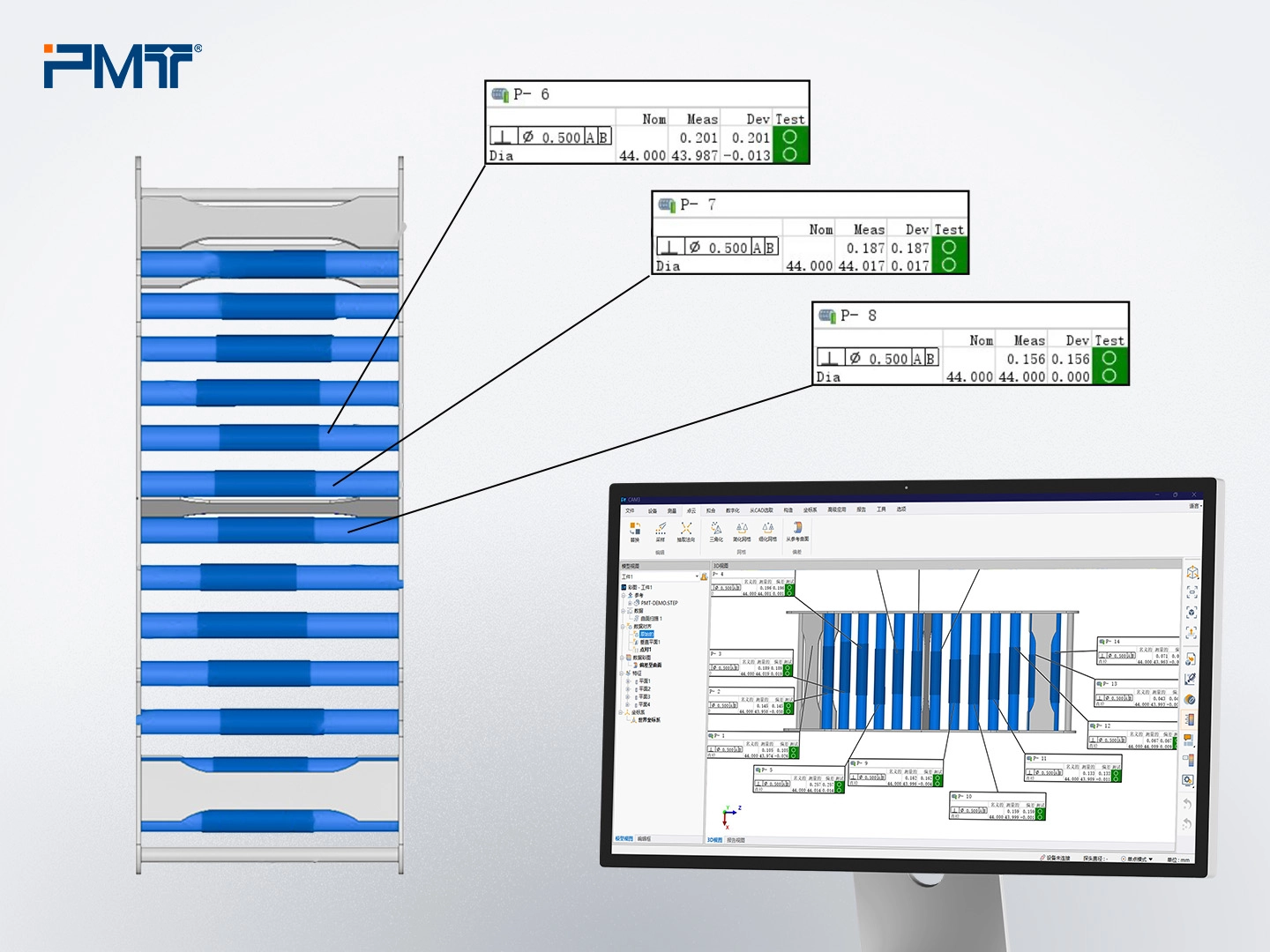
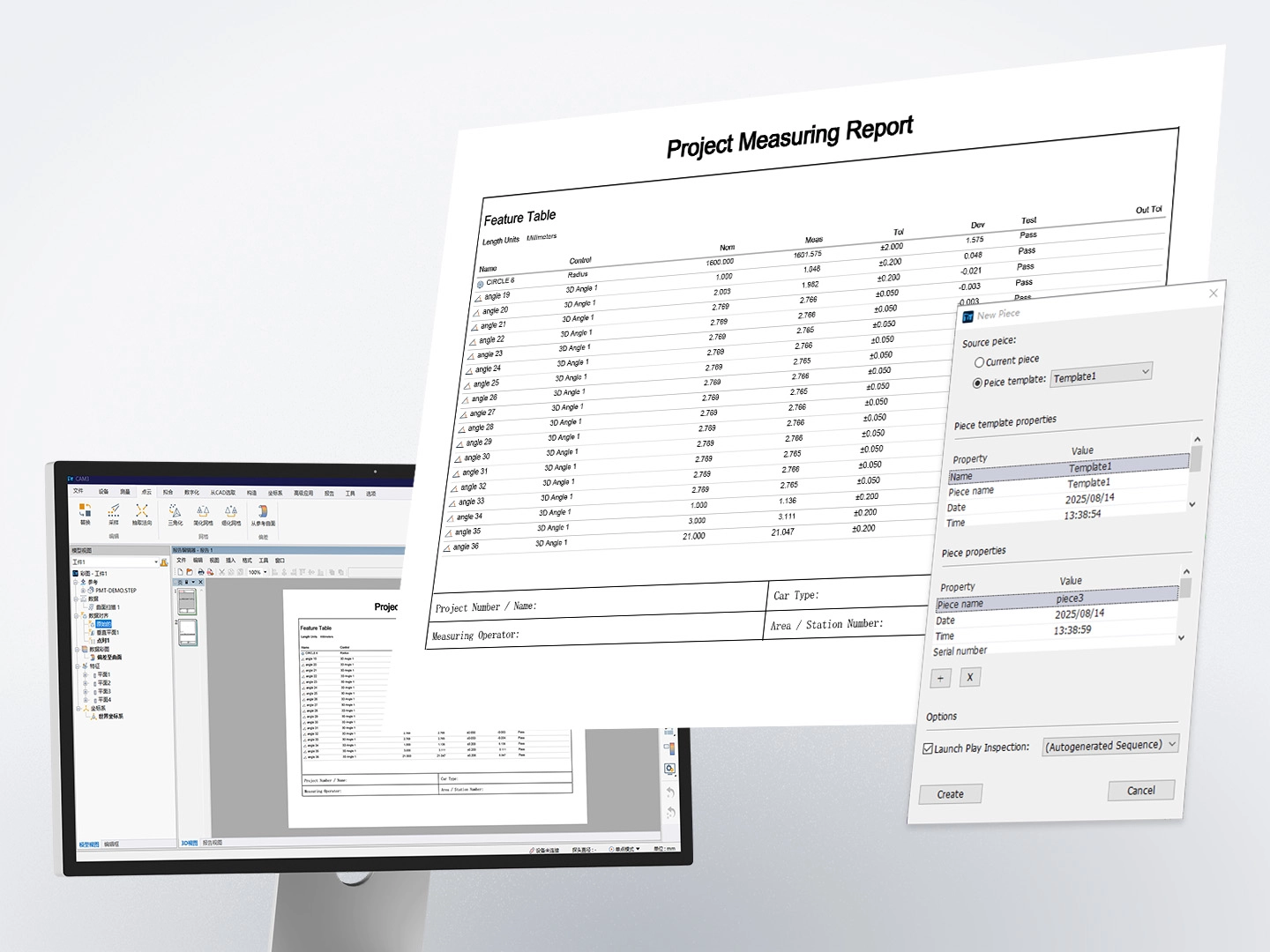
4.Batch Inspection & Report Generation
For random sampling or batch inspection, the portable measuring arm combined with 3D software helps streamline the process. All data is archived for traceability, supporting the development of a comprehensive quality control system.
What Tangible Benefits Can a Portable Measuring Arm Bring to Real-life Applications?
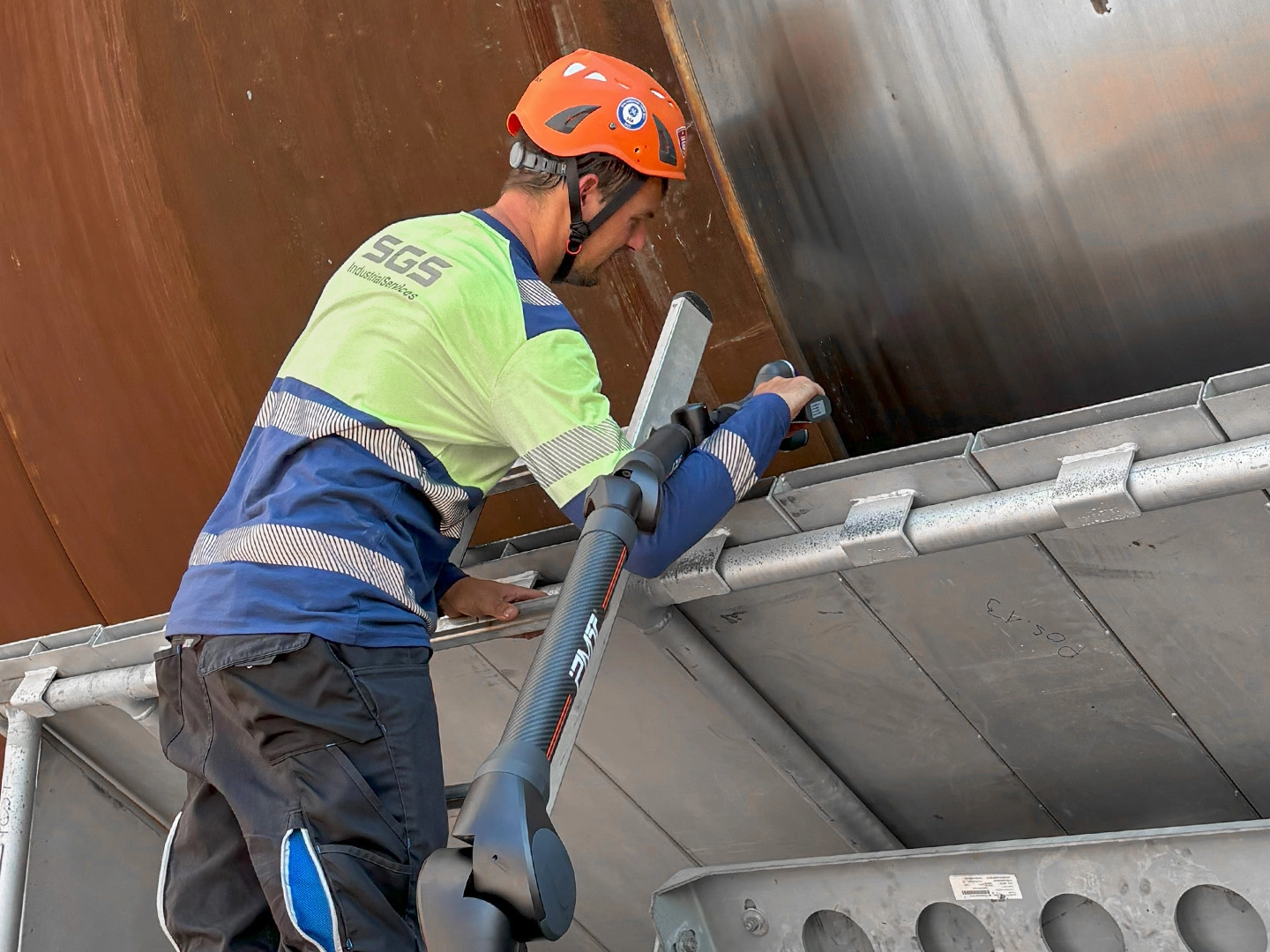
PMT portable measuring arms have been widely adopted across industries worldwide. In the wind energy sector, the measuring arm allows for on-site measurement and real-time adjustment without relocating the workpiece, significantly enhancing production efficiency and product quality. This innovative technology reduces labor and rework costs, delivering substantial economic benefits to customers. Overall, wind energy companies using the PMT Arm have achieved over a 30% reduction in production costs, providing reliable support for long-term sustainable growth.
The post Today’s Topic: How PMT’s Portable Measuring Arm Benefits the Wind Energy Industry? appeared first on PMT Technologies.
]]>