In the currently highly competitive manufacturing environment, product quality control has moved beyond the final inspection stage and must now be integrated throughout the entire production process. For manufacturers of casting equipment, this transformation is particularly crucial – large components, complex structures, and strict tolerances make traditional inspection methods inefficient, time-consuming, and labor-intensive. Therefore, many enterprises are adopting advanced 3D measurement solutions to directly incorporate precision into the workshop floor. The portable measuring arm combined with professional 3D inspection software enables manufacturers to establish a closed-loop quality control system – measurement data can immediately guide production adjustments, thereby improving overall product consistency.
Industry Background: Quality and Efficiency Challenges in Casting Machinery
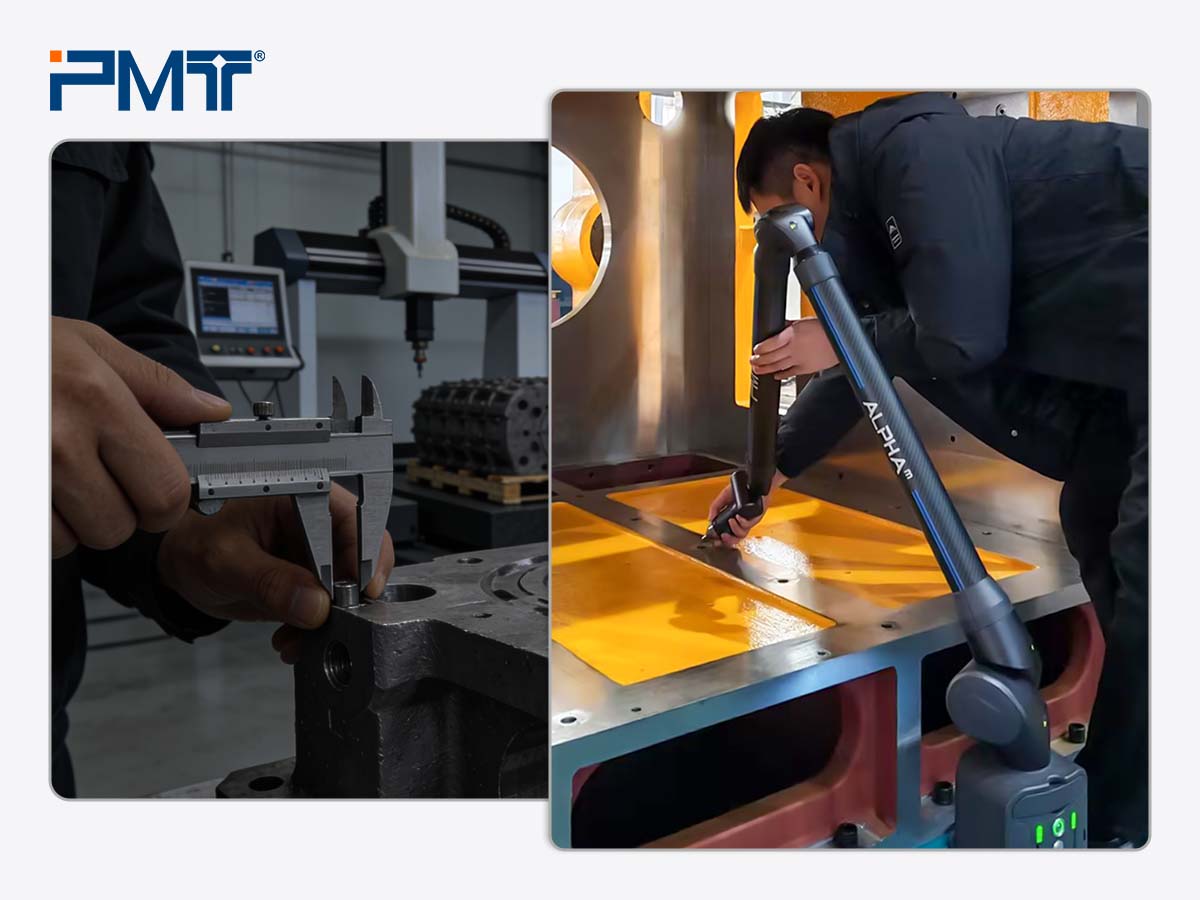
As casting equipment manufacturers expand into the global market, they are increasingly under pressure to deliver high-quality products within shorter delivery periods. On one hand, the surge in overseas orders requires a faster production cycle; on the other hand, traditional inspection tools often struggle to handle the complexity of large castings. Manual measuring tools have limitations in terms of accuracy and consistency, while fixed CMMsystems require transporting bulky parts to a controlled laboratory environment, which is time-consuming, labor-intensive, and occupies a large amount of space. The resulting bottleneck in inspection efficiency not only affects delivery schedules but also undermines product reliability. For many manufacturers, enhancing measurement capabilities has become a key measure for achieving industrial upgrading.
Solution Approach: From Single Inspection to Full-Process Dimensional Control
To overcome these limitations, leading manufacturers are moving from isolated measurements to full-process dimensional control. A portable CMM solution integrates hardware, software, and accessories into a single system that can operate directly on the production line.
Independent Technology and Integrated Solution
Firstly, the integrated system ensures compatibility and stability. The portable measuring arm offers flexible measurement capabilities, while the dedicated detection software is responsible for feature extraction, geometric evaluation, and report generation. This combination enables enterprises to manage complex measurement tasks without relying on multiple independent tools.
On-Machine Inspection and Real-Time Adjustment
More importantly, the portable deployment enables online testing. Operators can measure without disassembling any parts, which not only reduces downtime but also eliminates transportation risks. The real-time data feedback enables technicians to adjust processing parameters immediately, preventing errors from spreading in subsequent processes. Compared to traditional methods, this approach significantly improves detection efficiency and production rhythm.
Additional Value for Quality Management
In addition to improving efficiency, advanced measurement systems can also enhance the quality image of the enterprise. Accurate and traceable data demonstrate the technical strength to customers and auditors. For manufacturers involved in the global supply chain, strong inspection capabilities have become a competitive advantage.
Technical Implementation: Workflow of an Integrated Measurement Solution
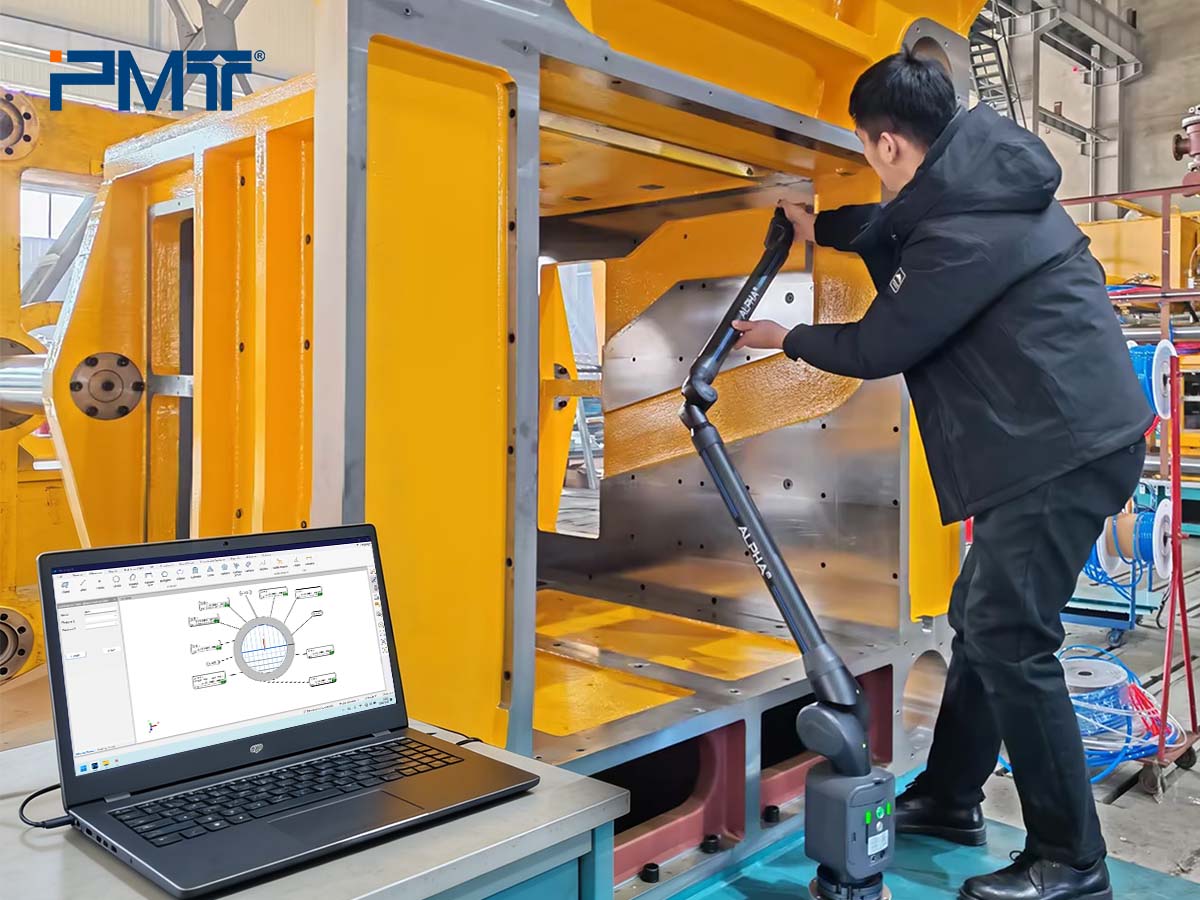
In practical applications, a portable CMM system follows a structured workflow to evaluate complex casting equipment components.
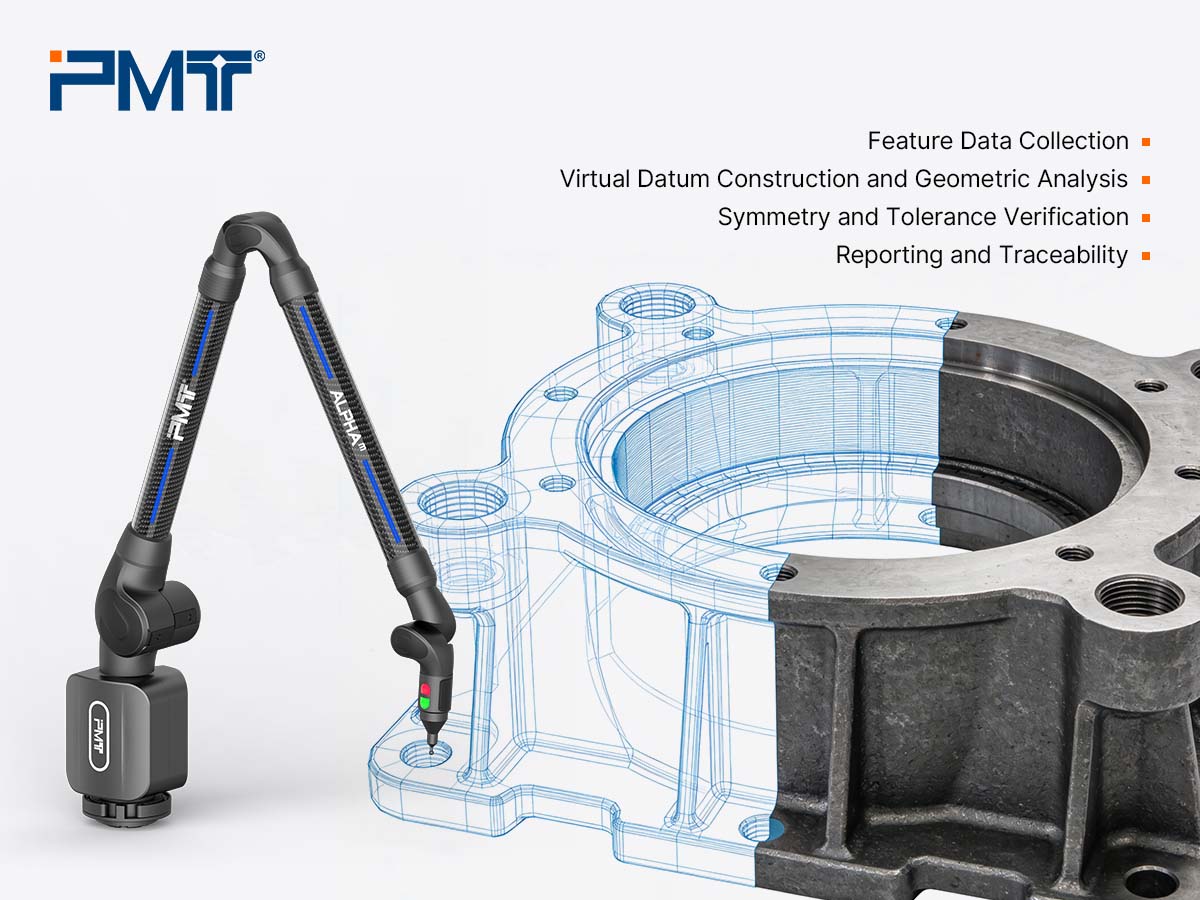
Feature Data Collection
Firstly, the measuring arm can directly capture key geometric features within the machine cavity, such as planes, holes and internal surfaces. The flexible probe positioning function enables it to reach areas that are difficult to access with traditional equipment.
Virtual Datum Construction and Geometric Analysis
Next, the inspection software constructs the reference plane and intersection lines based on the collected data. These virtual references provide a reliable coordinate system for evaluating relationships such as parallelism, perpendicularity, and symmetry. This step converts the original measurement points into meaningful engineering information.
Symmetry and Tolerance Verification
After establishing the coordinate system, the software compares measured values with nominal design data. Tolerance settings help determine whether the part meets required specifications. Automated calculations reduce human interpretation errors and ensure consistent evaluation standards.
Reporting and Traceability
Finally, the system generates digital inspection reports that can be archived for future reference. These records support quality traceability, process improvement, and customer communication.
Application Results: Improving Efficiency and Product Quality
In real production environments, the adoption of portable measuring arms has produced clear benefits. Inspection time for complex structural components has been significantly reduced, enabling faster project completion. At the same time, accurate measurement data improves machining precision and reduces rework. Manufacturers can maintain stable product quality while increasing output, which directly enhances customer satisfaction. The transition from experience-based judgment to data-driven decision-making represents a major step forward in quality management.
Industry Impact: Supporting Global Competitiveness
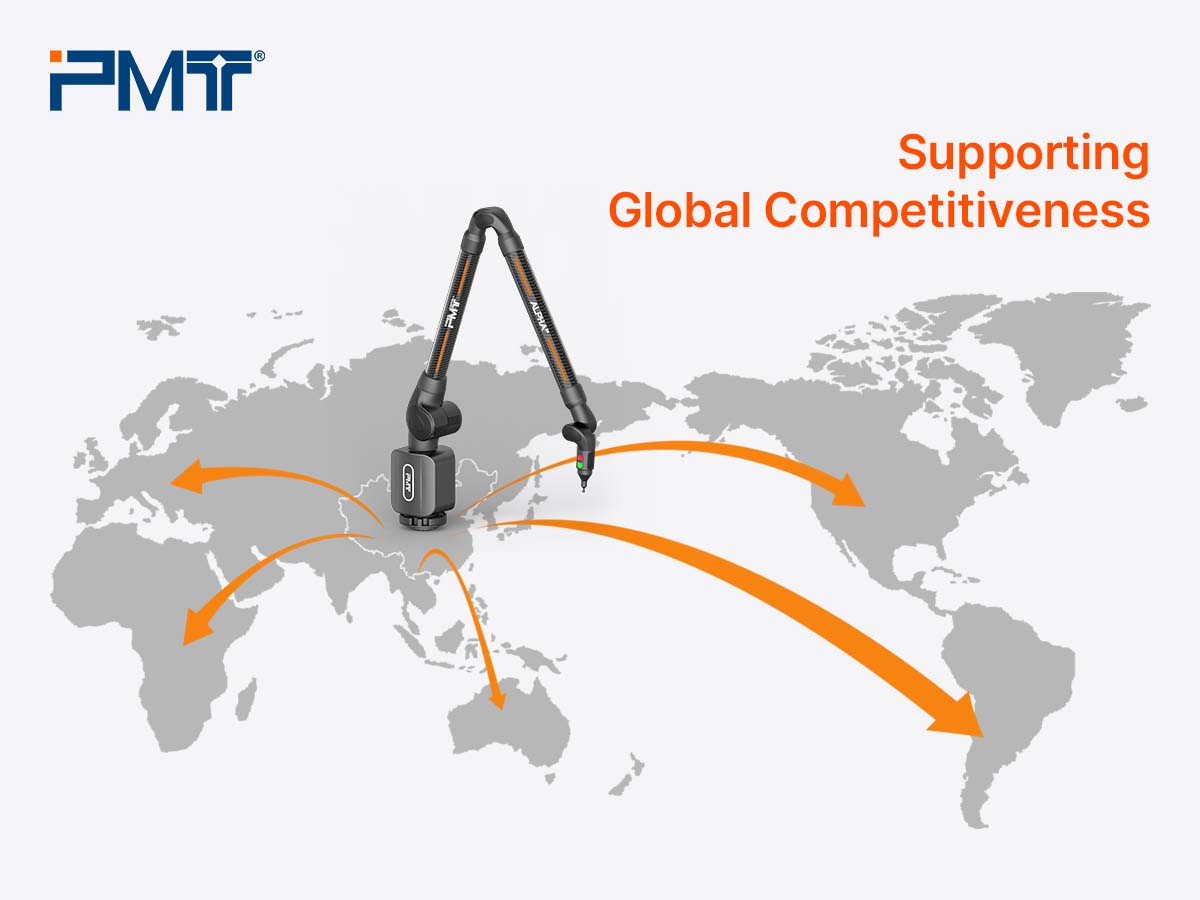
Looking at the broader picture, advanced measurement technology plays a crucial role in helping casting equipment manufacturers compete internationally. High-efficiency inspection supports large-scale production, while reliable quality control builds trust with global customers. As more companies adopt portable CMM solutions, measurement is no longer a separate function but an integrated part of manufacturing strategy.
Conclusion: Bringing Measurement to the Shop Floor
In conclusion, portable measuring arms are reshaping how casting equipment manufacturers manage quality. By moving precise measurement from the laboratory to the production site, companies can achieve faster feedback, better process control, and consistent product performance. This closed-loop approach not only improves efficiency but also supports long-term industrial upgrading. For manufacturers seeking to strengthen their position in the global market, investing in flexible and accurate on-site measurement technology has become a practical and effective choice.